

What Factors Affect Age of Onset for Perimenopause?
Published On: September 14, 2026

Also in this Series
- Perimenopause vs. Menopause: What's the Difference?
- What Factors Affect Age of Onset for Perimenopause?
- Is There a Blood Test for Perimenopause?
- Hormonal Changes in Perimenopause: How Estrogen, Progesterone & Testosterone Shift
- Early Perimenopause Symptoms: 10 Signs You Shouldn't Ignore in Your 30s and 40s
Perimenopause can be unpredictable. For many women, the earliest signs emerge long before they realize what’s happening.
If you are in your late 30s or early 40s and noticing changes in your cycle, mood, sleep, energy, weight, or tolerance for stress, these could be early perimenopause symptoms.
Perimenopause timing is shaped by far more than age alone, and hormones, immune health, metabolism, stress exposure, ovarian aging, and environmental factors can all play a role.
As a functional medicine physician and menopause expert, I’m on a mission to help more women become aware of the nuances that affect perimenopause onset, so they can advocate for themselves and get the support they need and deserve.
If you’ve been wondering if new symptoms or changes in your body are related to perimenopause, keep reading as we explore the factors that affect perimenopause onset.
In this article:
- What is the Average Age of Perimenopause?
- Is it Early Menopause?
- Factors That Can Influence When Perimenopause Begins
- Why Perimenopause Often Feels Like an “Unmasking” Period
- What to Do If This Sounds Like You
What is the Average Age of Perimenopause?
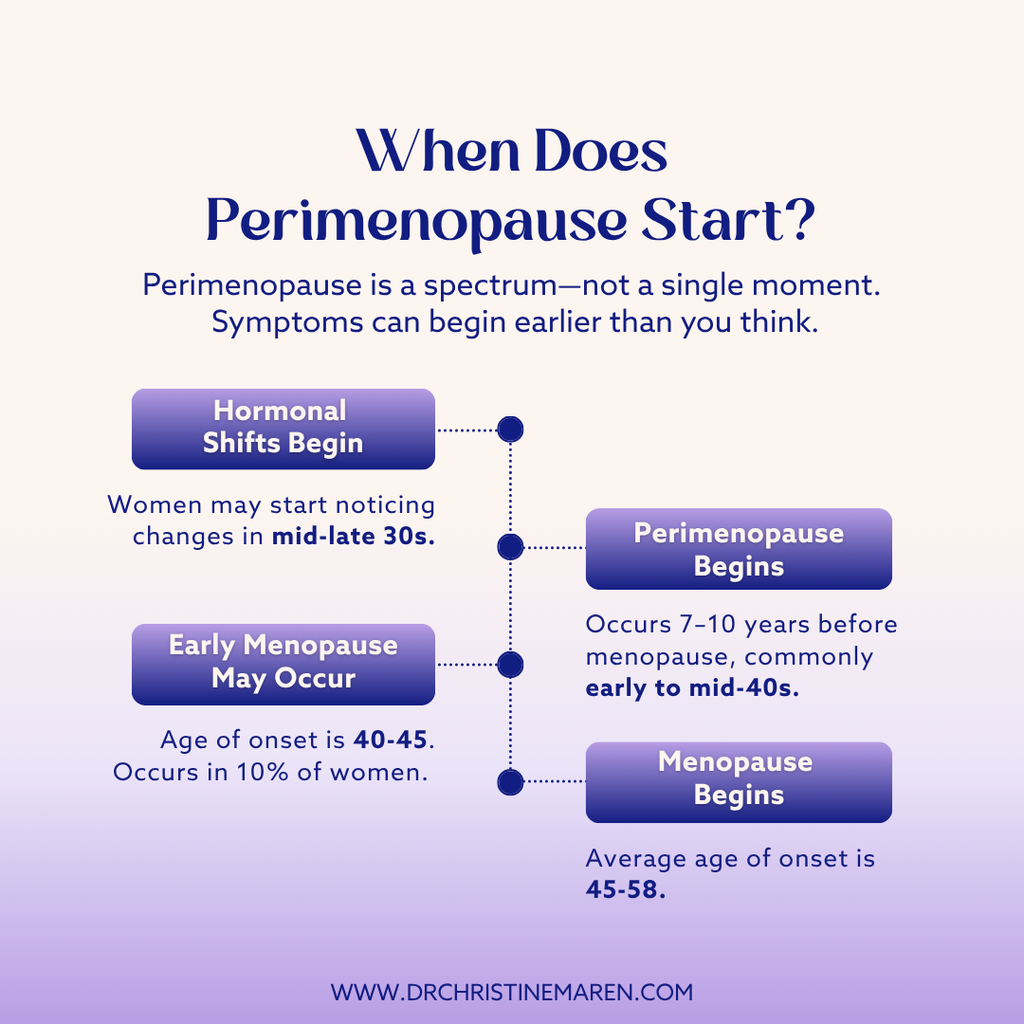
Perimenopause symptoms can begin 7–10 years before menopause. Since women on average go through menopause between the ages 45-55, this means the majority of us hit perimenopause in our late thirties or early forties.1
But that doesn’t mean you’ll hit the average. Many women experience the hormonal shifts of perimenopause earlier than you’d think.
Is it Early Menopause?
Some women experience menopause much sooner than expected.
Reaching menopause between 40 and 45 is called early menopause, and occurs in about 10% of women.2
Reaching menopause before age 40 is called premature menopause, premature ovarian failure, or premature ovarian insufficiency (POI) and affects about 1 in 100 women.3
Experiencing earlier menopause (early or premature) can increase your risk of certain conditions, including cardiovascular disease, low bone density (osteoporosis), loss of muscle, and cognitive decline.
Get more information in: Early Perimenopause Symptoms: 10 Signs You Shouldn't Ignore in Your 30s and 40s
Factors That Can Influence When Perimenopause Begins
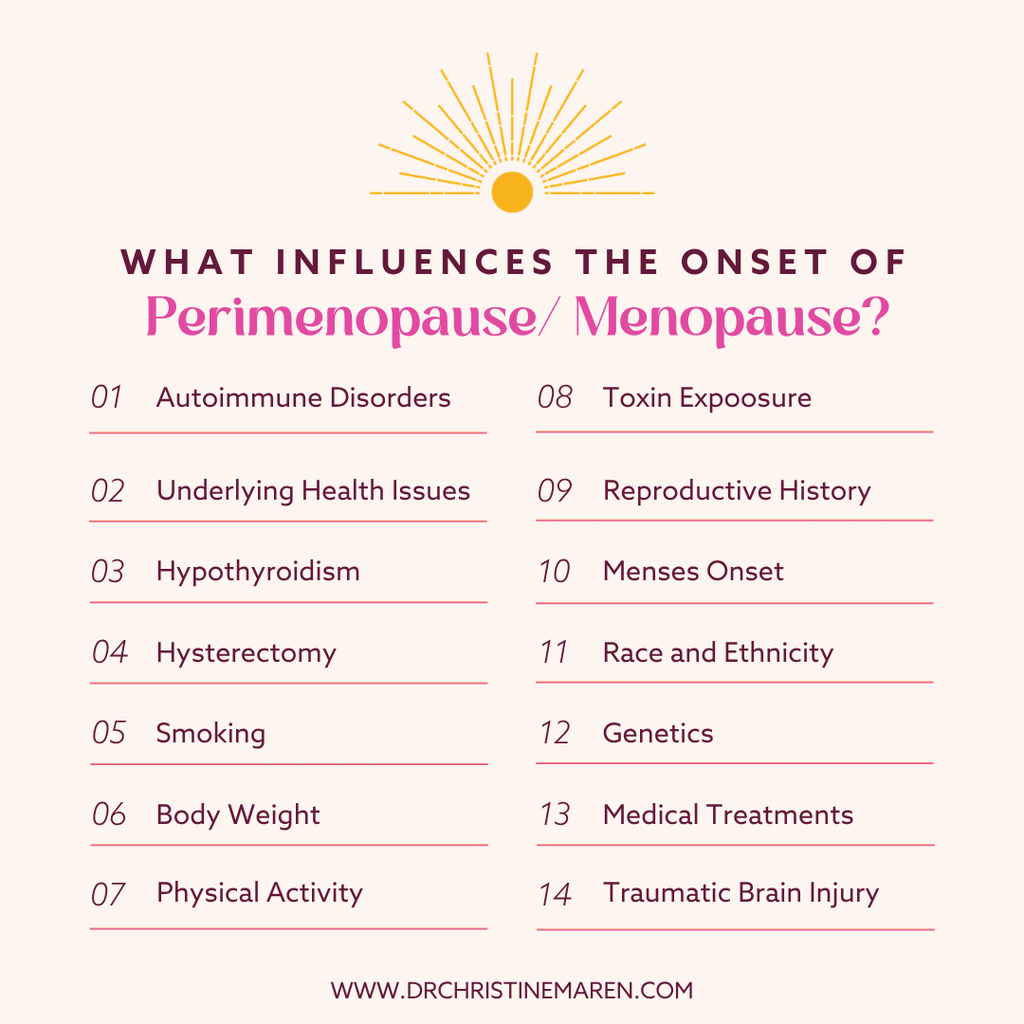
Women are often told perimenopause onset is dictated by two things: genetics and how old you were when you got your first period. Although these factors may (or may not) play a role, what’s often missed are the other causes of or contributors to earlier perimenopause onset, which include:
Autoimmune Disorders
Yeah, girl. If your intuition has been telling you that Hashimoto’s or another autoimmune disease may be contributing to perimenopausal symptoms, you’re probably right.4
The reason is that autoimmune diseases can affect ovarian function and hormonal signaling. Women with autoimmune conditions often experience earlier or more symptomatic perimenopause, particularly when inflammation is not well controlled.5
Hypothyroidism
Hypothyroidism and other chronic health conditions can disrupt hormonal feedback loops, leading to early and more intense perimenopause symptoms.6
Hysterectomy
While you probably know that a full hysterectomy will cause early menopause, not everyone knows that even a partial hysterectomy can also accelerate the onset of menopause, even if you still have your ovaries!7
Smoking
Smoking isn’t just a cancer and mortality risk; it can accelerate menopause onset by up to two years.
Women who smoke may also have more severe menopause symptoms, and smoking also worsens the effect of early menopause on mortality risk.8, 9
Underweight and Obesity
Both extremes matter here! Being significantly underweight can reduce estrogen production and lead to earlier menopause, while obesity is associated with oxidative stress and earlier reproductive aging.10
Listen, weight gain in perimenopause is a real struggle for many women, because eating less and moving more typically doesn’t work.
Get helpful tips and starting points in: How To Lose Weight In Your 40s (and beyond)
Sedentary Lifestyle
Did you know a lack of physical activity has been associated with earlier menopause?
One study found that moderate physical activity was significantly associated with a delay in menopause and ovarian decline.11
Regular physical activity, especially weight-bearing exercises like strength training, is also associated with healthier metabolic markers and hormones.
Movement supports insulin sensitivity, inflammation control, and hormones while helping with sleep, mood, and body composition.
Reproductive History
Here’s an interesting one: women who have children later in life may experience menopause later, while those who have never been pregnant may transition earlier.
This is due to how pregnancy timing, or lack thereof, affects ovarian reserve and lifetime hormonal exposure.12
Early Menarche (menses onset)
Although not always the case, research suggests women who get their first period before age 11 have a higher risk of early menopause than women who get theirs after age 12.13
Again, this isn’t a given, but something to keep in mind for early bloomers.
Race and Ethnicity
Menopause tends to happen earlier for African American and Hispanic women, and later in women of Asian descent.14, 15
The jury’s still out on why, but these differences likely reflect a combination of genetics, environmental exposures, chronic stress, and social determinants of health rather than race alone.
Genetics
Family history isn’t the only factor, but it plays a significant role in menopause onset. If your mother had a later menopause, you may also experience menopause later.16
Medical Treatments
Chemotherapy and pelvic radiation can induce early menopause.17
Traumatic brain injury (TBI)
A TBI may cause disruptions in hormonal regulation and potentially create an earlier onset of menopause.18
This is super fascinating given how common concussions are and all the research emerging around their consequences.
Toxin Exposure
Many health-conscious women are wise to the role that specific toxins, like endocrine-disruptors (EDCs), can play in hormonal dysregulation.
For those who are new to this, EDCs are a broad category of chemicals that can interfere with the endocrine (hormonal) system. They can mimic, block, or alter hormone production, secretion, transport, binding, action, or elimination in the body.
But did you know they can also affect perimenopause/menopause onset?
It’s true, and it’s disturbing.
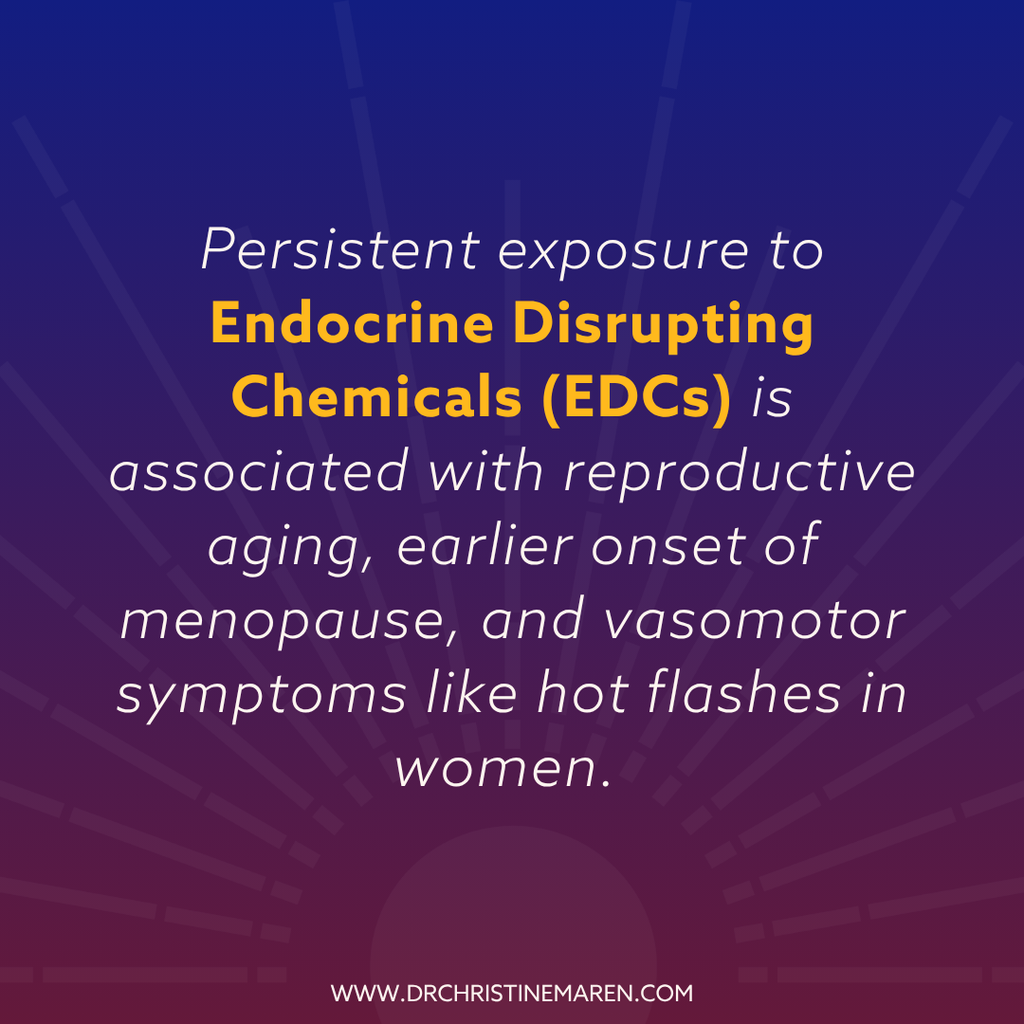
Studies suggest persistent exposure to EDCs like plastics, pesticides, and fragrances are associated with reproductive aging, earlier onset of menopause, and vasomotor symptoms like hot flashes in women.19, 20, 21
Exposure to heavy metals, including arsenic, cadmium, and mercury, can also diminish ovarian reserve and lead to earlier onset of menopause.22
A Note About Alcohol Consumption
There is a weak link between moderate alcohol intake and a lower risk of natural early menopause.23
However, alcohol use is associated with more severe menopausal symptoms and increases the risk of other conditions like heart disease, cancer, and osteoporosis.
During perimenopause, people who are already moderate-to-heavy drinkers are at greater risk for alcohol dependency/addiction.
I’ve also observed clinically and personally that women just do not tolerate alcohol well during perimenopause. It tends to worsen histamine symptoms like hives, contribute to disrupted sleep, bring on mood swings and irritability, and exacerbate weight gain, which is why I recommend avoiding it.
Why Perimenopause Often Feels Like an Unmasking Period
Perimenopause can feel confusing, not because the body is malfunctioning, but because it’s changing.
Earlier in life, our body quietly compensated for inflammation, nutrient depletion, metabolic strain, disrupted sleep, or chronic stress. But as hormones shift and decline, that buffer is gone.
Once subtle symptoms may become more noticeable. Once manageable patterns may feel louder. For many women, this is the first time their bodies ask for a different level of attention, which can be a real blessing in the long run if you listen.
What to Do If This Sounds Like You
Perimenopause is a normal life transition, but it deserves informed, compassionate care that reflects the complexity, uniqueness, and beautiful design of women’s bodies.
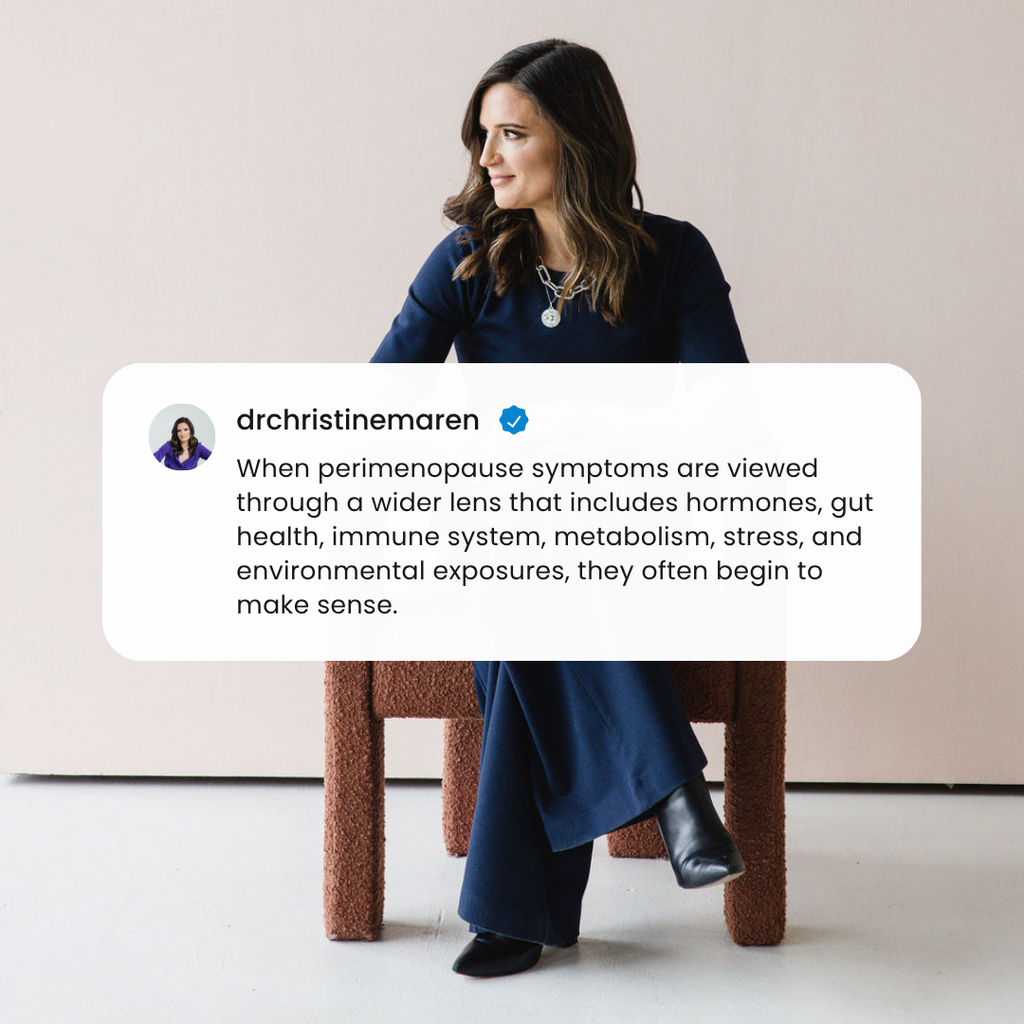
When symptoms are viewed through a wider lens that includes hormones, gut health, immune system, metabolism, stress, and environmental exposures, they often begin to make sense.
If you are looking for individualized guidance, my team and I offer hormone-informed, root-cause care for women navigating this transition with intention and clarity.
Click here to learn more about our comprehensive care approach and how to become a patient.
Want to stay connected? Then I invite you to join my monthly newsletter, where I share insights on hormones, gut health, metabolism, and practical tools for self-advocacy.
If you are looking for clarity about what may be driving your symptoms right now, I created a Hormone Clarity Quiz to help you identify which hormonal patterns are most likely at play in this season of life.
Remember: you deserve care that looks at the whole picture, not just a single number.
References
- https://www.womenshealth.gov/menopause/menopause-basics
- https://www.menopause.org/docs/default-source/professional/nams-2022-hormone-therapy-position-statement.pdf
- https://www.womenshealth.gov/menopause/early-or-premature-menopause
- https://www.sciencedirect.com/science/article/abs/pii/S1568997211002680
- https://www.ncbi.nlm.nih.gov/pmc/articles/PMC7961833
- https://www.womenshealth.gov/menopause/menopause-basics#:~:text=Menopause%20happens%20when%20you%20have,the%20United%20States%20is%2052
- https://journals.lww.com/greenjournal/abstract/2016/05000/association_of_ovary_sparing_hysterectomy_with.3.aspx
- https://women.smokefree.gov/quit-smoking-women/what-women-should-know/smokings-impact-on-women
- https://www.bmj.com/content/351/bmj.h4292
- https://www.sciencedirect.com/science/article/pii/S1521693423000482
- https://pmc.ncbi.nlm.nih.gov/articles/PMC11813050/
- https://academic.oup.com/humrep/article/32/3/679/2937790
- https://academic.oup.com/humrep/article/32/3/679/2937790
- https://journals.sagepub.com/doi/full/10.2217/17455057.5.2.127
- ]https://www.scientificamerican.com/article/discrimination-may-hasten-menopause-in-black-and-hispanic-women/
- https://academic.oup.com/humrep/article/32/3/679/2937790
- https://pubmed.ncbi.nlm.nih.gov/16794243/
- https://www.ncbi.nlm.nih.gov/pmc/articles/PMC7274553/
- https://www.ncbi.nlm.nih.gov/pmc/articles/PMC4309567/
- https://www.ncbi.nlm.nih.gov/pmc/articles/PMC9971557/
- https://www.ncbi.nlm.nih.gov/pmc/articles/PMC8988816/
- https://academic.oup.com/jcem/advance-article-abstract/doi/10.1210/clinem/dgad756/7582943?redirectedFrom=fulltex
- https://pubmed.ncbi.nlm.nih.gov/34216210/
Also in this Series
- Perimenopause vs. Menopause: What's the Difference?
- What Factors Affect Age of Onset for Perimenopause?
- Is There a Blood Test for Perimenopause?
- Hormonal Changes in Perimenopause: How Estrogen, Progesterone & Testosterone Shift
- Early Perimenopause Symptoms: 10 Signs You Shouldn't Ignore in Your 30s and 40s