

Early Perimenopause Symptoms: 10 Signs You Shouldn't Ignore in Your 30s and 40s
Published On: September 28, 2026

Also in this Series
- Perimenopause vs. Menopause: What's the Difference?
- What Factors Affect Age of Onset for Perimenopause?
- Is There a Blood Test for Perimenopause?
- Hormonal Changes in Perimenopause: How Estrogen, Progesterone & Testosterone Shift
- Early Perimenopause Symptoms: 10 Signs You Shouldn't Ignore in Your 30s and 40s
You’re in your late 30s or early 40s and something feels… off. Your weight is creeping up, your sleep is falling apart, your periods are unpredictable, and your moods are swinging out of nowhere.
Many women (and even their doctors) dismiss these shifts as “normal aging” or stress, but they’re often the first signs of perimenopause—a hormonal transition that can start up to a decade before menopause.
As a physician and menopause specialist, I’ve helped hundreds of women recognize and address these changes early.
If you’ve been wondering, “Could this be perimenopause?”—here are 10 early signs to look for (and what to do about them).
In this Article:
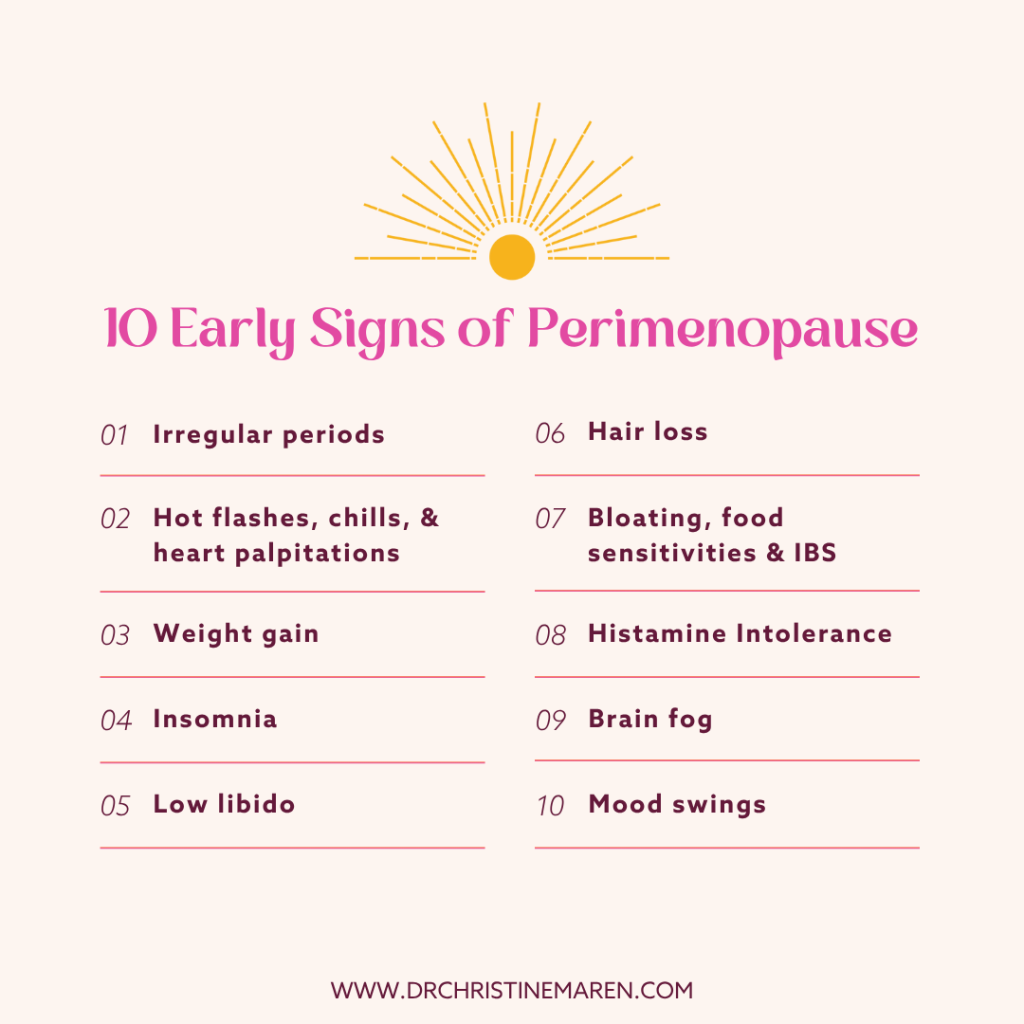
- Missed or Irregular Periods and Perimenopause: First Signs to Watch for
- Hot Flashes, Chills, and Heart Palpitations During Perimenopause
- Perimenopause Weight Gain: Why it Happens and What It Means
- Perimenopause and Insomnia, Night Sweats, and Other Sleep Disturbances
- Low Libido and Perimenopause: Hormonal Effects on Sex Drive
- Perimenopause Hair Loss: The Link Between Estrogen and Thinning Hair
- Perimenopause and Gut Health Changes
- Perimenopause and Histamine Intolerance
- Perimenopausal Brain Fog
- Mood Changes During Perimenopause: Anxiety, Depression, and Mood Swings
- Rule out Other Problems (The Unmasking Effect)!
- Natural Treatment Options for Perimenopause Symptoms
10 Early Perimenopause Symptoms You Shouldn't Ignore
The following are some common early perimenopause symptoms to look for in your 30s and 40s.
1. Missed or Irregular Periods and Perimenopause: First Signs to Watch For
One of the very first clues you’re entering perimenopause is a shift in your menstrual cycle, and it sometimes catches women by surprise, especially if they aren’t tracking their cycles.
Common changes include:
- Shorter cycles: Often the first change in early perimenopause, as cycles shorten from 28–32 days to 24–28 days. This is usually due to lower progesterone in the luteal phase (the second half of your cycle).
- Heavier cycles: Commonly caused by estrogen spikes not balanced by adequate progesterone. They can also be due to luteal out-of-phase (LOOP) cycles, when hormone timing is disrupted.
- Lighter cycles: A sign of declining estrogen overall.
- Missed periods: More typical later in perimenopause, often due to anovulatory cycles (when ovulation doesn’t occur).
Tracking your cycles can reveal patterns that make sense of these changes, and help your provider better support you.
Pro tip: Count from the first day of bleeding to the next first day of bleeding. In your reproductive years, this is typically 28–32 days. Consistent changes outside that range may be an early sign of perimenopause.

If this resonates, there's more.
My newsletter and community are where I share clinical insight, evolving research, and what's helping women feel more like themselves again in midlife.
2. Hot Flashes, Chills, and Heart Palpitations During Perimenopause
Sudden waves of heat, night sweats, chills, or a pounding heart can be alarming early signs of perimenopause.
These are known as vasomotor symptoms, and they’re driven by shifts in estrogen levels and changes in how your autonomic nervous system regulates body temperature and heart rhythm. 1
While these symptoms are common, a few important things to know:
- They’re not required. Many women never experience hot flashes but are still very much in perimenopause.
- Heart palpitations are often hormonal. Hormonal fluctuations can trigger palpitations because estrogen receptors exist in the AV node of the heart. Unfortunately, many women undergo expensive cardiac workups before this is recognized.
- Rule out other causes. Because palpitations can also stem from cardiovascular issues, thyroid conditions, or nutrient deficiencies (B12, iron), it’s still essential to get checked out.
Takeaway: Hot flashes and palpitations are hallmark perimenopause symptoms, but they’re not the only ones. If you don’t have them, you can still be in perimenopause.
3. Perimenopause Weight Gain: Why it Happens and What it Means
Suddenly gaining weight despite no changes to your diet or exercise routine? Finding it more challenging to maintain your weight? You’re not alone! Hormonal shifts in perimenopause play a big role in metabolism.
Here’s what’s happening behind the scenes:
- Estrogen declines: This changes how and where your body stores fat, shifting it toward the waistline.2, 3
- Insulin sensitivity drops: As estrogen drops, your cells don’t respond to insulin as effectively. This means blood sugar is harder to regulate, and the body is more likely to store energy as fat. 4, 5
- Muscle protein synthesis slows: Lower estrogen and testosterone make it harder to build and maintain lean muscle unless you’re intentional about strength training. Less muscle = slower metabolism. 6, 7
The frustrating part? Old weight-loss “tricks” like eating less and doing more cardio often backfire. They can raise cortisol, teach your metabolism to slow down, and make weight loss even harder.
The real answer is to support your hormones, build muscle, and eat for metabolic health (you’ve got to feed the machine!).
Learn more in: How To Lose Weight In Your 40s (and beyond)
4. Perimenopause and Insomnia, Night Sweats, and Other Sleep Disturbances
If you’re lying awake at 3 AM or waking up frequently throughout the night, hormones are a likely culprit.
Fluctuating estrogen and declining progesterone can trigger night sweats, insomnia, early wakings, and trouble falling back asleep. Lower stress tolerance also makes you more sensitive to overnight cortisol spikes.
What helps:
- Lifestyle: Consistent bedtime, morning light, reduced screens, exercise, stress management, calming herbs (passionflower, chamomile), melatonin for sleep onset, and balanced blood sugar.
- Hormone therapy: Progesterone is often my first go-to for sleep issues.8 Estradiol can also improve overall sleep quality and reduce night sweats.9
Takeaway: During perimenopause, sleep issues are often hormonally driven—not “just stress.”
5. Low Libido and Perimenopause: Hormonal Effects on Sex Drive
Estrogen and testosterone both impact desire, arousal, mood, and physical comfort during intimacy, such as vaginal dryness or other genitourinary symptoms.10, 11
That said, it’s essential to recognize that libido isn’t purely hormonal. It’s also shaped by stress, exhaustion, relationship dynamics, self-care (or lack thereof), being in survival mode, and feeling disconnected from your body.
Many midlife women feel depleted and unsupported, and research shows women in equal partnerships report greater sexual desire and satisfaction. 12 , 13
The good news: low libido is treatable. Options include hormone therapy, vaginal estrogen for dryness or discomfort, and medications like Addyi or Vyleesi.
Addressing burnout, anxiety, and relationship patterns, often with therapy or sex therapy, can also make a big difference.
6. Perimenopause and Hair Loss: The Link Between Estrogen and Thinning Hair
Thinning hair is one of the most under-recognized, but prevalent, symptoms of perimenopause, affecting up to 50% of women.14
And no, it’s not just stress (but that can play a role). Here’s why this happens:15
- Relative androgen dominance. Lower estrogen/progesterone levels make androgens like DHT (dihydrotestosterone) relatively more dominant.
- 5-alpha reductase activity. This enzyme converts testosterone into DHT, shrinking follicles.
- Declining estradiol. Estradiol normally helps downregulate 5-alpha reductase and supports the growth phase of hair follicles, known as the anagen phase. When it declines in perimenopause, DHT can act unchecked on the scalp.
Other factors, including thyroid dysfunction, nutrient deficiencies (iron, zinc, B vitamins), stress, postpartum hormonal shifts, and certain medications, can also cause hair loss.
Supplements such as saw palmetto and zinc can help downregulate 5-alpha reductase, while stress, insulin resistance, and inflammation can upregulate it.16, 17, 18
A comprehensive workup and a functional medicine lens can be very helpful in determining and treating the root cause (no pun intended) of perimenopausal hair loss.
7. Perimenopause and Gut Health Changes
As hormones shift and estrogen declines in perimenopause, you may notice bloating, food sensitivities, constipation, or IBS symptoms.
One reason is that estrogen plays a vital role in gut health by:
- Supporting the integrity of the intestinal barrier
- Modulating inflammation
- and influencing the diversity of your gut microbiome.
Improving gut health can also improve your perimenopausal symptoms, and vice versa. It’s a two-way street!
Learn more in: Gut Health and Menopause/Perimenopause: What Every Woman Should Know
8. Perimenopause and Histamine Intolerance
If you’ve noticed worsening allergies, hives, itchy skin, and/or alcohol intolerance, these could be signs of histamine intolerance.
Histamine issues often crop up in perimenopause, and the reason is three-fold: 19, 20
- Declining progesterone destabilizes mast cells, which release histamine.
- Estrogen fluctuations can amplify histamine’s effects.
- Shifts in the gut microbiome, including lower diversity and changes in bacteria that break down histamine, can tip the balance even further.
The good news is that addressing gut health and hormone balance can help lessen these symptoms.
In the meantime, listen to your body and learn what your triggers are, like alcohol.
If this resonates, there's more.
My newsletter and community are where I share clinical insight, evolving research, and what's helping women feel more like themselves again in midlife.
9. Perimenopausal Brain Fog
This is another one that’s often mistaken for “mommy brain”, fatigue, a hormonal imbalance, a mental health issue, or just being overwhelmed.
However, issues with focus, memory, brain fog, an inability to multitask, and a lack of mental clarity are all common signs of perimenopause. 21
Specifically, as estrogen fluctuates, it can affect neurotransmitters, blood flow, and brain regions involved in memory and attention.22
This shift often feels disorienting, especially for high-functioning women juggling work, home, and aging parents.
While it’s common, it’s not inevitable, and restoring hormonal balance, sleep, and nervous system resilience can help you get your brain back.
10. Mood Changes During Perimenopause: Anxiety, Depression, and Mood Swings
Increased anxiety, irritability, rage, and low mood can be symptoms of hormonal fluctuations.
Perimenopausal women are 2–4 times more likely to experience an episode of major depressive disorder.23
That said, sometimes these changes signal that it’s time to set boundaries and prioritize your own self-care the way you’ve been taking care of everyone else.
So while there definitely is a hormonal component, we also have to own the fact that many of us have been over-functioning and over-producing in relationships for too long.
Related reading: 7 Tips + Resources to Cultivate a Healing (Growth) Mindset Right Now
Rule Out Other Problems (The Unmasking Effect)!
As hormones shift in perimenopause, they don’t just create new symptoms; they can also unmask underlying health issues that have been quietly brewing in the background.
I call this the unmasking effect. When the hormonal “buffer” of your reproductive years fades, once silent problems can surface.
This is why a thorough workup matters.
Whether you work with me or another doctor, look beyond sex hormones to also check for:
- Thyroid dysfunction
- Nutrient deficiencies
- Gut infections or dysbiosis
Identifying and treating these root causes can dramatically improve your symptoms and help you feel like yourself again, instead of chasing them with quick fixes that don’t last.
The benefits of body-identical HRT outweigh risks for most women when started early, and there are many integrative options to reduce symptoms and restore resilience.
If you haven’t yet, be sure to check out:
- Part I: A Woman’s Guide to Perimenopause: Signs & Symptoms, Hormonal Changes, Testing, & More
- A Woman’s Guide to Perimenopause Part II: The Truth About HRT & Bioidentical Hormones
- Part III: Navigating Perimenopause: A Comprehensive Guide to Treatment Options and Lifestyle Strategies
Natural Treatment Options For Perimenopause Symptoms
In my practice, we take a 3-pillar approach: address the root cause, optimize hormones, and build resilience through foundational lifestyle habits.
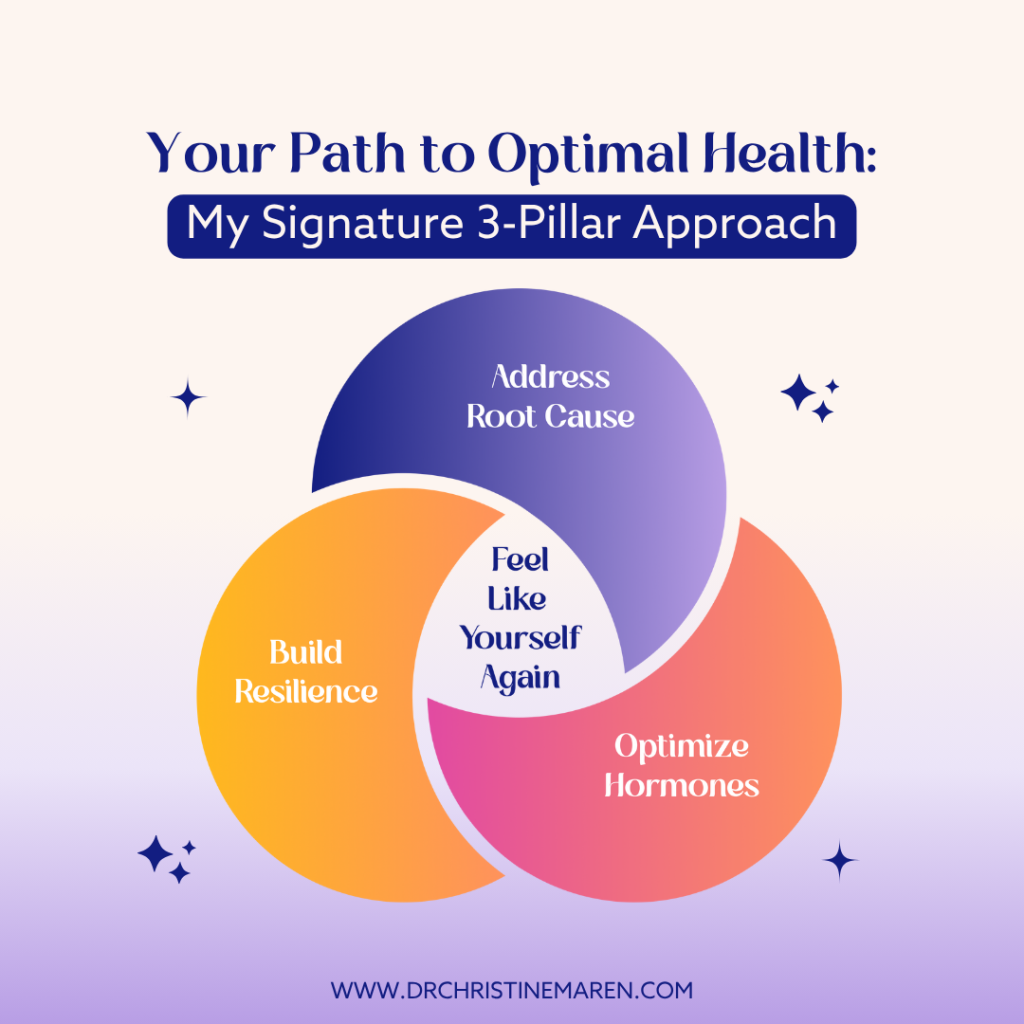
We’ll work on:
- a protein-centric, high fiber diet
- movement and strength training
- low tox living
- dialing in sleep
- and stress management.
That means looking beyond symptoms to understand the full picture—your gut health, nutrient status, hormone levels, thyroid function, and even your stress response, because no one thrives in survival mode.
Ready to Take Control?
My team and I specialize in helping high-achieving women take charge of their health and hormones.
We've guided countless women from feeling anxious, tired, and frustrated to rediscovering their radiance and feeling like themselves again.
Don't let hormonal changes and early perimenopause symptoms hold you back.
- https://www.nature.com/articles/s44294-025-00061-3
- https://pmc.ncbi.nlm.nih.gov/articles/PMC9204494/
- https://pmc.ncbi.nlm.nih.gov/articles/PMC10780928/
- https://pubmed.ncbi.nlm.nih.gov/34102108/
- https://pmc.ncbi.nlm.nih.gov/articles/PMC3933789/
- https://pubmed.ncbi.nlm.nih.gov/34102108/
- https://pmc.ncbi.nlm.nih.gov/articles/PMC3933789/
- https://www.tandfonline.com/doi/full/10.1080/13697137.2018.1455657
- https://menopause.org/wp-content/uploads/professional/nams-2022-hormone-therapy-position-statement.pdf
- https://www.nature.com/articles/s44294-025-00061-3
- https://www.isswsh.org/images/PDF/jsm_18_5_849.pdf
- https://www.sciencedirect.com/science/article/pii/S0025619617307991
- https://www.tandfonline.com/doi/full/10.1080/00224499.2022.2079111
- https://www.mdpi.com/2227-9059/11/11/3041
- https://pmc.ncbi.nlm.nih.gov/articles/PMC2685269/
- https://pubmed.ncbi.nlm.nih.gov/40395126/
- https://pubmed.ncbi.nlm.nih.gov/3207614/
- https://pubmed.ncbi.nlm.nih.gov/6200703/
- https://pubmed.ncbi.nlm.nih.gov/8147232/
- https://pubmed.ncbi.nlm.nih.gov/25973435/
- https://www.nature.com/articles/s44294-025-00061-3
- https://www.nature.com/articles/s41598-024-62820-7
- https://www.nature.com/articles/s44294-025-00061-3
Also in this Series
- Perimenopause vs. Menopause: What's the Difference?
- What Factors Affect Age of Onset for Perimenopause?
- Is There a Blood Test for Perimenopause?
- Hormonal Changes in Perimenopause: How Estrogen, Progesterone & Testosterone Shift
- Early Perimenopause Symptoms: 10 Signs You Shouldn't Ignore in Your 30s and 40s