

Thyroid vs. Perimenopause? A Guide to Signs, Symptoms, & Solutions
Published On: November 24, 2025

If you’re in or approaching midlife, you may be aware that symptoms like weight gain, brain fog, low libido, and mood swings can be signs of perimenopause.
However, these same symptoms could also be related to thyroid dysfunction, whether hyperthyroidism or hypothyroidism, which is common and sometimes missed during the menopausal transition.
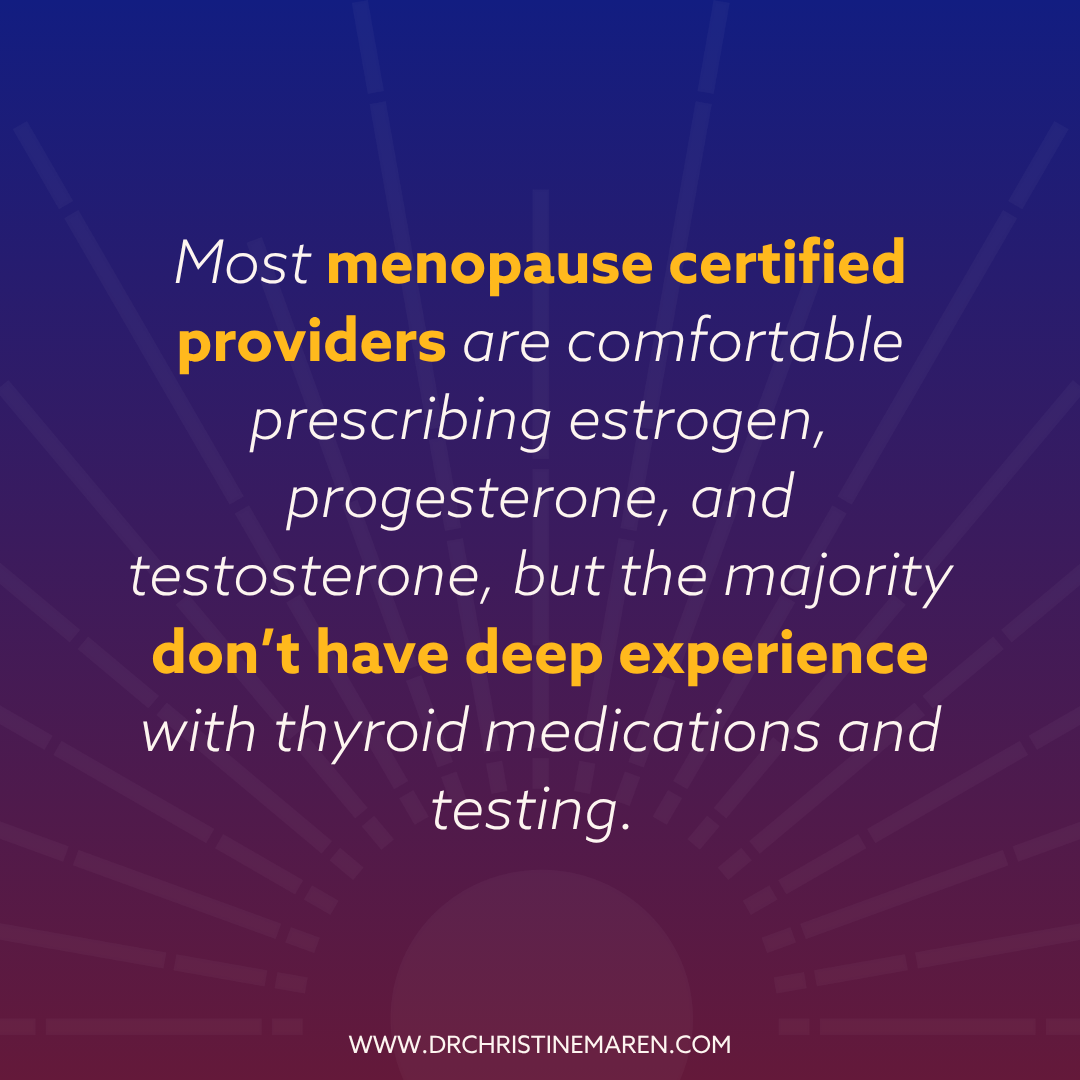
Most menopause certified providers (like me!) are comfortable prescribing estrogen, progesterone, and testosterone, but the majority don’t have deep experience with thyroid medications and testing.
The result?
Some women start hormone therapy and experience partial relief, but remain tired, cold, foggy, and frustrated, or worse, symptoms intensify, leading them to believe HRT isn’t working or is to blame.
So, how can you tell if it’s perimenopause or thyroid dysfunction or both?
Keep reading as we explore the connection between perimenopause, menopause, and thyroid, how to decipher symptoms, and get the help you need to thrive.
In this article:
- Why Thyroid Issues Are More Common Around Perimenopause & Menopause
- Thyroid, Perimenopause, & The Autoimmune “Trigger Window”
- Why the Thyroid is Often Overlooked during Perimenopause
- Why Thyroid Matters for HRT Success
- What to Do Next to Get Yourself Back on Track
- Thyroid & Perimenopause Takeaways
Why Thyroid Issues are More Common Around Perimenopause & Menopause
As discussed in previous articles, we know women are roughly five to ten times more likely to develop thyroid issues than men. 1 , 2
We also know women are more vulnerable to thyroid problems during certain hormonal transitions, such as postpartum, perimenopause, and menopause.
Check out these statistics:
- A woman’s lifetime risk of developing a thyroid condition is approximately 1 in 8, and prevalence jumps in midlife. 3
- Studies show 8–10% of perimenopausal women have thyroid dysfunction, climbing to 14–20% in women over 60.4 5
- Autoimmune thyroid disease (especially Hashimoto’s) is the leading cause of hypothyroidism in the United States and is often triggered by hormonal transitions, including menopause. 6 7
- Hashimoto’s is one of the most common causes of autoimmune disease in midlife women, and most often develops between the ages of 30 and 50. 8 9
In my experience as a physician specializing in thyroid health, I would estimate these numbers are much higher, as thyroid disorders are often underdiagnosed or misdiagnosed.The big takeaway: Thyroid dysfunction is not rare in perimenopause; it’s common, and often underdiagnosed.
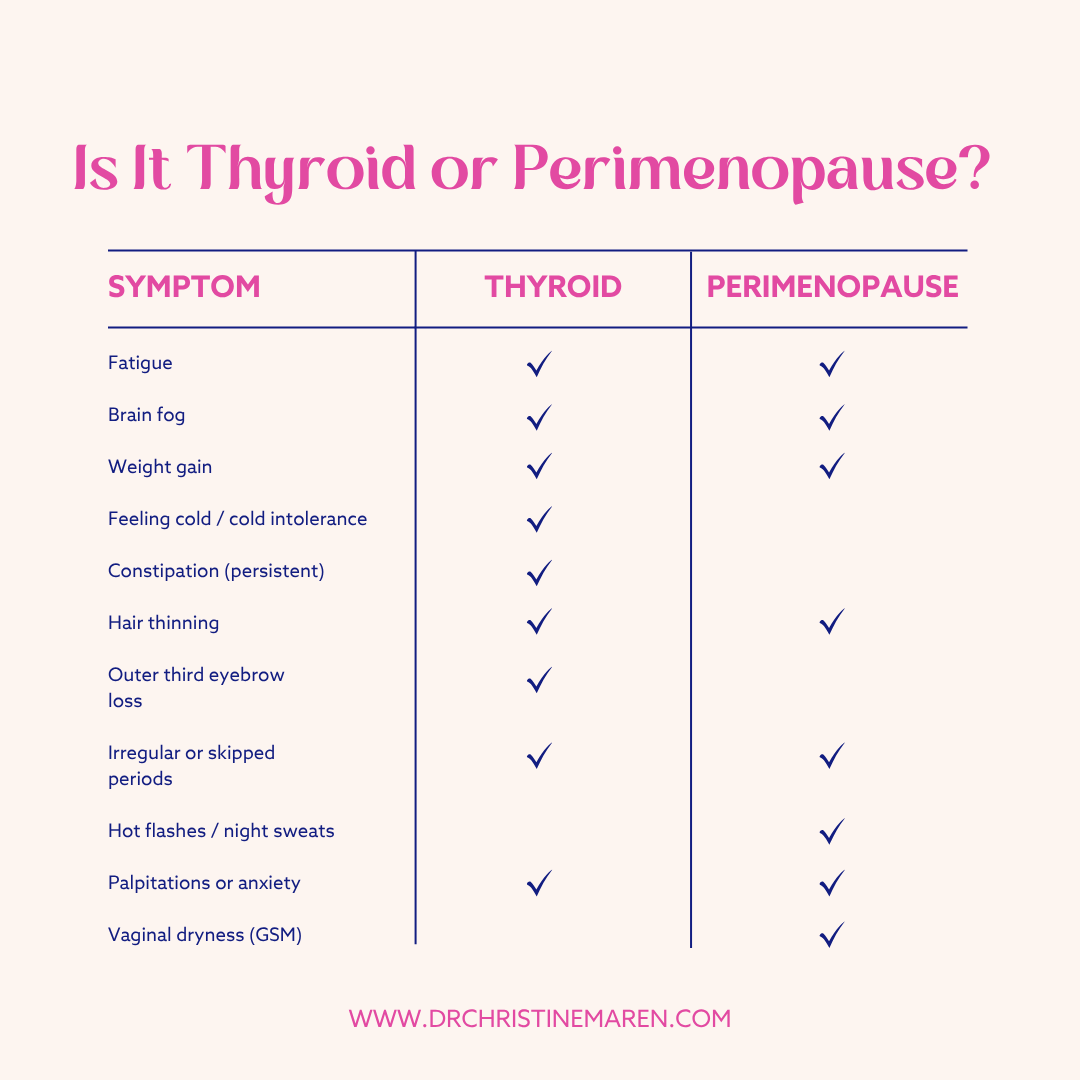
Comparing Symptoms: Is it Thyroid or Perimenopause?
So, how can you tell if it’s your thyroid or perimenopause? It can be hard to differentiate because the symptoms often overlap.
Here are a few clues to help you (and your provider) spot the difference.
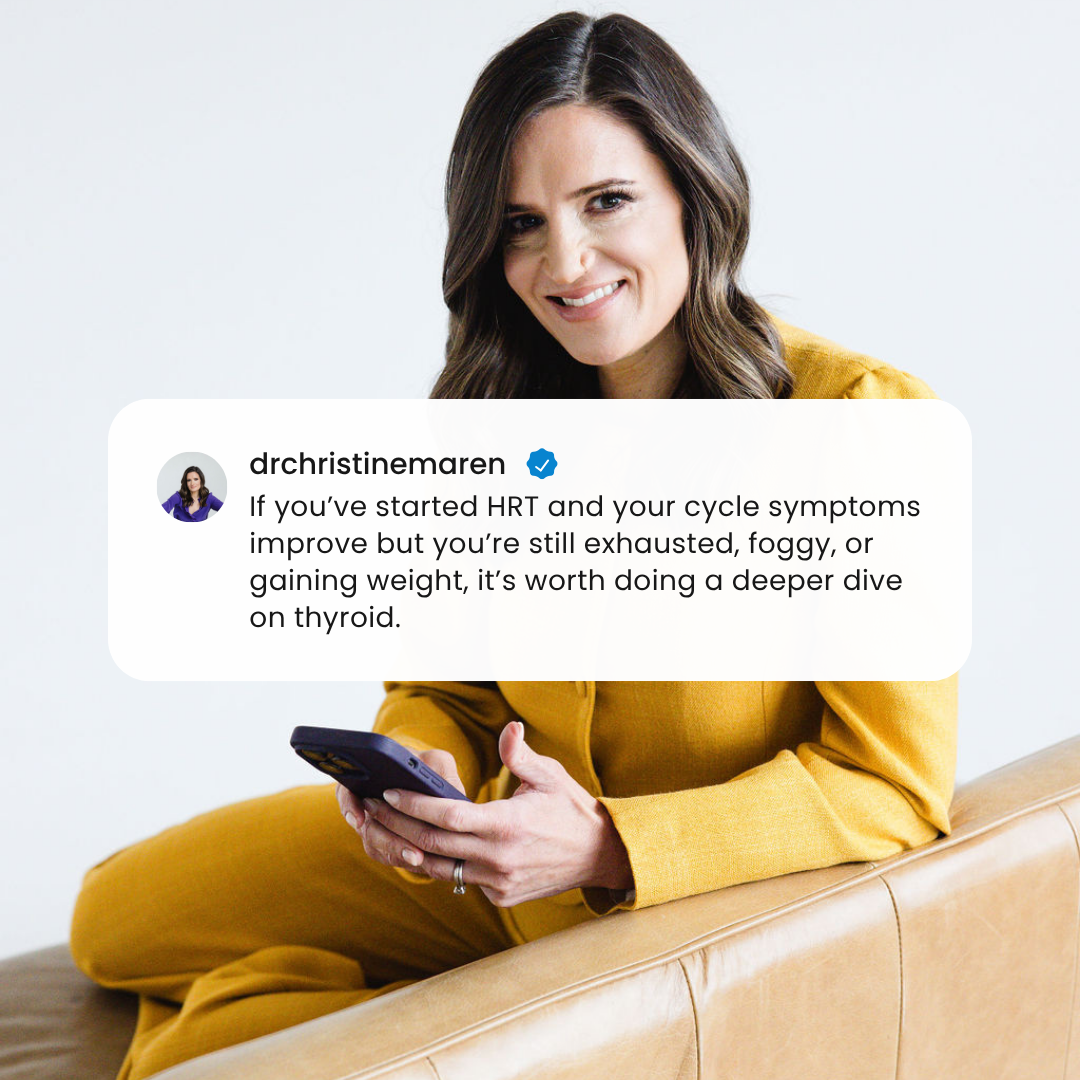
Pro tip: If you’ve started HRT but you’re still exhausted, foggy, gaining weight, or struggling with other symptoms, it’s worth doing a deeper dive on thyroid.
In my (very experienced) opinion, it’s almost always worth checking labs, and I would not recommend waiting it out.
Thyroid, Perimenopause, & the Autoimmune Trigger Window
We tend to think of perimenopause as a hormonal transition, but it’s also an immune transition.
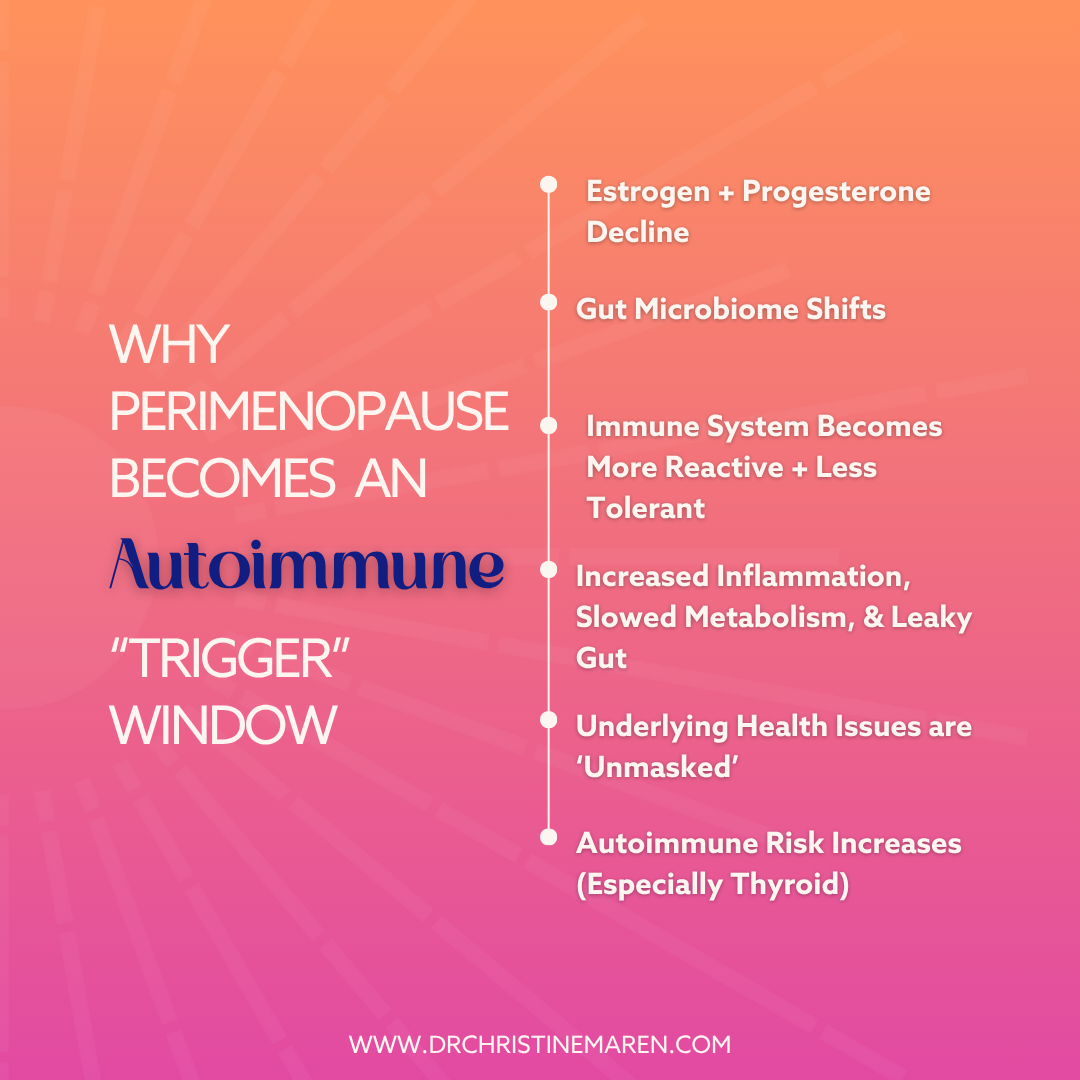
As estrogen and progesterone decline, your immune system becomes a little more reactive and a little less tolerant. These hormones usually help keep inflammation in check, so when they fluctuate or drop, your body can slip into a more inflamed, less balanced state.
But hormones aren’t the whole story.
Your gut microbiome (the trillions of bacteria that live in your digestive tract) plays a major role in how your immune system behaves. Research shows that menopause changes the makeup of the gut microbiome, making it less diverse and more similar to a male pattern. (Wild, right?) 10
Scientists have a name for this connection between sex hormones, the gut, and the immune system: the microgenderome.
This idea first came from a 2013 study where researchers discovered that male mice were naturally protected from autoimmune disease because of the interaction between their gut bacteria and testosterone. When they transferred gut bacteria from male mice to female mice, the females’ testosterone levels increased and their risk for autoimmune disease went down. 11
A few years later, another study confirmed the pattern. When researchers gave female mice gut bacteria from males, their immune systems reacted differently and they became more inflamed, proving that gut microbes and hormones talk to each other. 12
In simple terms: your hormones, gut microbes, and immune system are constantly in conversation. During perimenopause, as both hormones and the gut microbiome shift, that conversation changes. Inflammation increases, metabolism can slow, the gut becomes leakier, and immune regulation weakens.
That’s why perimenopause can act as an autoimmune “trigger window.”
It doesn’t cause autoimmune thyroid disease, but it can unmask what’s already brewing beneath the surface. For women who already have thyroid antibodies (even if their thyroid labs look “normal”), this is a high-risk time for developing hypothyroidism.
Why the Thyroid is Often Overlooked during Perimenopause
There are several reasons thyroid issues are missed during perimenopause and menopause, including:
- Symptom overlap: Fatigue, brain fog, mood swings, achy joints, weight gain, sleep issues, hair loss, and temperature fluctuations are nonspecific symptoms that can happen in perimenopause and hypothyroidism. Because the signs look so similar, thyroid dysfunction is often mistaken for “just menopause.”
- Hormone therapy bias: Many clinicians focus exclusively on hormone replacement therapy (HRT) with estrogen and progesterone, assuming that lingering symptoms are part of the adjustment process. As a menopause specialist, I’m a strong advocate for HRT, but it’s only part of the picture. If the thyroid isn’t optimized, no amount of estrogen or progesterone will fully restore energy, metabolism, or mood.
- Lab & diagnostic limitations: Too often, thyroid evaluation stops at a single TSH test. That’s not enough. TSH only tells us how the pituitary is signaling the thyroid, it doesn’t show how well the thyroid is converting or how the hormones are working at the cellular level. And without testing thyroid antibodies, we can completely miss Hashimoto’s, the most common cause of hypothyroidism in women.
Download my Thyroid Lab Guide below to learn more about comprehensive lab testing and what it means.
Why Thyroid Matters for HRT Success
Even the most perfectly balanced HRT strategy won’t fully resolve symptoms if your thyroid is underperforming. Here’s why:
- Metabolism: Thyroid hormones regulate your body’s energy production at a cellular level. Therefore, if your thyroid function is off, your metabolism suffers, leading to weight gain, digestive issues, low energy, and cardiovascular problems.
- Brain function: Adequate thyroid hormone supports neurotransmitter balance, mood, and cognition.
- Hormone synergy: Estrogen increases thyroid hormone receptor sensitivity! So when estrogen drops, tissues become less responsive to T3/T4 and thyroid hormone may be less effective at the cellular level, so symptoms worsen even if labs haven’t shifted much.
- Binding proteins: Oral estrogen may raise thyroxine-binding globulin (TBG), which can reduce free T4, possibly necessitating a higher dose of thyroid medication. Transdermal estrogen usually avoids this. Testosterone, on the other hand, may lower your need for thyroid medication. 13
- Muscle mass: Supported by estrogen and testosterone, muscle plays an essential role in the conversion of T4 to T3.
The good news is that once you work with a physician who can help you dial in your thyroid protocol with your HRT strategy, these symptoms can resolve relatively quickly, leading to a whole new lease on midlife.
Diagnosis and Treatment for Thyroid Issues During Menopause
If you’re in perimenopause or menopause and suspect your thyroid might be causing symptoms, or you’re unsure if you’re in perimenopause or experiencing thyroid symptoms, here’s what to do.
1. Ask for a Complete Thyroid Panel
Many healthcare providers still only test TSH, but that doesn’t tell the whole story.
A full picture includes: TSH, Free T4, Free T3, Reverse T3, Thyroid Peroxidase (TPO) Antibodies, and Thyroglobulin (Tg) Antibodies.
These markers can reveal thyroid dysfunction and early autoimmune activity long before TSH changes.
Want to understand what your results mean? Download my Thyroid Lab Guide, it breaks down what optimal thyroid function really looks like for women in midlife.
2. Recheck or Adjust Your HRT
If you’ve recently started HRT (especially oral estrogen or testosterone) recheck your thyroid levels after about 6–8 weeks. These hormones can change how your thyroid medication works.
3. Choose the Right Form of Estrogen
Whenever possible, I recommend transdermal estradiol (patch, gel, or cream). It’s gentler on your liver, doesn’t raise thyroid-binding globulin (TBG), and helps keep thyroid levels more stable.
4. Work With a Clinician Who Sees the Whole Picture
If you’ve been told “your labs are normal” but you still don’t feel well, you deserve a clinician who understands how thyroid, hormones, gut health, and the immune system all shape one another. This is the kind of integrative, root-cause care my team and I provide every day.
Click here to learn more about working with us.
But here’s the thing: you don’t have to be a patient to stay in the loop. Join my inner circle to get new articles, thyroid and hormone guides, and midlife health insights delivered right to your inbox.
Thyroid & Perimenopause Takeaways
- Perimenopause is a high-risk window for thyroid dysfunction because hormonal shifts affect immune tolerance, gut microbiome, tissue sensitivity, and thyroid hormone circulation.
- If you’re on HRT, eating well, and doing “all the right things” but still don’t feel like yourself, your thyroid may be the missing link.
- Understanding your thyroid is key to feeling strong, clear, and confident in midlife.
Interested in learning more? Explore these reader favorites:
- How to Lose Weight in Your 40s (and beyond)
- Early Perimenopause Symptoms: 10 Signs You Shouldn't Ignore in Your 30s and 40s
- Gut Health and Menopause/Perimenopause: What Every Woman Should Know
- The Thyroid Gut Connection
- A Functional Medicine Approach to Hashimoto’s Thyroiditis and Hypothyroidism
References
- https://www.thyroid.org/media-main/press-room/
- https://www.researchgate.net/publication/51619844_The_epidemiology_of_thyroid_disease
- https://www.thyroid.org/media-main/press-room/
- https://pmc.ncbi.nlm.nih.gov/articles/PMC10398375/
- https://pmc.ncbi.nlm.nih.gov/articles/PMC10365143/
- https://www.thyroid.org/hashimotos-thyroiditis/
- https://link.springer.com/article/10.1007/s12016-025-09031-8
- www.niddk.nih.gov/health-information/endocrine-diseases/hashimotos-disease#likely
- https://pmc.ncbi.nlm.nih.gov/articles/PMC12015930/
- https://pubmed.ncbi.nlm.nih.gov/30244778/
- https://pubmed.ncbi.nlm.nih.gov/23328391/
- https://pubmed.ncbi.nlm.nih.gov/28713378/
- nejm.org