

Gut Health and Menopause/Perimenopause: What Every Woman Should Know
Published On: May 20, 2025

Most health-conscious women are aware of the role gut health plays in things like immunity, digestive function, and even mood. Once considered a “fringe theory”, the connection between gut health and nearly every aspect of physical and mental health is now well established.
However, few women are aware of the gut menopause connection (which also applies to perimenopause).
Specifically, how the delicate interplay between the gut microbiome and hormones can ignite or exacerbate symptoms during perimenopause, menopause, and beyond.
I call this “the unmasking effect”, where existing conditions worsen or become unmasked due to changes in hormonal stability.
As a functional medicine and hormone expert (who's in the midst of perimenopause), I’ve been shouting this from the rooftops on podcasts and seminars, but I want every woman to know about this, which is what this article is all about.
Today, we’ll explore the practical side of the gut-perimenopause connection including signs, symptoms, and practical solutions.
In this article:
- What We Know About The Gut Health and Menopause (The Gut-Hormone-Axis)
- How Hormonal Changes Affect Your Gut During Perimenopause
- Declining Hormones Disrupt Microbiome Diversity
- Estrogen and Intestinal Permeability: The Critical Connection
- The Histamine-Hormone Connection
- Hydrogen Sulfide Overgrowth
- Meet The Estrobolome
- The Critical Role of The Estrobolome and Beta-Glucuronidase in Hormonal Homeostasis
- Downstream Effects of Gut Dysbiosis During Perimenopause
- Breaking the Cycle: How To Optimize The Gut-Hormone Axis During Perimenopause & Menopause
This Just In! What We Know About The Gut-Hormone-Axis
Many of us integrative functional medicine doctors have been talking about the gut and its connections to, well, everything for years.
So it comes as no surprise that emerging research is validating what many of us have believed or suspected, that the gut does indeed play a vital role in hormonal homeostasis.1
Specifically, emerging research has revealed a fascinating bidirectional or symbiotic relationship between our hormones and gut microbiome in menopause.2 3 4 5 6
Known as the gut-hormone axis, this becomes significant during perimenopause and menopause when so many women experience new or re-emerging digestive issues (like bloating, indigestion, gas, etc.), inflammation, autoimmune flares, allergies, skin issues, and mystery symptoms in addition to all the fun hormonal/vasomotor symptoms.
The bottom line is that hormonal changes and gut health are intrinsically connected, each influencing the other in ways that can either support wellness or exacerbate symptoms.
How Hormonal Changes Affect Gut Health During Perimenopause
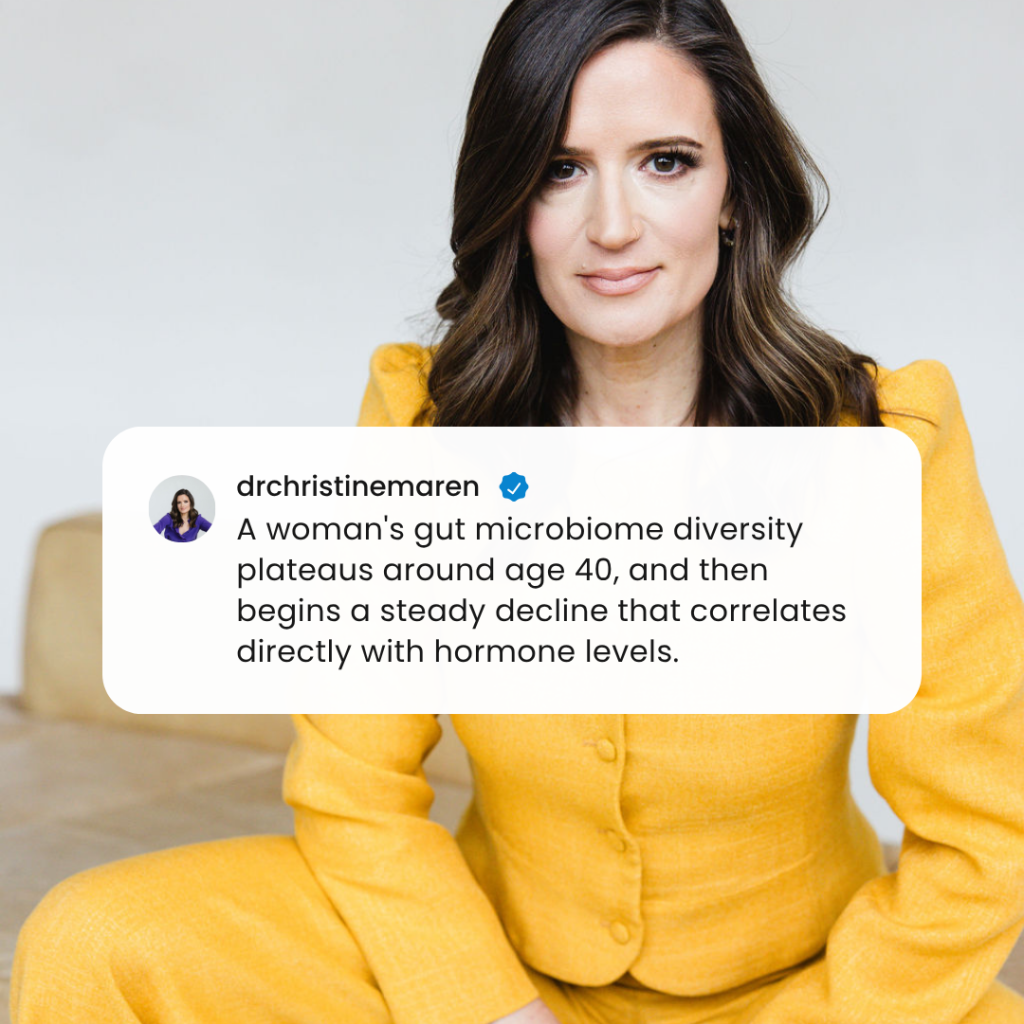
Groundbreaking research has revealed something remarkable: a woman's gut microbiome diversity plateaus around age 40, and then begins a steady decline that correlates directly with hormone levels.7
This isn't just a minor change, it's a fundamental restructuring of your inner ecosystem.
Perhaps most fascinating is what happens during menopause. Studies show that as estrogen and progesterone decline, a woman's gut microbiome increasingly resembles a male gut microbiome.
This is significant because sexual dimorphism (biological differences between males and females) normally creates distinct microbiome patterns throughout life, until menopause effectively erases many of these differences. 8
Think about that for a moment: the microbial community that's been with you your entire female life transforms into something completely different as you transition through perimenopause.
Declining Hormones Disrupt Microbiome Diversity
The gut microbiome relies heavily on reproductive hormones to maintain intestinal integrity and robust microbiome diversity.
As these hormones fluctuate and decline, several cascading effects occur:
1. Loss of keystone bacteria: Beneficial estrogen-dependent bacteria like certain Lactobacillus and Bifidobacteria species decline by 30-50%
2. Opportunistic overgrowth: With reduced competition, potentially problematic bacteria flourish
3. Dysbiosis (imbalance of gut bacteria) development: The balance shifts toward a less favorable bacterial composition
4. Reduced metabolic function: Bacteria that help process nutrients and produce beneficial compounds diminish
These shifts don’t just affect the gut. The oral and urogenital microbiomes are also impacted during perimenopause, leading to issues like gum disease, UTIs, and vaginal dryness.9To learn more check out Benefits of Vaginal Estrogen: A Key to Women’s Genitourinary Health and Libido at Any Age
We’ve established how perimenopause dramatically alters the microbiome—but what’s truly fascinating is how this sets off a chain reaction affecting three critical, often-overlooked systems.
These are the surprising connections you need to understand:
1. Estrogen and Intestinal Permeability: The Critical Connection
One of the most important takeaways from this article is that estradiol directly supports gut barrier integrity. Estrogen receptors in the intestinal lining help regulate tight junction proteins that keep the gut barrier intact. 10 11
In plain English: Estrogen protects against leaky gut.
This is so important to grasp because, as estrogen levels decline in perimenopause and menopause, the gut barrier becomes more permeable, which is one more reason I'm a strong advocate for HRT during this transition.
As estrogen declines, the gut barrier becomes more permeable—triggering systemic inflammation and compounding perimenopausal symptoms. This is a key reason I'm a strong advocate for HRT as part of a gut-healing strategy during this transition.
2. The Histamine-Hormone Connection
Have you noticed seasonal allergies, itchy skin, food sensitivities, or hives ramping up in perimenopause?
Fluctuations in estrogen and dips in progesterone can destabilize mast cells, immune cells that store and release histamine.12 13
Since mast cells line the gut (along with the bulk of the immune system), this dysregulation can impact gut health and trigger full-body symptoms:14 15
- Headaches and brain fog
- Bloating and abdominal cramping
- Skin reactions and hives
This also explains why you may no longer tolerate that second glass of wine—alcohol is high in histamines.
And because histamine is an excitatory neurotransmitter, it can also worsen anxiety, insomnia, and heart palpitations in midlife.
3. Hydrogen Sulfide Overgrowth
Hydrogen sulfide is a gas produced by certain gut bacteria, and some of it is beneficial.
But in excess, it damages intestinal epithelial cells, increases gut permeability, and drives inflammation.16
Symptoms of excess hydrogen sulfide and/or dysbiosis include: 17
- Worsening bloating, diarrhea, or IBS-like symptoms
- Gas that smells like rotten eggs
- Increased food sensitivities (especially to sulfur-rich foods like garlic, onions, and cruciferous vegetables)
- Higher inflammation levels contribute to joint pain, fatigue, brain fog, and autoimmune flares
- Greater risk for insulin resistance and metabolic dysfunction
As you’ve just learned, perimenopause sets the stage for microbial imbalance, intestinal permeability, and opportunistic overgrowth—especially hydrogen sulfide-producing bacteria—which explains why so many women develop digestive symptoms seemingly out of nowhere.
Meet The Estrobolome
As discussed previously, the relationship between gut and hormones isn't a one-way street. The gut microbiome plays a critical role in regulating hormone levels.
To understand this better, let’s zoom out and look at the three phases of estrogen metabolism:
Phase 1: Liver Transformation
First, your liver converts active estrogens (like estradiol) into metabolites through a process called hydroxylation. These metabolites can be beneficial (like 2-hydroxyestrone) or potentially harmful (like 16-hydroxyestrone and 4-hydroxyestrone) depending on various factors.
Phase 2: Conjugation
Next, these metabolites undergo conjugation, which makes them water-soluble for elimination.
This phase is influenced by nutrition, methylation capacity, and genetic variations (like COMT, GST, and MTHFR).
Phase 3: Elimination via the Gut
Conjugated estrogens are excreted via bile into the intestines. This is where your gut microbiome takes center stage. Healthy, regular bowel movements are essential in this phase. If you’re constipated, these conjugated estrogens can get reabsorbed into circulation, disrupting hormone balance.
This is exactly why gut health isn’t just about digestion— it’s fundamental to balanced hormones during perimenopause.
The Critical Role of The Estrobolome and Beta-Glucuronidase in Hormonal Homeostasis
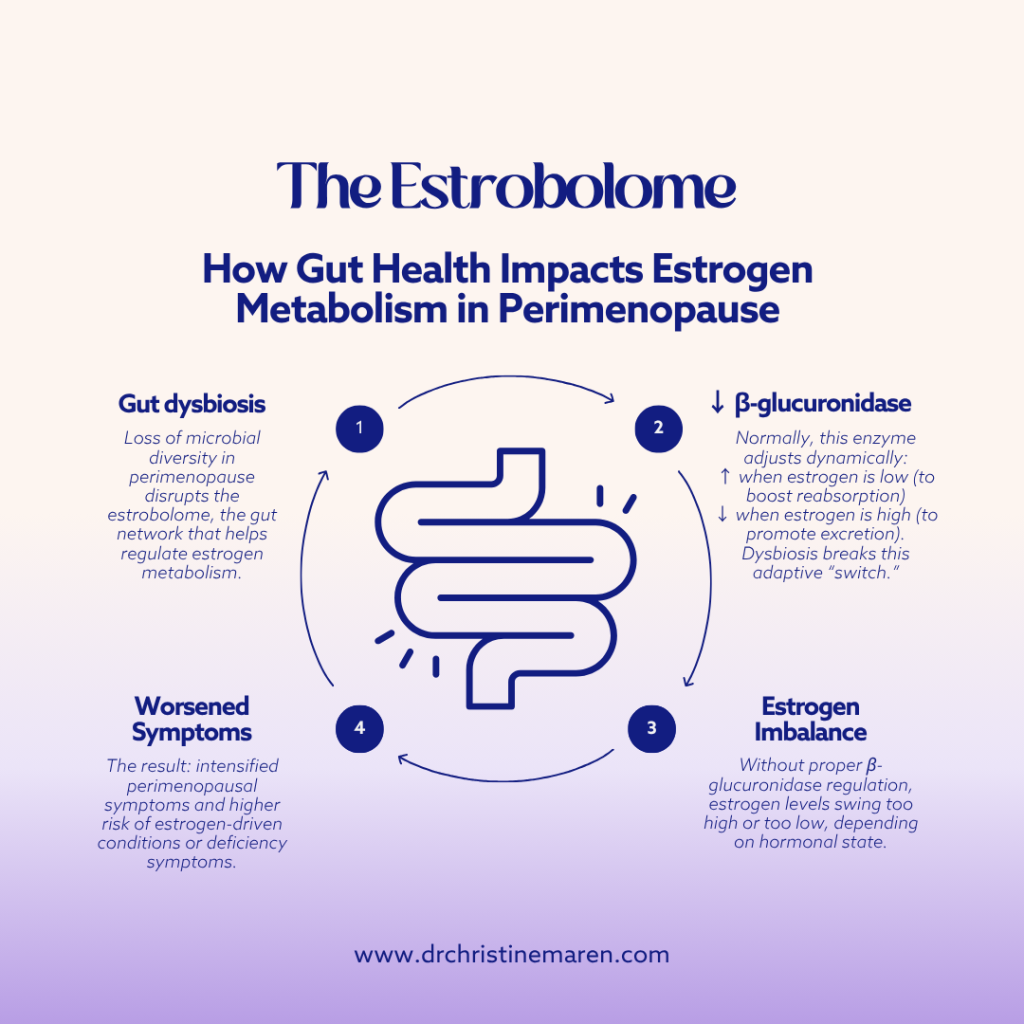
The estrobolome is the microbiome’s specialized unit for handling estrogen. In other words, it’s the subset of gut bacteria responsible for metabolizing and regulating estrogen levels.
The estrobolome regulates estrogens through secretion of an enzyme called beta-glucuronidase, which deconjugates estrogens into their active forms— essentially unlocking them so they can be reabsorbed into the bloodstream rather than eliminated.
We need a healthy estrobolome to support optimal hormonal function—from the reproductive years through menopause. A balanced gut microbiome helps regulate beta-glucuronidase activity and, by extension, estrogen levels.18
But when the gut is out of balance—due to infections, antibiotic use, poor diet, or dysbiosis (overgrowth of "bad" bacteria)—this delicate system is disrupted. The result? A hormonal storm.
- When beta-glucuronidase activity is too high, it can lead to excess estrogen recirculation, potentially contributing to estrogen-driven conditions like endometriosis and endometrial cancer.
- When beta-glucuronidase activity is too low, it may accelerate estrogen elimination, worsening symptoms of estrogen deficiency commonly seen in perimenopause and menopause.
Ultimately, beta-glucuronidase is meant to protect us. But when its regulation is compromised, we lose hormonal equilibrium—leading to either estrogen excess or deficiency, both of which drive symptoms and disease.
Downstream Effects of Gut Dysbiosis During Perimenopause
We’ve discussed how hormones influence the microbiome—and how the microbiome, in turn, regulates hormone balance. But why does this matter?
If you’ve followed me for a while, you know that gut health drives inflammation, and chronic inflammation drives nearly every modern disease—from autoimmunity to mental health. During perimenopause, disruptions in gut health can unmask this cascade.
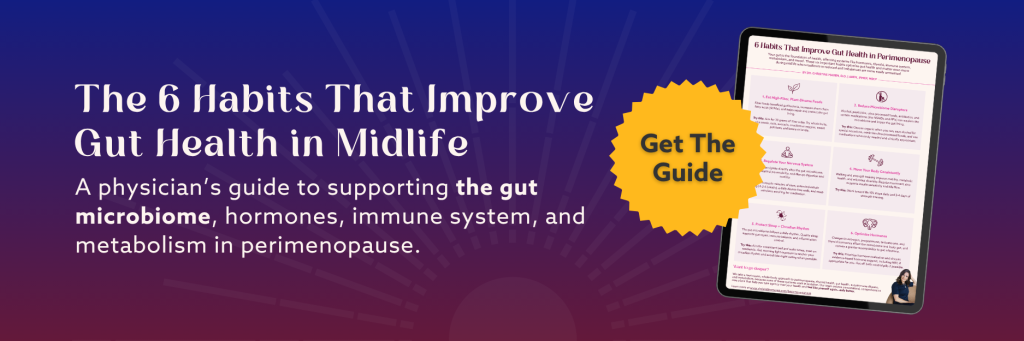
Here are a few key downstream impacts:
1. Autoimmune Disease
Perimenopause is a known trigger for autoimmune conditions. Many women carry latent autoimmune tendencies for years, and the hormonal shifts of midlife provide the final push—that’s the unmasking effect in action. 19
Read more in: A Functional Medicine Approach to Autoimmune Disease.
2. Thyroid Function
Roughly 20% of T4 to T3 conversion occurs in the gut.
Dysbiosis disrupts this process and promotes systemic inflammation, which further inhibits thyroid function. Sluggish thyroid, in turn, slows gut motility—creating a vicious cycle.20
Read more in: A Functional Medicine Approach to Hashimoto's Thyroiditis and Hypothyroidism & The Thyroid-Gut Connection
3. Weight Gain
It’s well-established that the microbiome influences metabolism, insulin sensitivity, fat storage, and obesity risk.21 Our gut bacteria significantly influence how we extract and store calories from food and impact key metabolic hormones like insulin, leptin, and ghrelin. 22 23
When dysbiosis develops, inflammatory signals from a leaky gut promote insulin resistance and fat storage, while decreased short-chain fatty acid production affects energy metabolism.
Read more in: How to Lose Weight in Your 40s (and beyond)
4. Mood Changes
The connection between the gut and brain, known as the gut-brain-axis,24is well-established with about 95% of serotonin produced in the gut.25
Researchers now understand that microbiome imbalance affects neurotransmitter function, potentially contributing to the mood swings, anxiety, and depression common in perimenopause.
As discussed in A Woman’s Guide to Perimenopause Part II: The Truth About HRT & Bioidentical Hormones, the first line of treatment for depression in perimenopause is HRT, NOT SSRIs.
The Bottom Line
Isn’t it empowering to see how all this opens up a whole new world for how we prevent and treat perimenopausal and menopausal symptoms?
As I’ve said before, I’m a big advocate for HRT, but not without addressing the gut, which has always been foundational in functional medicine.
Breaking the Cycle: How To Optimize The Gut-Hormone Axis During Perimenopause & Menopause
The gut-hormone connection in perimenopause can create either a vicious cycle of worsening symptoms or a positive cycle of improving health.
Every day, I work with women to help them achieve the latter: a joyful and empowering perimenopause journey that leads them to their highest and most authentic selves.
Because let’s face it, you can’t fulfill your purpose, connect with your partner or family, and enjoy the kick-ass years of your 40s and 50s, when you don’t feel like yourself.
Need Help Putting the Perimenopause Puzzle Together?
If you’re reading this article, chances are you haven’t found the answers you need to address perimenopausal or menopausal symptoms.
If so, I invite you to learn more about my approach.
As a functional medicine physician specializing in a root cause approach to women's health and hormones, I help women fix their gut health and optimize their hormones using three pillars: root cause resolution, hormone optimization, and five foundational habits for building resilience.
As you’ve just learned, it’s all connected—gut, hormones, immune function, metabolism—and so is our approach.
If you’re ready to say buh-bye to suffering, apply to work with me.
For everyone else, stay connected by signing up for my newsletter and following me on social for more empowering, evidence-based integrative perimenopause and menopause tips and advice.
References
- https://pmc.ncbi.nlm.nih.gov/articles/PMC10416750/
- https://pubmed.ncbi.nlm.nih.gov/28778332/
- https://pmc.ncbi.nlm.nih.gov/articles/PMC9379122/
- https://pmc.ncbi.nlm.nih.gov/articles/PMC9239235/
- https://pmc.ncbi.nlm.nih.gov/articles/PMC10047399/
- https://www.nature.com/articles/s44294-024-00050-y
- https://pubmed.ncbi.nlm.nih.gov/28778332/
- https://pmc.ncbi.nlm.nih.gov/articles/PMC9379122/
- https://pmc.ncbi.nlm.nih.gov/articles/PMC10047399/
- https://pubmed.ncbi.nlm.nih.gov/21252046/
- https://pmc.ncbi.nlm.nih.gov/articles/PMC9520828/
- https://pubmed.ncbi.nlm.nih.gov/8147232/
- https://pubmed.ncbi.nlm.nih.gov/25973435/
- https://med.virginia.edu/ginutrition/wp-content/uploads/sites/199/2020/06/Mast-Cell-Activation-Syndrome-2-June-2020.pdf
- https://pmc.ncbi.nlm.nih.gov/articles/PMC6407111/
- https://pmc.ncbi.nlm.nih.gov/articles/PMC10047399/
- https://pmc.ncbi.nlm.nih.gov/articles/PMC10047399/
- https://pmc.ncbi.nlm.nih.gov/articles/PMC10416750/
- https://pubmed.ncbi.nlm.nih.gov/40117049/
- https://pmc.ncbi.nlm.nih.gov/articles/PMC7353203/
- https://pmc.ncbi.nlm.nih.gov/articles/PMC10368799/
- https://www.ncbi.nlm.nih.gov/books/NBK154098/
- https://pmc.ncbi.nlm.nih.gov/articles/PMC3601187/
- https://pmc.ncbi.nlm.nih.gov/articles/PMC8263213/
- https://pubmed.ncbi.nlm.nih.gov/29909048/