

Hormonal Changes in Perimenopause: How Estrogen, Progesterone & Testosterone Shift
Published On: September 14, 2026

Also in this Series
- Perimenopause vs. Menopause: What's the Difference?
- What Factors Affect Age of Onset for Perimenopause?
- Is There a Blood Test for Perimenopause?
- Hormonal Changes in Perimenopause: How Estrogen, Progesterone & Testosterone Shift
- Early Perimenopause Symptoms: 10 Signs You Shouldn't Ignore in Your 30s and 40s
3 AM awakenings, brain fog, weight gain, mood swings, anxiety, low libido, itchy skin… hormonal fluctuations can cause a lot of mischief during perimenopause!
But have you ever wondered exactly what is going on with these hormonal swings?
If so, you’re in the right place. Here, we’ll examine what happens with your hormones during perimenopause. Specifically, we’ll focus on changing patterns of progesterone, estrogen, and testosterone, and why certain symptoms occur during perimenopause.
In this article:
- Are hormonal changes common in perimenopause?
- How do hormones change in perimenopause?
- Why do hormonal changes happen?
- What hormones change during perimenopause?
- Progesterone and Perimenopause
- Estrogen and Perimenopause
- Testosterone and Perimenopause
- Hormonal Changes by Type
Are Hormonal Changes Common In Perimenopause?
As I often say, perimenopause is about so much more than hormones. But hormonal changes are a defining feature of this stage of life.
Perimenopause is one of three major hormonal transitions in a woman’s life (the other two are puberty and pregnancy).
Although we’ve gotten pretty good at prepping young girls for puberty, and we talk a lot about pregnancy, most of us have no clue or are misinformed about what’s going on in our bodies during perimenopause (and we could certainly use more research!).
But there’s a lot we do know, and I have a lot of experience working with patients and navigating this stage of life myself.
I’m on a mission to change the way women experience midlife, because with the right support, it can be a beautiful experience.
So let’s do this!
How Do Hormones Change In Perimenopause?
Hormonal changes during midlife are often misunderstood because they do not usually follow a linear pattern.
As ovarian function becomes less consistent, ovulation may occur in some months and not others. This leads to shifting patterns of progesterone and wide fluctuations in estrogen, sometimes surging high before trending lower.
In perimenopause, it’s this instability, not just hormone deficiency, that drives many symptoms related to sleep, mood, energy, focus, metabolism, and changing bleeding patterns.
But hormone levels are only part of the story. How hormones affect you also depends on their bioavailability, the sensitivity of hormone receptors, and how different hormonal signals interact with one another.
I’ve used the analogy of a symphony to describe hormones because they function as an interconnected system. Just as a symphony depends on different instruments playing together and responding to the conductor, the endocrine system depends on coordinated communication between the brain, ovaries, adrenal glands, thyroid, and other tissues.
When that coordination becomes less predictable, the result can feel a lot like an orchestra that has lost its rhythm.
The key takeaway is that hormone function is about much more than a single hormone level. It reflects hormone production, bioavailability, receptor sensitivity, and the way these signals interact with one another.
Why Do Hormonal Changes Happen?
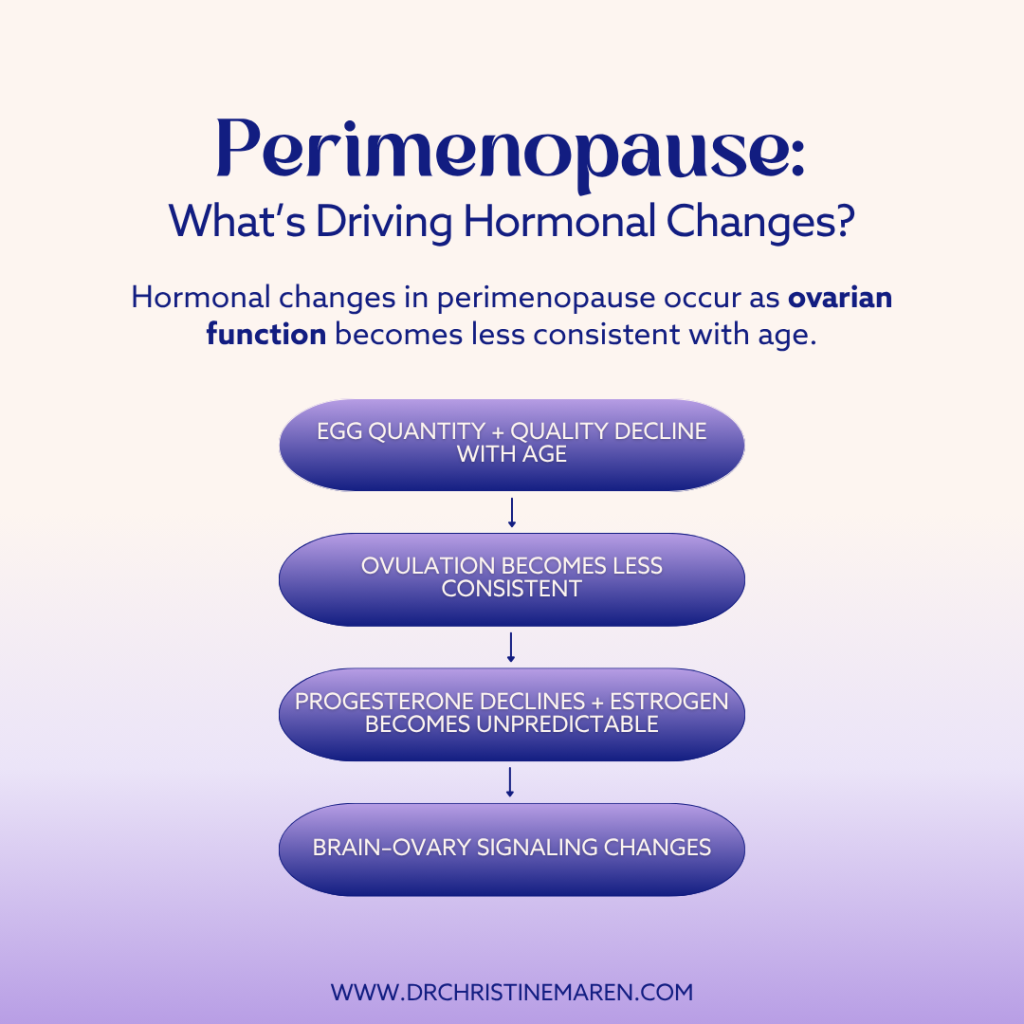
Hormonal changes in perimenopause occur because:
- Egg quality and quantity decline: You are born with all your eggs. As you age, you have fewer eggs left, and their quality drops.
- Ovulation is less consistent: As follicle development becomes less predictable, ovulation may be delayed, irregular, or skipped altogether.
- Ovaries make less hormone: As ovulation becomes less consistent, progesterone production becomes less reliable and often declines first. Over time, ovarian production of estrogen and testosterone also declines.
Why Do Estrogen Levels Become So Unpredictable During Perimenopause?
Most women understand that estrogen levels begin dropping during perimenopause, which does happen, but estrogen levels can also surge.
This is because communication between the hypothalamus, pituitary gland, and ovaries becomes less reliable during perimenopause. Remember my symphony analogy? The pituitary gland continues to release follicle-stimulating hormone (FSH) to stimulate the ovaries, but as ovarian responsiveness and feedback become less predictable, FSH levels rise. At times, this increased stimulation can produce surges of estrogen.
Many women also experience something called luteal-out-of-phase (LOOP) events, when a new follicle begins developing too early, during the luteal phase of the previous cycle. This can trigger an unexpected surge in estrogen and cause a short cycle or breakthrough bleeding that seems to arrive only two weeks after the last period.
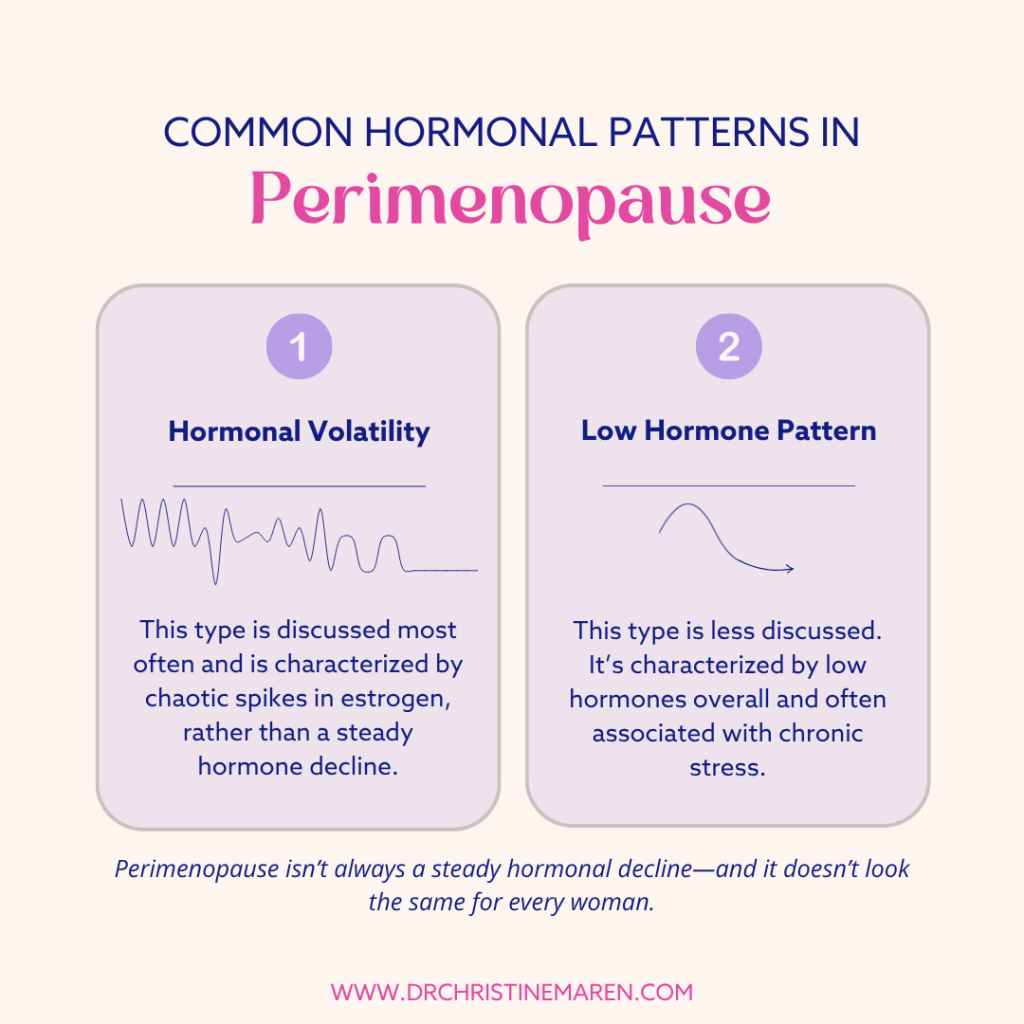
All that said, not every woman experiences the “rollercoaster” of perimenopause and chaotic spikes in estrogen.
Clinically, I’ve observed another common pattern. Rather than dramatic hormonal swings, she has low hormones overall, like a phone battery at 5%. She tends to have chronic stress and often has low digestive enzymes, low fasting insulin, and sometimes low thyroid function. I see this pattern most often in women who are under-fueled or physiologically depleted, which overlaps with HPA axis dysfunction. (I know this patient well because I was one of them!)
Now that you understand how hormones work, we’ll discuss progesterone, estrogens, and testosterone in relation to perimenopause.
What Hormones Change During Perimenopause?
We’ve talked a lot about estrogen changing during perimenopause, which is real. But progesterone is also a major part of the story. As ovulation becomes less consistent, progesterone production often declines. Testosterone, which is not always on the radar, may also decline during this transition.
And critically, it’s important to understand that hormones don’t act in isolation. The balance between estrogen and progesterone matters deeply.1
Being aware of these broader hormonal patterns is empowering, as it helps us understand what’s likely happening in our bodies so we can navigate the perimenopause and menopause seasons with clarity and intention.
Let’s explore progesterone, estrogen, and testosterone in more depth. Or if you want to fast-forward, you can take my free Hormone Clarity Quiz to help you identify the hormonal patterns you’re experiencing right now.
Progesterone and Perimenopause
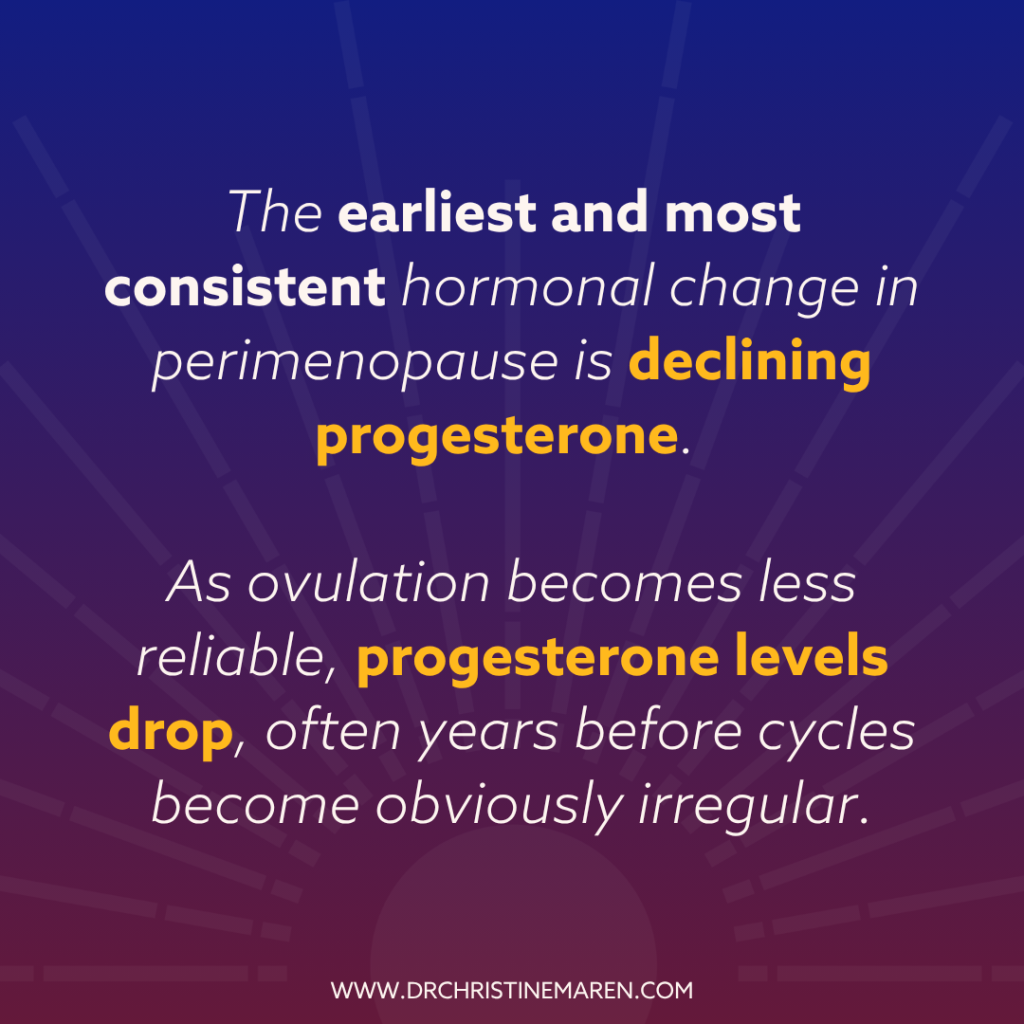
One of the earliest hormonal changes in perimenopause is less consistent progesterone production, largely due to changes in ovulation.2
As progesterone declines, some women experience heavy and/or more painful periods. This is because progesterone counteracts estrogen-driven proliferation of the endometrium (the uterine lining).3
Progesterone is produced after ovulation during the luteal phase, the second half of the menstrual cycle from ovulation until menstruation. In early perimenopause, the luteal phase can become shorter or progesterone production may be lower, even if ovulation occurs. This can lead to shorter cycles and periods that arrive earlier than expected (i.e. every 21-25 days instead of every 28-32 days).
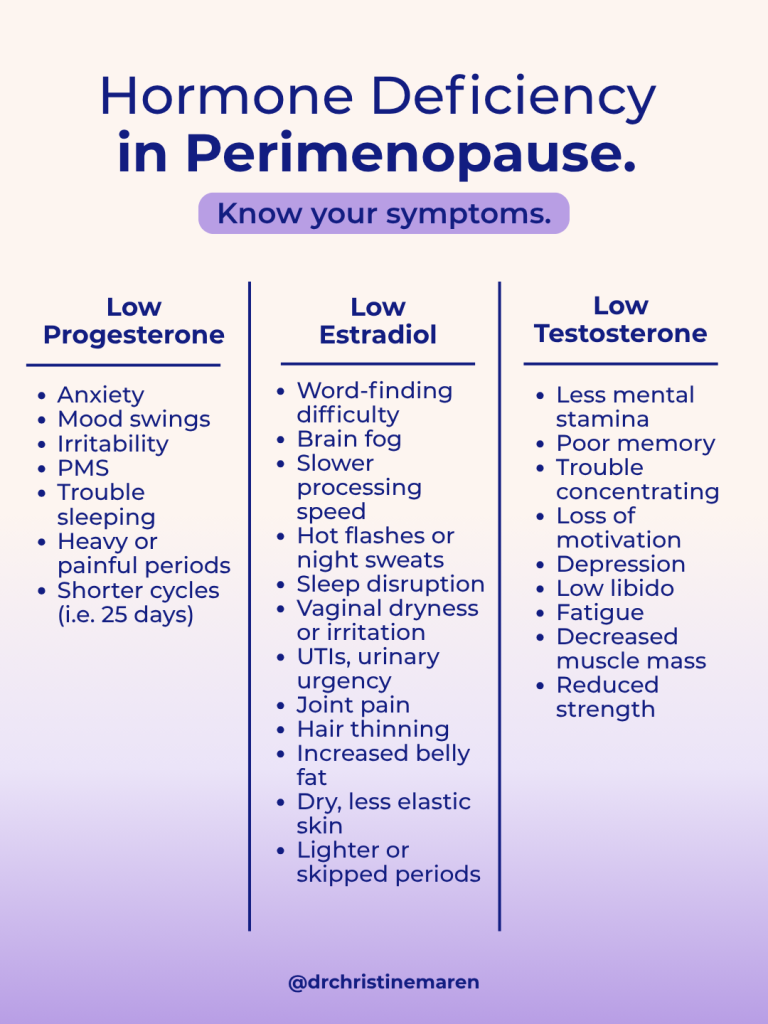
Common symptoms of low progesterone in perimenopause can include:
- Anxiety
- Mood swings
- Irritability
- PMS
- Trouble sleeping
- Heavy or painful periods
- Shorter cycles
Estrogen and Perimenopause
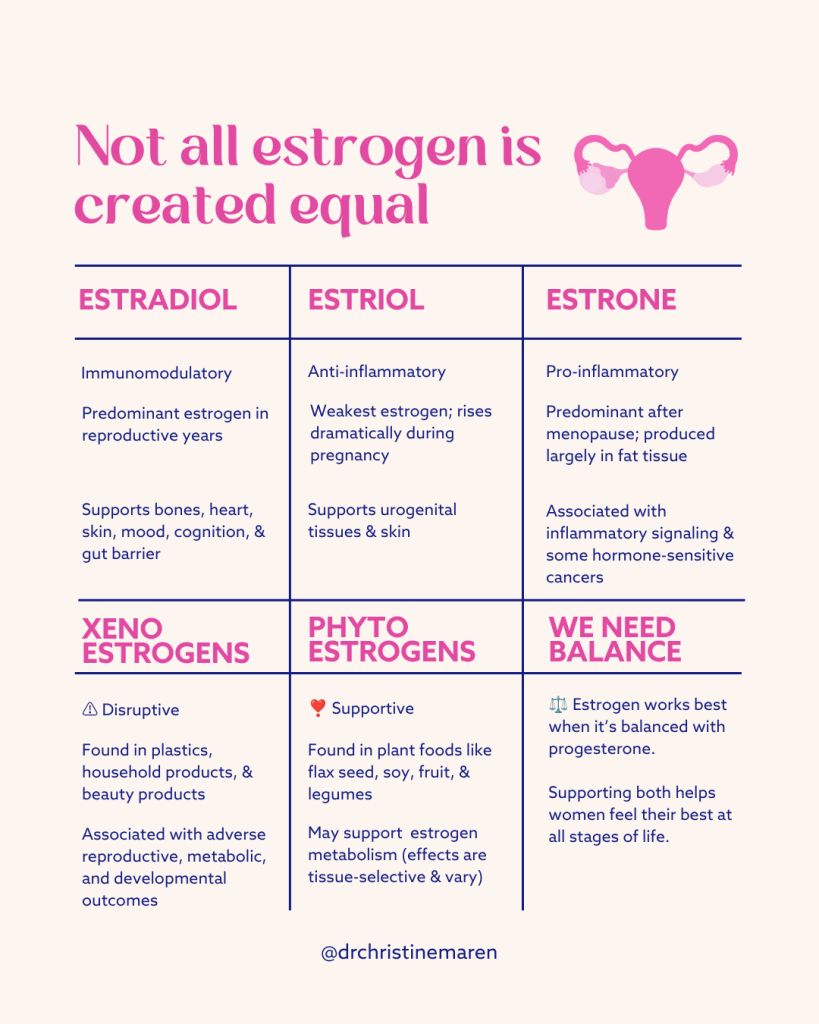
Now onto the most-talked-about hormone in perimenopause: estrogen! Estrogen is actually a collective term that refers to a group of related hormones called estrone (E1), estradiol (E2), and estriol (E3).
Let’s first unpack these in more detail:
Estrone is primarily produced in the ovaries and in fat tissue. It is considered a weaker form of estrogen and becomes more dominant after menopause when estradiol levels decline. Estrone has pro-inflammatory effects, especially when present at higher levels relative to estradiol.
Estradiol is queen! She is the most potent form of estrogen and plays a crucial role in regulating the menstrual cycle and supporting bone density, cardiovascular health, skin elasticity, mood, cognition, mental health, and more. Estradiol is also immunomodulatory, which means it acts like a volume knob for your immune system and can increase or decrease inflammation depending on what your body needs.
Estriol is the weakest of the three estrogens and has anti-inflammatory effects. It may also provide beneficial effects in certain tissues, including the urogenital tract and skin. My favorite application is for aesthetic purposes, as topical estriol has been shown to improve skin elasticity and moisture and help with anti-aging.
Recall that during perimenopause, estrogen does not always decline in a straight line. Levels can fluctuate dramatically and sometimes surge before ultimately trending lower as menopause approaches.
It is the balance between estrogen and progesterone that is so important and necessary for health.4
In early perimenopause, these surges in estrogen can create symptoms that mimic low progesterone, such as heavier and/or more painful periods, breast tenderness, and mood swings.
Symptoms can change from month to month, and as estrogen becomes more consistently low, particularly later in the menopausal transition, women tend to experience more of the symptoms of low estrogen.
Symptoms of low estrogen in perimenopause can include:
- Word-finding difficulty
- Brain fog
- Slower processing speed
- Hot flashes or night sweats
- Sleep disruption
- Vaginal dryness or irritation
- Urinary tract infections (UTIs)
- Urinary urgency
- Joint pain
- Hair thinning
- Increased belly fat
- Dry, less elastic skin
- Lighter or skipped periods
Testosterone and Perimenopause
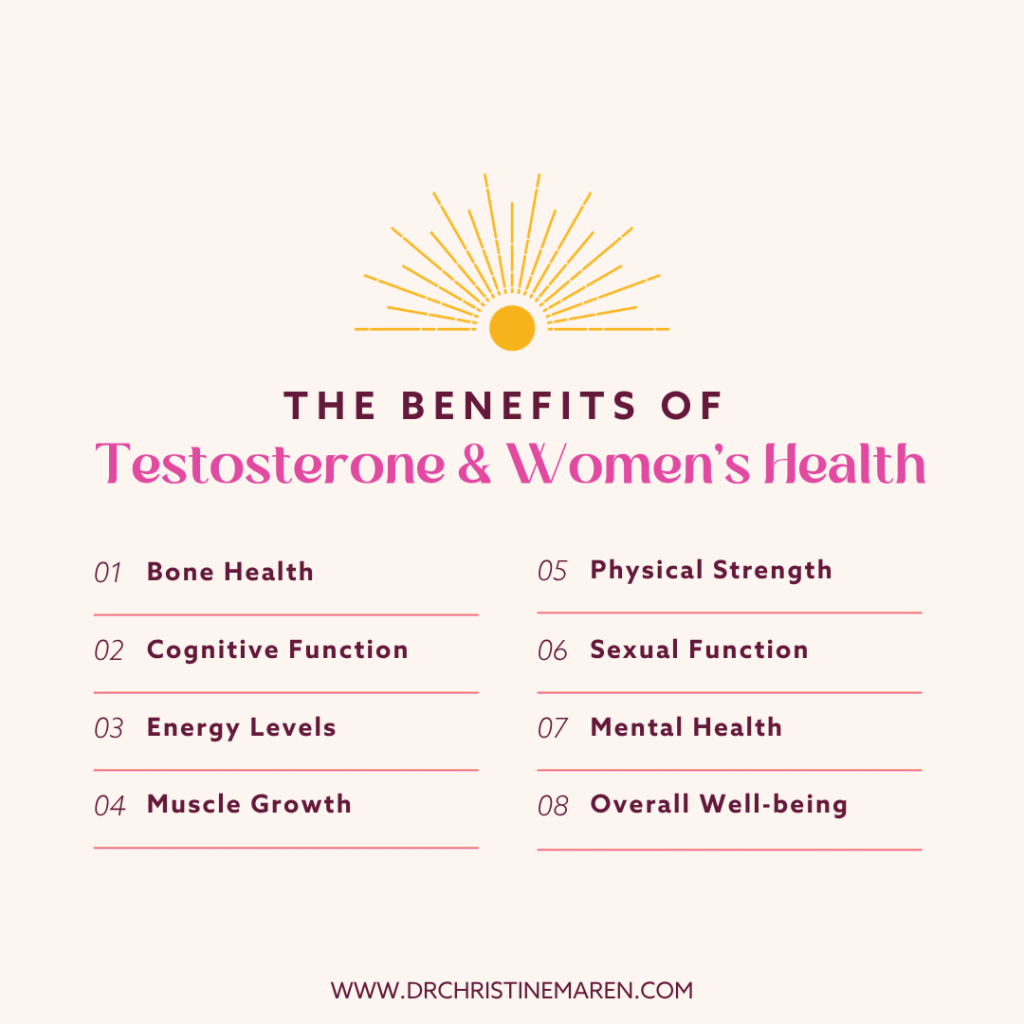
Here’s a little-known fact: women have more circulating testosterone than estrogen! And while we have about 10% the testosterone of men, it’s still super important for our physical, mental, and emotional health.5
Unlike estrogen and progesterone, testosterone is made in both the ovaries and the adrenal glands, so not all women will experience the symptoms of low testosterone.
Factors that may impact testosterone status include adrenal function, metabolic health, inflammation, and chronic stress, which is why symptoms can vary so widely.
Bioavailability also matters. Most testosterone in the bloodstream is bound to proteins, including sex hormone-binding globulin (SHBG). Women with higher SHBG generally have less free testosterone available to tissues, so symptoms can occur even when total testosterone appears adequate.
Symptoms of low testosterone in perimenopause can include:
- Less mental stamina
- Poor memory
- Trouble concentrating
- Loss of motivation
- Depression
- Low libido
- Fatigue
- Decreased muscle mass
- Reduced strength
Bottom line: Testosterone is an important part of the hormonal picture in perimenopause, and both hormone levels and bioavailability matter when considering symptoms.
Related reading: Why HPA Axis Dysfunction May Be More Important Than Gut Health.
Hormonal Changes by Type
Let’s recap what we’ve just covered:
- For many women, perimenopause is characterized by hormonal fluctuation (think roller coaster), not steady hormone decline (like cycling downhill).
- However, some women experience symptoms of low hormones early on.
- Symptoms of perimenopause can begin years before periods become noticeably irregular (often these are neurological ones like word-finding difficulty and mood changes).
- The balance between estrogen and progesterone is an important factor in how women experience symptoms.
- Testosterone may also decline during this time, although not all women experience low testosterone.
- In menopause, symptoms are driven more by hormone deficiency than by hormonal volatility, contributing to changes in bone density, cardiovascular health, body composition, and genitourinary health.
Understanding these hormonal patterns helps explain why the same treatment approach does not work for every woman and why timing matters.
See: Perimenopause Vs. Menopause: What’s The Difference? for more detailed insights on knowing where you’re at and treatment options.
Need Help Navigating Hormonal Changes In Perimenopause?
My team and I specialize in helping women thrive in midlife by taking a whole-person, root cause approach to women’s health and hormones.
Our expertise focuses on the areas that are so often overlooked or dismissed:
- Hormones during perimenopause and menopause
- Gut health
- Hypothyroidism and Hashimoto’s
- Autoimmune conditions
- Weight loss and metabolic health
Click here to learn more about our whole woman-centered approach and how to become a patient.
Looking to gather more information first? Then start with My Hormone Clarity Quiz, a simple stepping stone to help you understand what your body and symptoms may be telling you, and where to go from there.
Perimenopause can, and should, be an empowering time of self-renewal, discovery, and positive change. This is a time to understand your body more deeply, advocate for what you need, and step into the next phase of life with greater clarity and intention.
Symptoms are common during this transition, but that doesn’t mean you have to ignore them or simply slog through. They are signals worth paying attention to. Whether you choose to work with us or another integrative menopause expert, give yourself the gift of excellent care and the support you deserve.
References:
- https://www.sciencedirect.com/science/article/pii/S174067572030013X
- https://www.fertstert.org/article/S0015-0282(15)00042-4/fulltext
- https://www.sciencedirect.com/science/article/pii/S174067572030013X
- https://www.sciencedirect.com/science/article/pii/S174067572030013X
- https://www.sciencedirect.com/science/article/pii/S0378512213000121
Also in this Series
- Perimenopause vs. Menopause: What's the Difference?
- What Factors Affect Age of Onset for Perimenopause?
- Is There a Blood Test for Perimenopause?
- Hormonal Changes in Perimenopause: How Estrogen, Progesterone & Testosterone Shift
- Early Perimenopause Symptoms: 10 Signs You Shouldn't Ignore in Your 30s and 40s