

Is There a Blood Test for Perimenopause?
Published On: September 14, 2026

Also in this Series
- Perimenopause vs. Menopause: What's the Difference?
- What Factors Affect Age of Onset for Perimenopause?
- Is There a Blood Test for Perimenopause?
- Hormonal Changes in Perimenopause: How Estrogen, Progesterone & Testosterone Shift
- Early Perimenopause Symptoms: 10 Signs You Shouldn't Ignore in Your 30s and 40s
Is there a blood test for perimenopause? Yes and no.
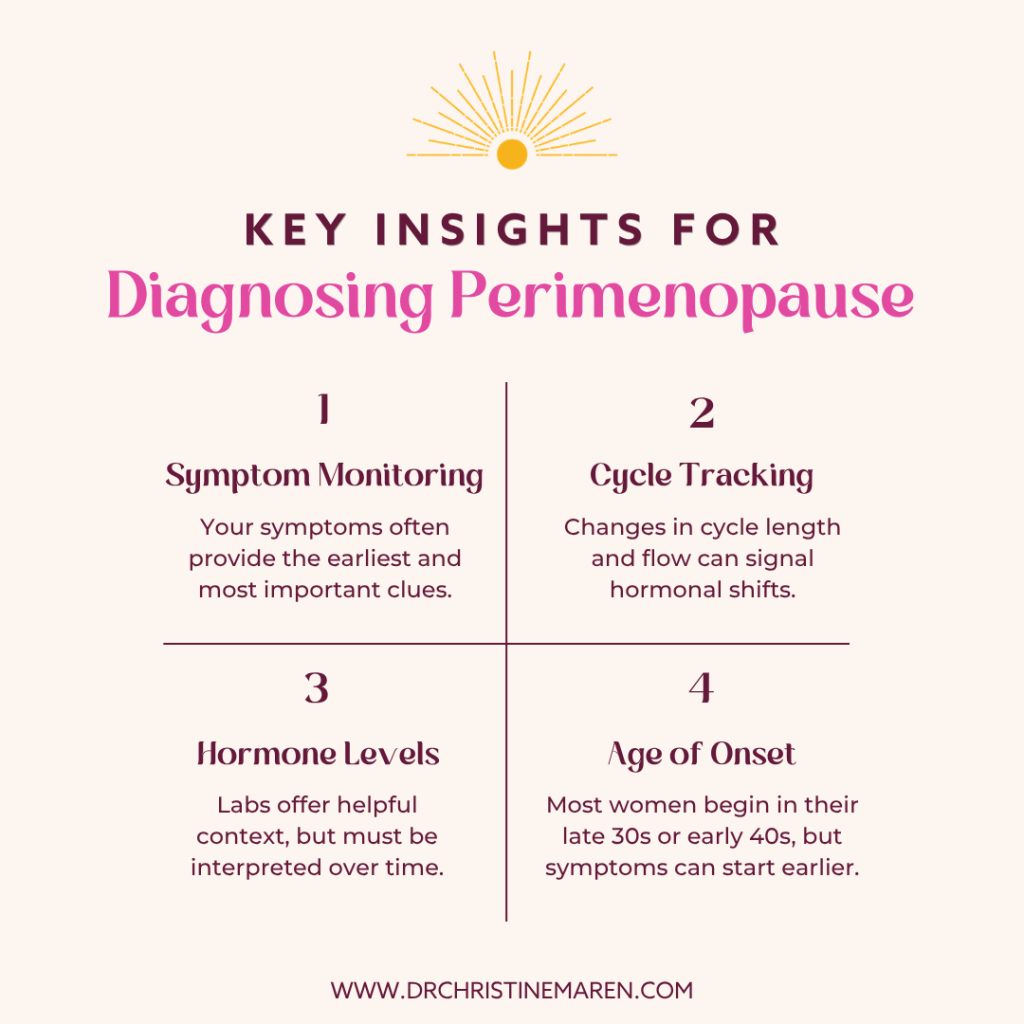
Perimenopause is primarily a diagnosis based on symptoms and cycle tracking.
However, in my (very experienced) opinion, lab testing is an important (and often underutilized) part of the puzzle. There are various tests you can take to measure hormone levels and help identify any other underlying issues that may be causing symptoms.
Curious to learn more? Let’s get into it with my go-to tests for assessing perimenopause status and identifying other health and hormonal issues.
In this article:
- Can a hormone test tell me if I’m in perimenopause?
- Other helpful tests for perimenopause
- Are there any functional medicine tests for perimenopause?
- Can I use hormone testing to track changes over time?
- Do I need a hormone test before I can start HRT?
- Why do some doctors avoid hormone testing during perimenopause?
- Is testing for perimenopause worth it?
Can a Hormone Test Tell Me If I'm in Perimenopause?
Although there is no perfect perimenopause test, there are tests we can and should use to measure hormone levels and rule out other potential issues, like hypothyroidism.
The following is a list of some of the tests I use clinically:
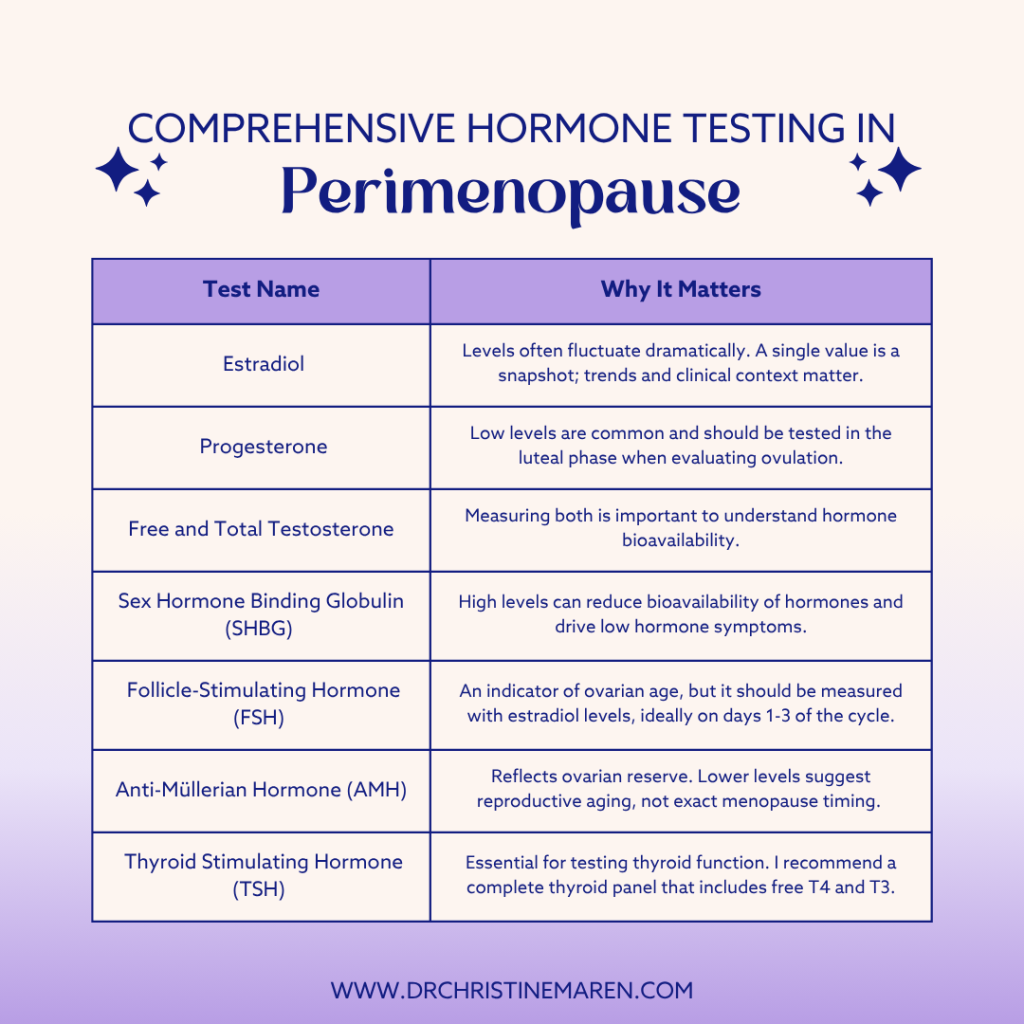
1. Estradiol
Estradiol levels can fluctuate significantly depending on the time of month, so a single test can’t reliably confirm or exclude this transition.
However, it is very helpful to strategically monitor estradiol levels. This usually means testing on days 1-3 of your cycle and again after ovulation (the luteal phase), to get a comprehensive picture.
I also test estradiol after patients start Hormone Replacement Therapy (HRT) to ensure absorption and optimal levels.
2. Progesterone
Low progesterone is extremely common in perimenopause and often precedes a significant estrogen decline.
However, like estradiol, timing is critical.
Progesterone should be tested during the second half of your cycle in the luteal phase.
I also measure progesterone in women who are no longer cycling if they are on HRT.
3. Free and Total Testosterone
Yes, women produce and need testosterone for energy, mood, cognition, muscle mass, and libido! Unlike estrogen, testosterone is produced by both the ovaries and the adrenal glands, so not all women experience a decline in this hormone.
Measuring both free and total testosterone is important because free testosterone tells us what is bioavailable.
Getting testosterone dialed in can be life-changing for some women, so do not miss this test!
4. Sex Hormone Binding Globulin (SHBG)
Testing SHBG helps us understand how bioavailable hormones are.
For example, when SHBG is high, it can bind up free hormone and drive symptoms of low testosterone or low thyroid function even when total levels appear normal.
It is especially important to assess in women with fatigue, low libido, or poor response to hormone therapy.
5. Follicle-Stimulating Hormone (FSH)
FSH is also an indicator of ovarian age, but it should be measured with estradiol levels, ideally on days 1-3 of the cycle for accuracy. Normal/low FSH and high estradiol (over 60–80 pg/mL) is usually a sign of early ovarian aging, indicating your ovarian reserve is likely dropping, causing your body to rush egg production early in the cycle.
High FSH (over 10–12 mIU/mL) and low estradiol can be a sign of advanced ovarian aging, indicating that the brain is shouting loudly (high FSH), but the ovaries are struggling to respond and produce estrogen.
Testing FSH and estradiol is important if premature ovarian failure is suspected, but testing does not have to be restricted to a specific day of the cycle if periods are absent.
6. Anti-Müllerian Hormone (AMH)
Unless you’ve struggled with infertility, you’ve probably never heard of this hormone, but testing it can provide information about remaining egg supply (ovarian reserve) and reproductive aging.
A very low AMH level can suggest that a woman is approaching menopause, but it cannot precisely predict when it will occur.
If a woman in her late 30s or 40s begins missing periods, a low AMH confirms the cause is ovarian aging (perimenopause) rather than secondary issues like high stress, thyroid dysfunction, or extreme weight loss.
Since there is not one perfect test, your doctor or healthcare practitioner may not order all of these tests. Symptom tracking, cycle tracking, and age offer the best insights for diagnosing perimenopause.
However, I remain a strong advocate for testing and data since it offers another important window to your health.
Other Helpful Tests for Perimenopause
This may seem like a lot of tests. However, if precision, individualized care, and root cause resolution are the goals, I recommend the following additional labs.
1. Thyroid Function Tests
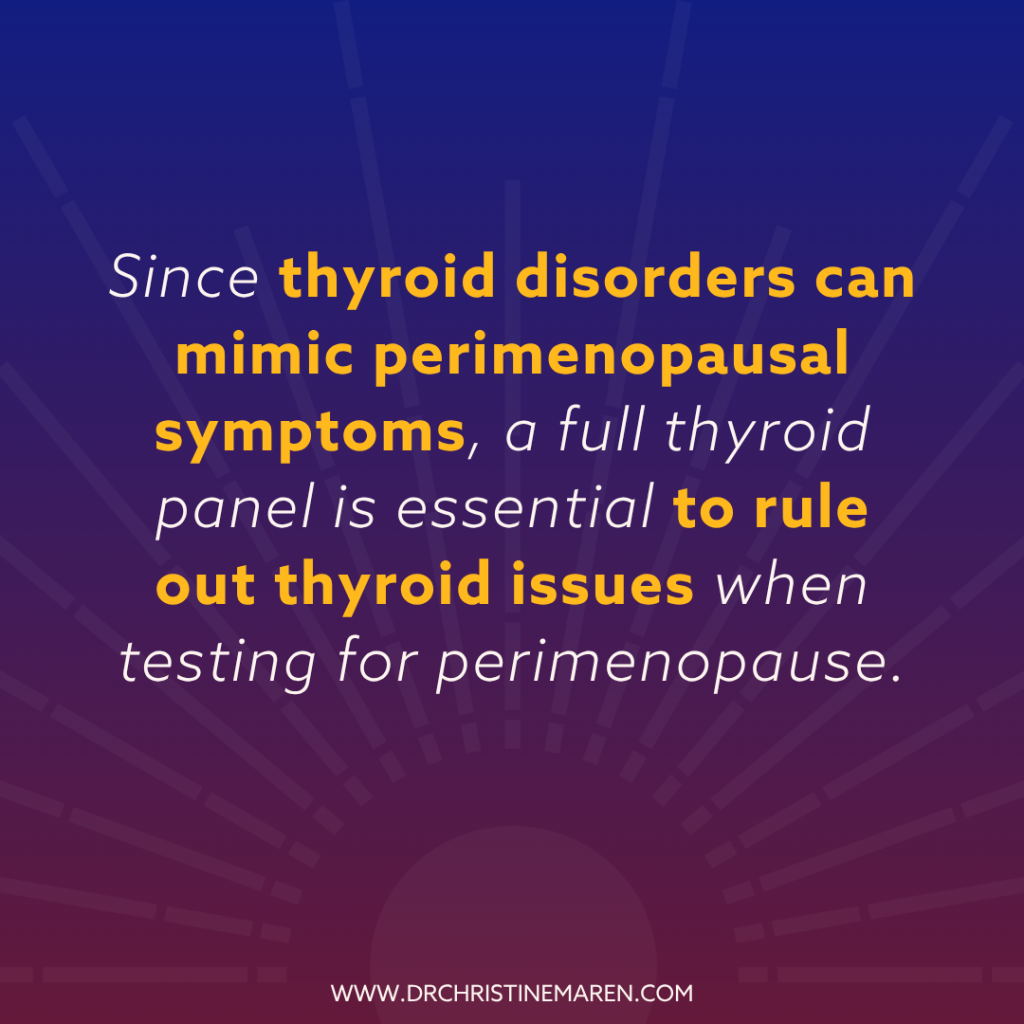
Since thyroid disorders can mimic perimenopausal symptoms, a comprehensive thyroid panel (TSH, free T4, free T3, and thyroid antibodies) is essential to evaluate thyroid disease and Hashimoto’s.
2: Hemoglobin A1C (HbA1C) and Fasting Insulin
Hemoglobin A1c (HbA1c) is a blood test that measures the average blood glucose levels over the past 3 months.
A high HbA1C may indicate pre-diabetes or diabetes, and is also associated with an increased risk of Alzheimer’s disease and cancer.
Metabolic health affects everything, including perimenopause onset and symptoms, so, in my opinion, keeping on top of HbA1C is crucial.
3. Complete Blood Count (CBC) and Metabolic Panel (CMP)
These are simple tests to screen for things like anemia and liver function, helping evaluate other conditions that might cause overlapping symptoms.
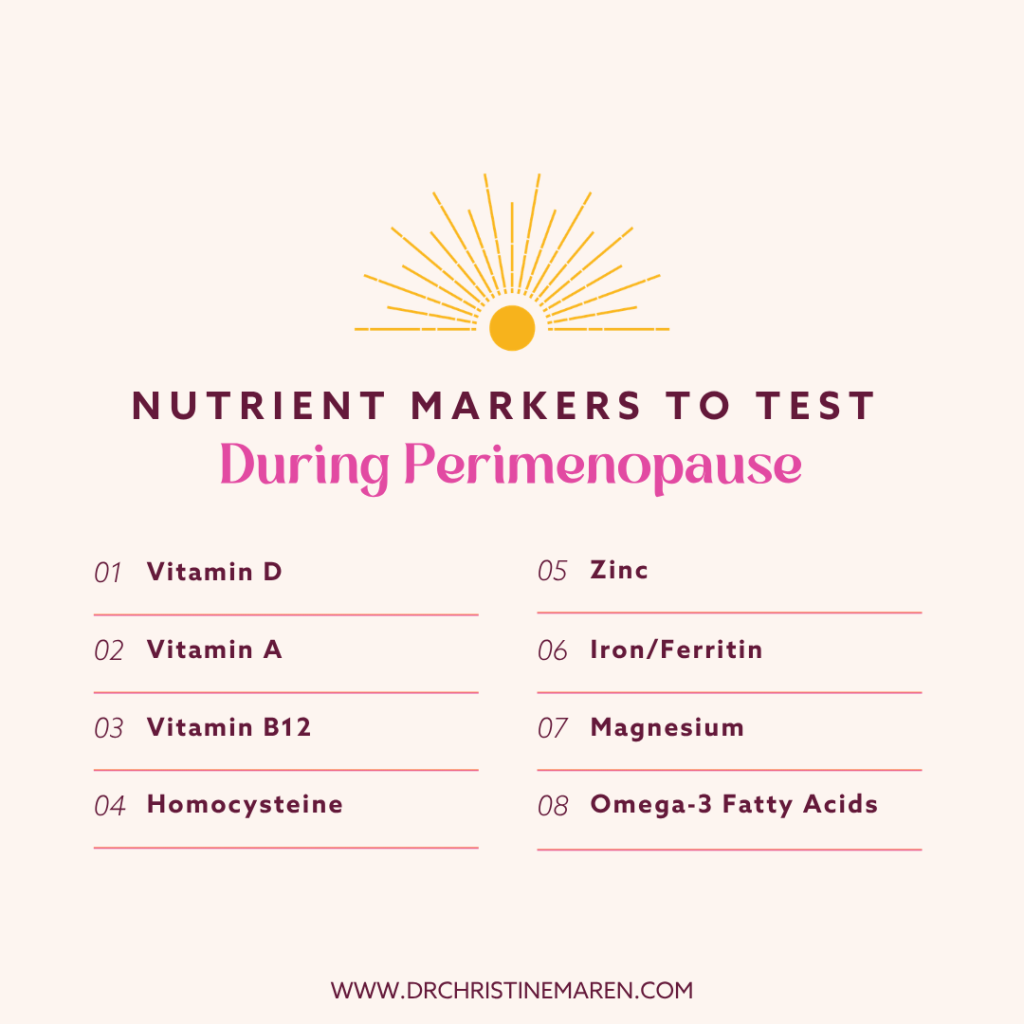
4. Nutrient Markers
Nutrition factors into everything, ladies, including hormonal health.
Vitamin and nutritional deficiencies are common and may mimic or exacerbate perimenopausal symptoms such as fatigue, mood swings, and cognitive changes.1
In my practice, this includes testing:
- Iron/Ferritin
- Vitamin D
- Vitamin A
- B12
- Homocysteine
- Zinc
- Magnesium
- Omega-3 fatty acids
Nutrient deficiencies and insufficiencies are also common in post-menopausal women, so I recommend regular testing as we age.
5. hsCRP (high sensitivity C-reactive protein)
Checking hsCRP can be a valuable tool for assessing inflammation and cardiovascular risk.
It can also provide insights into overall health and guide lifestyle and treatment choices aimed at reducing inflammation and its associated risks.
However, because hsCRP is a nonspecific marker, elevated levels should be interpreted in the context of other clinical findings and health assessments.
Are There Any Functional Medicine Tests for Perimenopause?
Yes. Several companies offer at-home urine testing to track your cycle and help assess trends.
One of those is the DUTCH Cycle Map. Another is Mira.
These are urine tests that measure estrogen and progesterone levels throughout the cycle to track the follicular, ovulatory, and luteal phases.
I find them helpful for determining hormone levels and for tracking differences across cycle phases.
The downside is that they take effort, time, and investment, so they’re not always ideal.
Can I Use Hormone Testing to Track Changes Over Time?
Yes, absolutely. And I recommend it! Hormones like estrogen and progesterone bounce up and down wildly during perimenopause. More data points give us an idea of what’s happening, but it’s important to interpret these with context around cycle day and flow.
Do I Need a Hormone Test Before I Can Start HRT?
That is my preference, but it’s not absolutely necessary, except for testosterone. I definitely like to follow levels after we start HRT to be sure we use the right dose and reach goal levels.
Why Do Some Doctors Avoid Hormone Testing During Perimenopause?
Many doctors avoid hormone testing for perimenopause because hormone levels fluctuate day to day and during the cycle.
They argue that symptoms and tracking your cycle are the more accurate indicators, which is true. However, lab testing is a valuable complement and crucial for ruling out coexisting conditions such as thyroid problems and nutrient deficiencies.
The perception is that data and numbers can be misleading and costly. From my perspective, it’s more costly to make decisions without data that can potentially lead to more suffering.
Another reason is that they haven’t been trained to do so, but that doesn’t mean testing isn’t valuable.

Is Testing for Perimenopause Worth it?
Yes, absolutely! It’s usually relatively inexpensive and often covered by insurance. It doesn’t give us all of the answers, but it’s important data to track.
I’ve seen too many women denied testing, and my team and I usually find multiple issues that help explain symptoms.
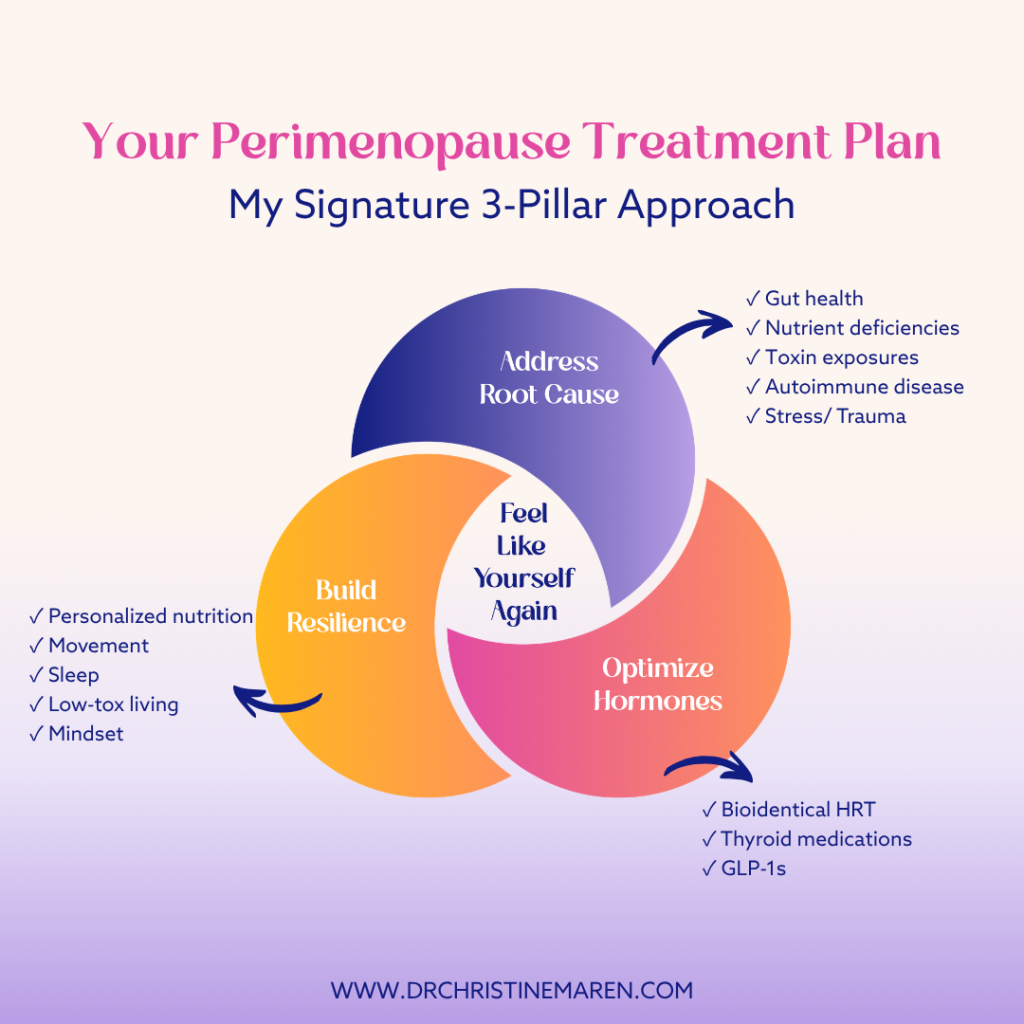
From there, we design a personalized plan following my proven three-pillar method:
- Address root causes such as gut health, nutrient deficiencies, and toxins.
- Optimize hormone levels with precision, using bioidentical HRT, thyroid medications, and/or peptides, as needed.
- Build resilience through personalized nutrition, movement, sleep, and stress recovery strategies.
This is not a one-size-fits-all protocol. This is care that’s truly personalized to your body, your labs, and your life.
Interested in Perimenopause Testing? We can help
Obviously, I’m a big fan of testing for perimenopause and optimizing hormones, so if this sounds like something you need, we’re here to help.
My practice specializes in caring for women in midlife, including addressing hormonal, thyroid, gut health, metabolic, and autoimmune issues.
We take a whole-person, root-cause approach to midlife care and leave no stone unturned.
Click here to learn more about our approach to comprehensive care and how to become a patient.
Not quite ready for testing, but looking for tools to help verify whether your symptoms may be related to perimenopause?
Take My Hormone Clarity Quiz as a first step to understanding what your symptoms may mean, and what to do next.
References:
Also in this Series
- Perimenopause vs. Menopause: What's the Difference?
- What Factors Affect Age of Onset for Perimenopause?
- Is There a Blood Test for Perimenopause?
- Hormonal Changes in Perimenopause: How Estrogen, Progesterone & Testosterone Shift
- Early Perimenopause Symptoms: 10 Signs You Shouldn't Ignore in Your 30s and 40s