

The Functional Medicine Solution for Autoimmune Disease
Published On: January 27, 2026

If you’re reading this article, chances are you have an autoimmune disease or love someone who does.
These chronic conditions, once considered rare, have exploded in the last 30 years. Part of this is due to a better understanding of the over 100 autoimmune diseases in general and their symptoms. Which, up until recently, were too often mislabeled as mental health issues, infections, stress-related, or medically unexplained symptoms (and sadly, this still happens a lot).
But there is more to the story than that.
If you’ve been diagnosed with an autoimmune condition like Hashimoto’s, celiac disease, inflammatory bowel disease, lupus, multiple sclerosis, rheumatoid arthritis, psoriasis, etc. you’ve likely been told some version of the same thing: “You’ll have this disease forever. There’s nothing we can do but try to manage your symptoms with these very expensive and powerful drugs.”
That answer often feels incredibly disappointing, especially if your diagnosis arrives during what should be a vibrant stage of life: early adulthood, new parenthood, perimenopause, menopause, or beyond.
As both a physician and someone who has lived with autoimmune disease, I don’t believe that explanation goes far enough.
Let’s take a closer look at what autoimmune disease really is, why it disproportionately affects women, and what modern functional medicine research tells us about addressing its root causes.
In This Article:
- What is Autoimmune Disease?
- Why Autoimmune Diseased Has Increased So Dramatically
- The Fasano Triad: The Three Root Causes of Autoimmune Disease
- Why Women Are More Likely to Develop Autoimmune Disease
- The Microgenderome: Where Hormones, Gut Health, and Immunity Intersect
- The Link Between Chronic Stress and Autoimmune Disease
- The Functional Medicine Approach to Autoimmune Disease
- Can Autoimmune Disease Go Into Remission?
What Is Autoimmune Disease?
Autoimmune disease occurs when your immune system mistakenly attacks healthy tissue and organs in your body like your thyroid, joints, skin, brain or digestive tract.
Today, autoimmune diseases affect an estimated 1 in 5 Americans, and prevalence continues to rise worldwide. In fact, there are now over 100 recognized autoimmune diseases, many of which are notoriously difficult to diagnose.
Some of the most common include:
- Hashimoto’s Thyroiditis
- Grave’s Disease
- Inflammatory Bowel Disease (Crohn’s, Ulcerative Colitis)
- Celiac Disease
- Rheumatoid Arthritis
- Lupus
- Type 1 Diabetes
- Psoriasis/Psoriatic Arthritis
- Multiple Sclerosis
- Sjögren’s syndrome
Despite the growing number of cases, it’s still very difficult for autoimmune sufferers to get an accurate diagnosis and typically takes years and far too many doctor's visits. Some reasons for this are due to the fact that symptoms can vary significantly from person to person, can change over time and can sometimes overlap with or mimic other conditions. What’s more: There’s no single diagnostic test that confirms all autoimmune disease. Even commonly used screening tools, such as antinuclear antibody (ANA) testing, can miss active disease.
For an accurate diagnosis to be made, three things need to happen: clinical experience, pattern recognition, and deeper investigation. Unfortunately, not all practicing physicians are equally skilled or trained to recognize the signs and run the appropriate tests.
Now, if you’re thinking: “Wait a minute, my immune system is supposed to protect me. Why would it betray me?” Then bravo! You’re already on the right critical thinking path to understanding autoimmune disease.
It’s true that if you have an autoimmune condition your body is damaging its own tissue, which is what causes those unpleasant symptoms like fatigue, rash, achy joints, weight gain, etc. However, it’s important to know that your body has not betrayed you. It’s actually trying to protect you—it’s just that its system has become dysregulated.
The question is why, which we’ll get into in the below section.

If this resonates, there's more.
My newsletter and community are where I share clinical insight, evolving research, and what's helping women feel more like themselves again in midlife.
Why Autoimmune Disease Has Increased So Dramatically
Why and how did your immune system become dysregulated in the first place? Conventional medicine says, “We don’t know why this happens in some people and not others. It may be genetic and/or environmental”. However, the evidence is clear that a specific combination of factors contribute to the formation of autoimmune disease.
In other words: autoimmune disease isn’t random, or even entirely genetic or lifestyle-driven. It results from a combination of factors that affect people differently.
The Fasano Triad: The Three Root Causes of Autoimmune Disease
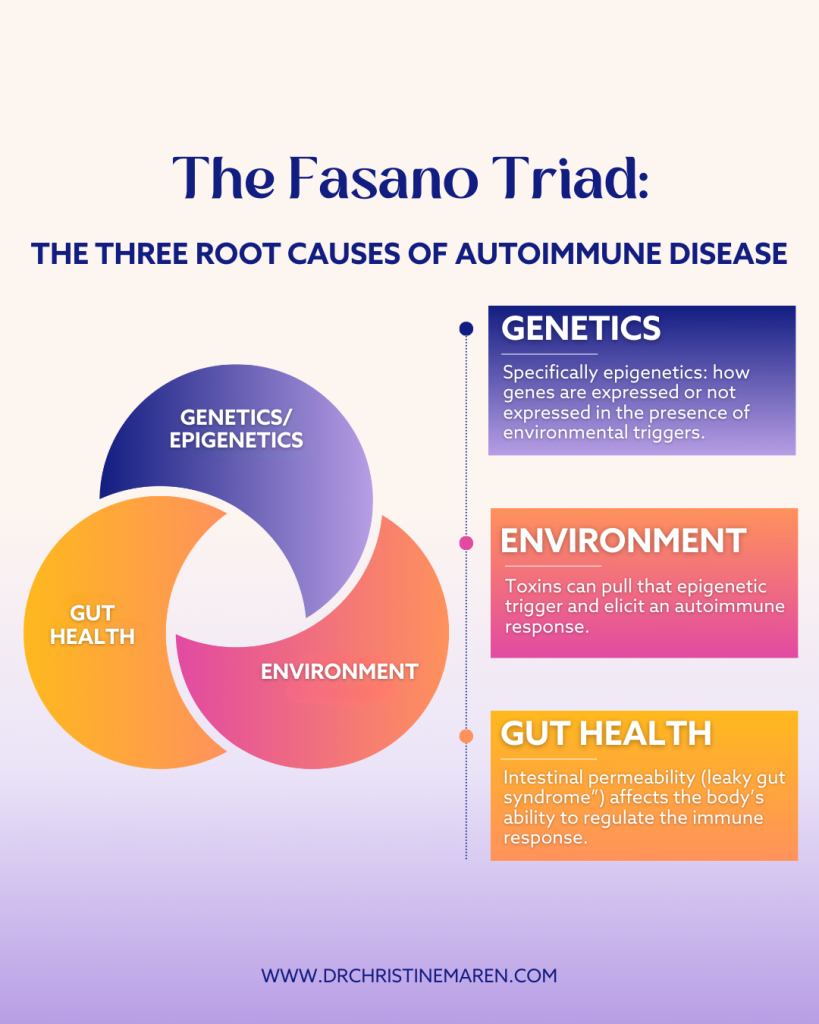
Much of what we now understand about autoimmune disease comes from the work of gastroenterologist and researcher Dr. Alessio Fasano 1. His research helped move autoimmune disease out of the realm of “mystery”; he demonstrated that autoimmune disease doesn’t develop from a single cause, but rather there are three specific factors that need to be present at the same time.
This model, which is often referred to as the Fasano triad, explains why autoimmune disease is neither random nor inevitable, even for people with a strong genetic predisposition.
Here’s a look at these factors individually and in relation to the whole.
#1: Genetics
#2: Environment
#3: Gut Health
1. Genetic Susceptibility
We’ve known for quite some time that genetics play a role in certain autoimmune conditions, such as Hashimoto's, but not every person who has a genetic predisposition will go on to develop an autoimmune condition. In fact, there’s a saying in epigenetics (the field of medicine that studies genetic expression): “Genes load the gun, environment pulls the trigger.” This explains, to some extent, why two people can have the same genetic predisposition toward a disease, yet only one winds up getting sick. In other words, genetics influence risk, but they do not determine destiny.
2. Environmental Triggers
Environmental factors are often what flip the switch on an underlying vulnerability. These triggers can take many forms—everything from infections and chronic stress to mold or mycotoxin exposure, chemical or heavy metal burden, certain medications, food sensitivities, unresolved trauma, or long-term sleep deprivation. In most cases, it’s not one dramatic exposure that leads to autoimmune disease, but rather a slow, cumulative load over time (i.e. the things your body has been managing quietly until it can’t anymore).
That burden tends to hit harder during periods of major physiologic change, when your immune system is already working overtime to adapt. This helps explain why autoimmune conditions so often show up or flare during major transitions including pregnancy, postpartum, perimenopause and menopause. During these periods of immense change, the body’s margin for error is smaller, and environmental stressors that once felt manageable can suddenly have outsized effects.
3. Intestinal Hyperpermeability (Leaky Gut)
The third (and essential) piece of the triad is something known as intestinal hyperpermeability (also referred to as impaired gut barrier function or “leaky gut”).
Dr. Fasano’s research2 showed that when the intestinal barrier is compromised, the immune system is exposed to things it was basically never meant to see. Under healthy conditions, tight junctions between intestinal cells act like a selective gate, allowing nutrients through while keeping potential irritants out. But when those junctions loosen, larger particles from inside the gut can cross into immune territory. In people with genetic susceptibility, that exposure can trigger chronic immune activation and, over time, a loss of immune tolerance.
A key regulator in this process is zonulin—a protein that controls how tightly those intestinal junctions stay closed. Zonulin release can be stimulated by certain microbes and dietary components, including gluten, and higher levels have been linked to increased intestinal permeability and autoimmune disease development.3
This finding was a turning point in autoimmune disease research because it helped explain how environmental factors actually get under the immune system’s skin.
As you can see, this model was pivotal for understanding autoimmune disease, but what it doesn’t fully explain is why autoimmune disease affects women at far higher rates, or why symptoms so often emerge during hormonal transitions. To make sense of that pattern, we have to zoom out beyond the triad itself and look at how hormones, the gut microbiome, and immune signaling intersect, especially during times of major physiological change.
Why Women Are More Likely to Develop Autoimmune Disease
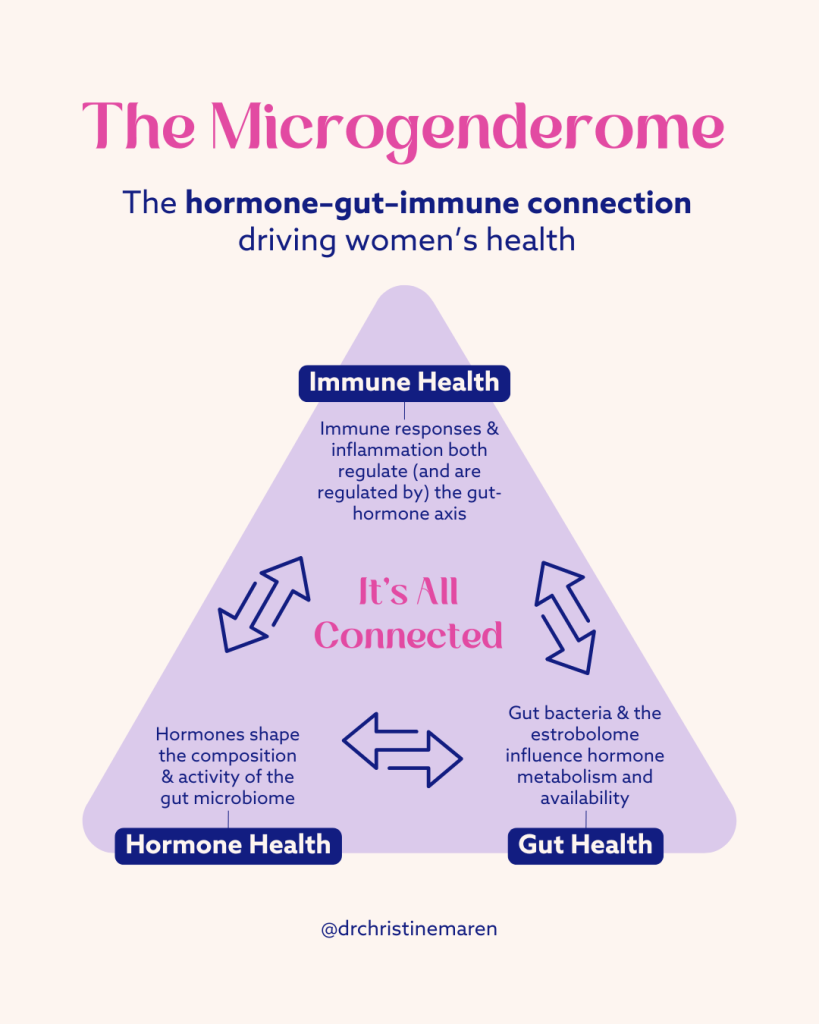
Autoimmune disease affects women far more often than men. In fact, approximately 80–85% of people living with autoimmune disease are women, and many are diagnosed during periods of significant hormonal change.4
In my practice, I see this pattern every day. While we don’t have one single explanation for why this happens, research and clinical experience point to several important factors. Most of them come back to how the female immune system works and how often it’s asked to adapt.
Genetics Increase Risk, but Timing Still Matters
Genetics do play a role in autoimmune disease, including differences related to the X chromosome, but genetics alone don’t explain why autoimmune disease often develops at specific points in life.5
Many women carry genetic susceptibility for years without symptoms, which again points to the importance of timing, particularly during periods of hormonal and immune stress.
If this resonates, there's more.
My newsletter and community are where I share clinical insight, evolving research, and what's helping women feel more like themselves again in midlife.
Women Have a More Responsive Immune System
The female immune system is naturally more adaptive and responsive than the male immune system. This flexibility is essential for pregnancy and reproductive health, as a woman’s immune system must constantly recalibrate to accommodate a growing fetus. But it comes with a trade-off.
As a result, women tend to mount stronger immune and inflammatory responses when the immune system is activated. Over time, repeated immune activation, be it from chronic stress, infections, gut issues or environmental exposures, can increase the risk that immune tolerance breaks down and autoimmune disease develops.
This adaptability makes the female immune system more susceptible and chronically activated to the effects of psychological stress, trauma, sleep deprivation, under-fueling, overtraining, and caregiving (sound familiar?). These demands can push the system toward loss of tolerance and persistent inflammation.
In contrast, the male immune system is generally more stable and less reactive, which may reduce the risk of autoimmune disease but makes men more susceptible to severe infections.
Women Experience Three Distinct Hormonal Transitions
One of the challenges for women is that our hormones change frequently and dramatically over the course of our lives.
Across the lifespan, women move through three significant hormonal transitions that place unique demands on immune regulation: puberty, pregnancy (particularly the postpartum period), and menopause.6
These transitions don’t just change hormones, they alter the immune system, inflammation, and the way the body maintains tolerance to self.
Postpartum offers the clearest example, with research showing a significantly increased risk of autoimmune disease onset within the first year postpartum, a time characterized by an abrupt change in hormones.7
Menopause represents a similar transition that is far less studied, but we know it’s a high risk window for women to experience new onset autoimmune disease or an autoimmune disease flare.8
Hormonal changes don’t usually cause autoimmune disease on their own, but they definitely play an important role and can unmask an underlying vulnerability that was already present.
The Microgenderome: Where Hormones, Gut Health, and Immunity Intersect
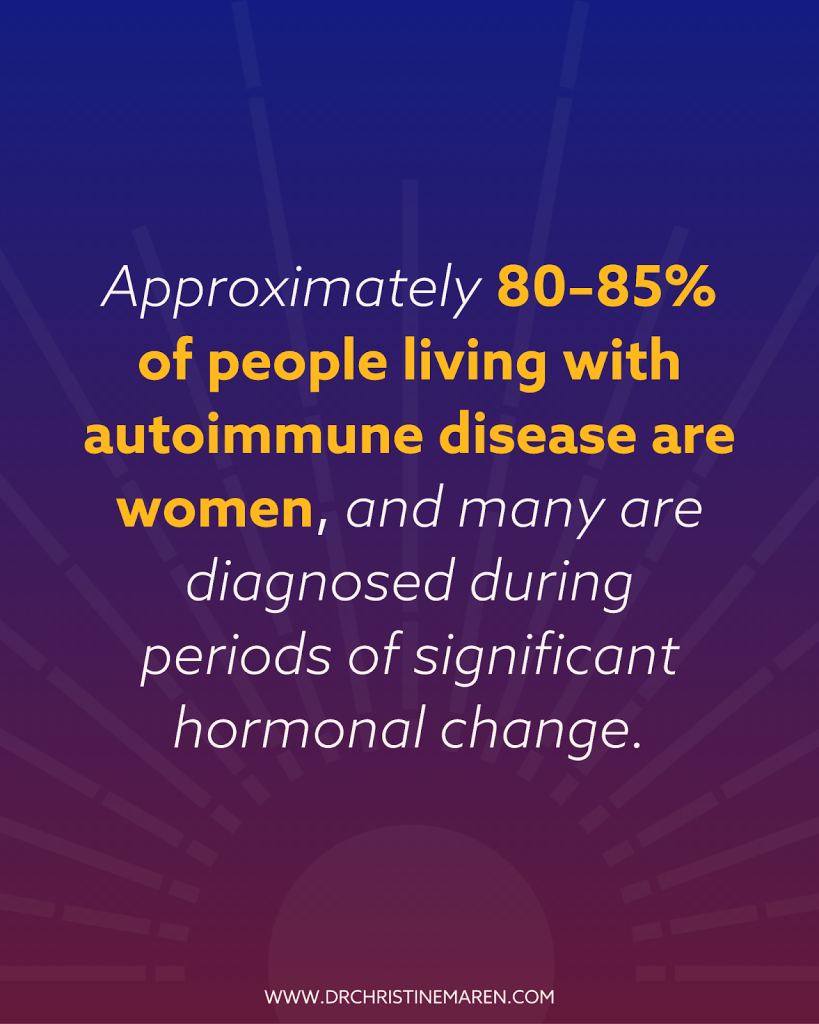
There’s an emerging area of research I talk about often called the microgenderome, and it helps connect many of the missing pieces when it comes to autoimmune disease in women.
The microgenderome describes the bidirectional relationship between:
#1: Sex hormones
#2: Gut microbiome
#3: Immune system
These systems are not separate—they constantly influence one another.
This framework helps explain why autoimmune disease often appears or worsens during hormonal transitions like perimenopause and menopause.
As hormone levels shift during perimenopause, we see changes in the composition of the gut microbiome and less diversity in gut bacteria. This makes the microbiome more vulnerable to imbalance and inflammation, and also influences how estrogen is metabolized by certain gut bacteria (referred to as the estrobolome). When the gut microbiome is less diverse, this directly influences hormone balance. These changes can also weaken the gut barrier, leading to increased intestinal permeability, or “leaky gut.”
As we learned from Fasono’s triad, when the gut barrier isn’t working as well as it should, the immune system is exposed to substances it normally wouldn’t see, which can drive ongoing immune activation.
Hormonal shifts affect the gut microbiome and immune balance; the gut affects hormone balance and immune signaling; the immune system influences both hormones and the gut. Together these systems influence one another and shape how autoimmune disease shows up in midlife.
The Link Between Chronic Stress and Autoimmune Disease
One of the most underrecognized and clinically relevant patterns I want you to know about is the link between autoimmune disease and chronic stress.
In my practice, many women with autoimmune conditions share a similar profile. They are high-performing, capable, responsible, and deeply self-reliant. They tend to hold themselves to high standards, carry a lot, and push through long after their bodies are asking for rest. These traits are not flaws. They are adaptations that often begin early in life and serve women well for decades.
Research shows that early-life stress, including childhood adversity, neglect, or prolonged emotional strain, is associated with a higher risk of autoimmune disease in adulthood.9 Chronic activation of the stress response affects the HPA axis, cortisol, gut barrier, and immune regulation—all systems already implicated in autoimmunity.
As I mentioned earlier, the female immune system is particularly vulnerable to the effects of chronic stress.
Like so many of my patients, I struggled for years before I recognized this pattern in myself and addressed this aspect of my health. Like many women, I had learned at a young age how to be strong, competent, and self-sufficient. Those traits served me well, until my body no longer had the same resilience to compensate.
This isn’t about pathologizing ourselves or negating our hard work. It’s about recognizing that these adaptations can become a double-edged sword, allowing us to succeed while quietly taxing the nervous and immune systems over time.
Consider this an invitation to look at this layer of your health with compassion and curiosity. For many women, supporting immune healing also means restoring a sense of safety, softness, and resilience in the body, not just fixing labs or suppressing symptoms.
The Functional Medicine Approach to Autoimmune Disease
In functional medicine our goal is always to understand why your body is struggling, and to treat the root causes, not just the symptoms.
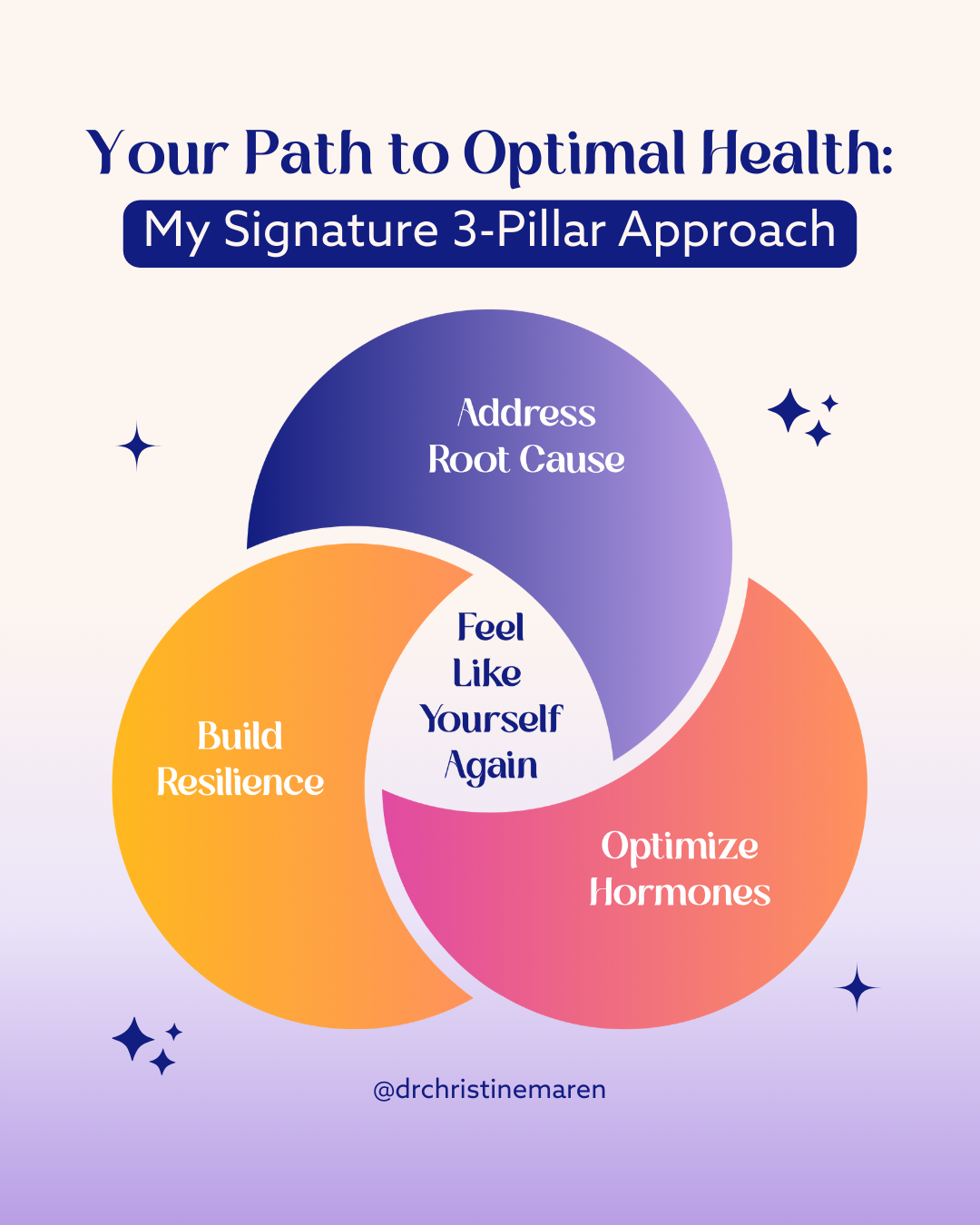
When it comes to autoimmune conditions, that means focusing on the factors we can influence. In my practice, we address this inside our three pillar approach:
- gut health,
- hormones, and
- lifestyle habits.
We start with listening to your story and gathering data. Once we have this information, we build a personalized plan to support healing. There’s no one-size-fits-all protocol, but we focus on:
- Removing trigger foods, like gluten.
- Correcting nutrient deficiencies and individualized supplement recommendations.
- Treating gut infections.
- Optimizing hormones including estrogen, progesterone, testosterone and also thyroid hormones.
- And dialing in our five foundational lifestyle habits which include nutrition, movement, low-tox living, sleep, and mindset.
We may also recommend medications like low dose naltrexone (LDN). This is a compounded medication used off-label that can help regulate immune function with relatively low risk. It’s not right for everyone, but it’s worth discussing.
Can Autoimmune Disease Go Into Remission?
I no longer view autoimmune disease as a life sentence. While it’s true that autoimmune conditions aren’t always “cured” in the conventional sense, that doesn’t mean people are destined to feel unwell forever. In my clinical experience, many patients are able to reach meaningful remission (often for years) when hormones are optimized and the underlying drivers of immune dysfunction are identified and addressed.
It is worth pointing out however that remission doesn’t look the same for everyone. For some, it means flares become far less frequent or disappear altogether. For others, it shows up as steadier energy, clearer thinking, deeper sleep and a reduced need for medications. Often, patients describe it more simply than any lab marker can capture: they start to feel like themselves again.
That said, autoimmune disease exists on a spectrum. Whenever there are periods of physical stress, emotional strain, illness or major hormonal transitions (pregnancy, postpartum, or menopause) symptoms can reactivate. But the difference, once you understand your personal triggers, is that these moments no longer feel mysterious or overwhelming. Instead of feeling blindsided or powerless, you have insight, tools and, most importantly, a plan.
Where to Go From Here
If you want to better understand the root causes driving your autoimmune disease, particularly during hormonal transitions, education is a powerful place to start.
My team and I are all personally and professionally highly experienced in helping people overcome autoimmune disease (you can read more about my own journey back to health here).
If you’re ready for personalized support, learn more about working one-on-one with my team. We take a root-cause, hormone-informed, whole-body approach, and we’d love to be part of your care team.
If you want to stay connected, join my monthly newsletter. You’ll receive new articles, hormone and gut health insights, evidence-based strategies, and practical tools to help you make confident decisions about your health.
Remember: Autoimmune disease does not define you and with the right support, it does not have to control your life either.
References
- https://www.massgeneral.org/doctors/19184/alessio-fasano/
- https://www.massgeneral.org/children/mucosal-immunology/faculty/fasano-lab
- https://pmc.ncbi.nlm.nih.gov/articles/PMC3458511/
- https://pmc.ncbi.nlm.nih.gov/articles/PMC7980266/
- https://pmc.ncbi.nlm.nih.gov/articles/PMC11405048/
- https://pmc.ncbi.nlm.nih.gov/articles/PMC6501433/
- https://pmc.ncbi.nlm.nih.gov/articles/PMC3097198/
- https://pmc.ncbi.nlm.nih.gov/articles/PMC11928423/
- https://www.sciencedirect.com/science/article/pii/S0889159125001734