

Benefits of Vaginal Estrogen: A Key to Women's Genitourinary Health and Libido at Any Age
Published On: January 8, 2025
Let's Talk About Vaginal Estrogen!
Ladies, it's time for an open conversation about a topic that affects us all but often goes undiscussed: genitourinary health.
Whether you're in your 30s, 40s, 50s, or beyond, understanding the role of vaginal estrogen in your body can be a game-changer for vulvar/vaginal health, urinary health, and yes, also your sex life.
This article isn’t just for menopausal women — breastfeeding women and ladies on birth control pills need to tune in, too.
This is especially important if you’re experiencing recurrent Urinary Tract Infections (UTIs).
So let's dive in – I promise it'll be more enlightening than embarrassing! You can thank me later.
Table of Contents
What is Genitourinary Syndrome of Menopause (GSM)?
Have you experienced any of the following symptoms during menopause, perimenopause, or in general?
- Vaginal dryness
- Burning and itching of the vagina or vulva
- Painful or uncomfortable sex
- Decreased sensitivity or arousal
- Painful or uncomfortable urination
- Symptoms similar to Interstitial Cystitis
- Urinary urgency
- Recurrent urinary tract infections (UTIs)
These are all symptoms of Genitourinary Syndrome of Menopause (GSM), previously known as vulvovaginal atrophy or atrophic vaginitis. 1
These symptoms can be mild or severe enough to impact quality of life and relationships.
GSM is very common, with an estimated 60% of menopausal women experiencing symptoms. 2
Yet, only around 6% share their concerns with the healthcare providers, which makes me think the numbers are much higher.
Understanding Low Estrogen States: Not Just a Menopause Issue
As I hinted above, GSM isn’t just a menopause or perimenopause issue because it’s related to estrogen levels, fluctuations, and seasons.
Estrogen levels fluctuate from birth control to breastfeeding to menopause. Let’s break this down.
Birth Control Users: Some hormonal contraceptives can lead to lower estrogen levels in your body. The result? You might experience low libido and vaginal dryness even in your younger years.
New Moms: Breastfeeding can temporarily lower your estrogen levels. This is now called Genitourinary Syndrome of Lactation (GSL), a fancy term for "Why does everything feel different down there?" 3
Perimenopause: Estrogen levels start declining as early as your late 30s or early 40s. Spoiler alert: It can be a bit of a roller coaster!
Menopause: The grand finale of estrogen production. At this stage, men have more estrogen than women!
Remember that the benefits of vaginal estrogen extend well beyond menopause.

If this resonates, there's more.
My newsletter and community are where I share clinical insight, evolving research, and what's helping women feel more like themselves again in midlife.
The Benefits of Vaginal Estrogen: Your Essential Guide
We’ll address safety first by breaking down the myths.
Recent research brings good news: vaginal estrogen is safe! Research shows no increased risk of blood clots, stroke, or heart disease.4
Even more encouraging, it's considered safe for women with breast cancer (as always, consult your healthcare provider for personalized advice).5
A word of caution—don’t fall for outdated FDA warnings on labels: Despite new research demonstrating the safety of vaginal estrogen, the FDA still puts scary-sounding labels on these products. The Unboxing Menopause campaign for estrogen aims to address and challenge the misconceptions created by outdated and overly cautious FDA warnings on vaginal estrogen products.
So, what is it exactly?
Vaginal estrogen is local therapy (meaning it’s low-dose estrogen applied directly to the vulva and vagina) and works specifically on the genitourinary system.
Systemic hormone replacement therapy (HRT), which I am a huge advocate of for women in perimenopause and menopause, is systemic hormone therapy, which is a higher dose of estrogen usually delivered transdermally or taken orally.
You can use both systemic and local hormone therapy to address GSM, but systemic therapy comes with other risks (although if you read A Woman’s Guide to Perimenopause Part II: The Truth About HRT & Bioidentical Hormones you know that benefits outweigh risks for most women).
I often recommend both, but it depends on the individual, so check with your doctor or our Work With Us page.
I typically prescribe vaginal estrogen as an insert but it’s also available as a cream or ring.
There are even some over-the-counter (OTC) products, usually as estriol vs estradiol +/- DHEA.
Regardless, when it works for you, vaginal estrogen will become your new best friend.
How Does Vaginal Estrogen Work?
Vaginal estrogen has multiple beneficial effects on the entire genitourinary system, including increased blood flow; better collagen production; improved tissue integrity and elasticity; more natural lubrication; and supports a favorable acidic microbiome.6 7 8 9
All of which can help reduce or eliminate a myriad of genitourinary symptoms and improve your sex life (which we’ll discuss more in a minute).
Here are Five Life-Changing Benefits of Vaginal Estrogen
After having three vaginal births and transitioning into perimenopause — vaginal estrogen was a welcome remedy.
I’ve experienced its benefits personally and I’ve seen it help countless patients.
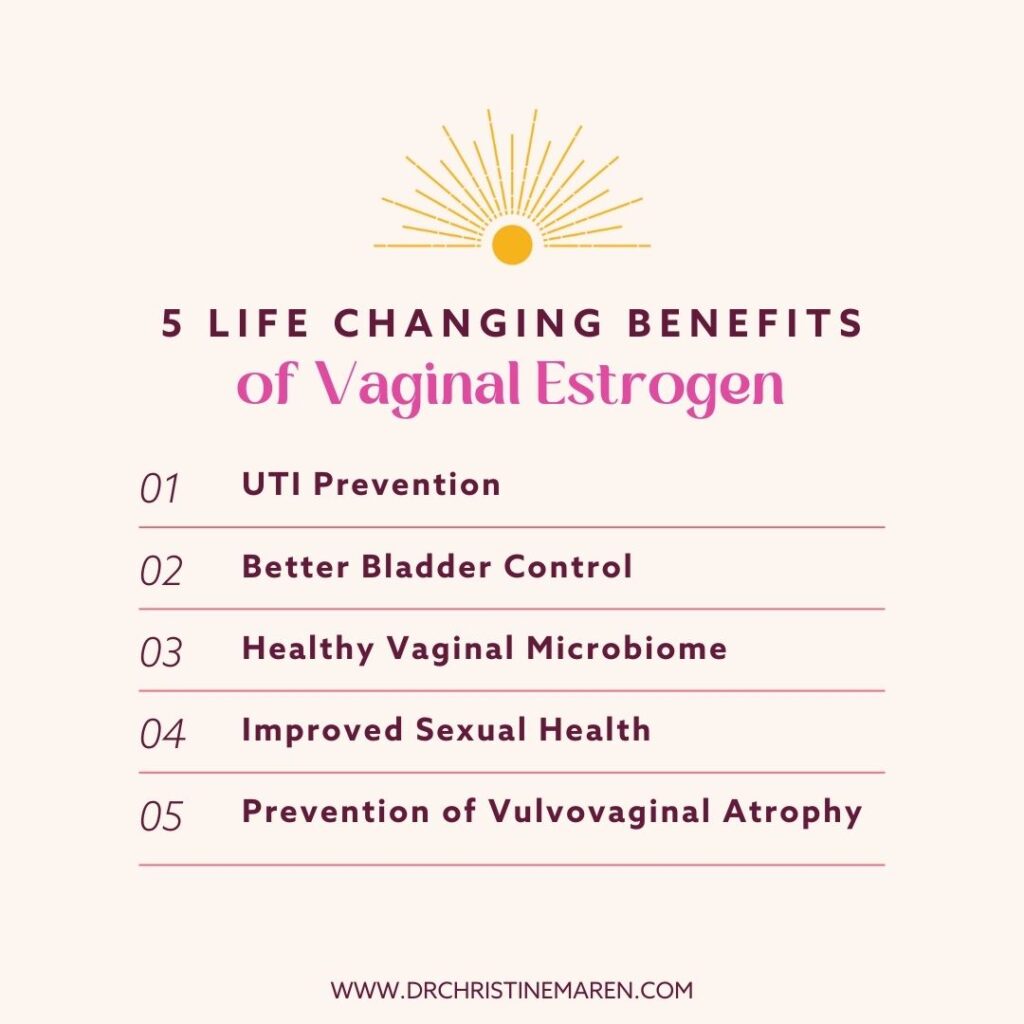
The following are five key benefits of vaginal estrogen during perimenopause, menopause, or any time your estrogen levels are lacking.
1. UTI Prevention
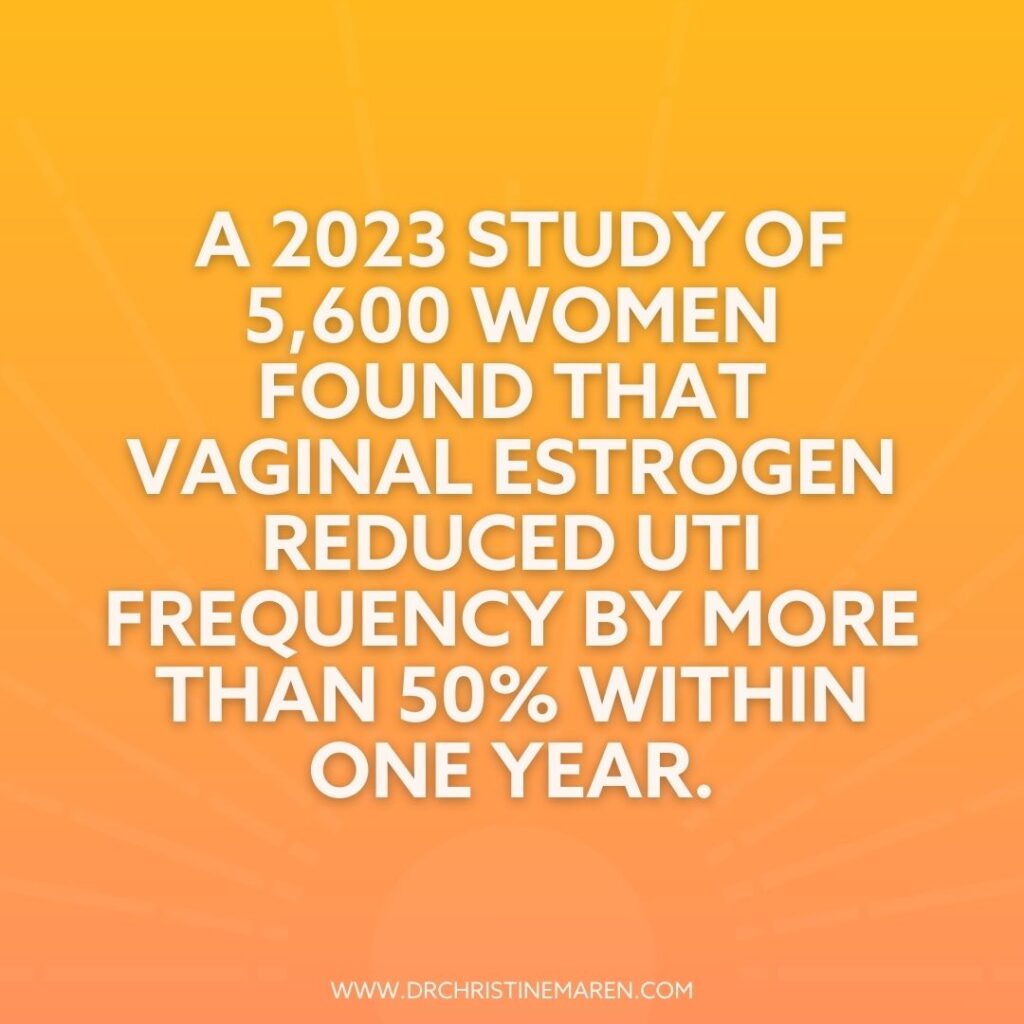
Research shows dramatic benefits for UTI prevention: A 2023 study of 5,600 women found that vaginal estrogen reduced UTI frequency by more than 50% within one year!10
Many of my patients with recurrent UTIs have resolved the issue completely by using vaginal estrogen. This means less antibiotic use and a reduced risk of antibiotic-resistant infections and associated complications. It can also help prevent serious outcomes like urosepsis, a potentially life-threatening condition that disproportionately affects older adults.
Here’s how vaginal estrogen can help prevent UTIs:
- Strengthens urethral and vaginal tissues to improve resilience.
- Creates a protective barrier against harmful bacteria.
- Supports natural defense mechanisms by enhancing the microbiome and tissue health.
Vaginal estrogen provides a simple, safe, and effective way to reduce UTI frequency and improve overall urinary health.
2. Better Bladder Control
As anyone who has had a vaginal birth and/or is reaching perimenopause will tell you, bladder control is a thing!
Many women notice increasing urinary urgency, leaks, or discomfort— and this is where vaginal estrogen can provide immense relief and support, helping prevent things from escalating with age.
Here are just a few ways vaginal estrogen improves urinary symptoms:11 12 13
- Reduces urinary urgency and stress incontinence by improving tissue integrity.
- Strengthens pelvic floor support for better control.
- Enhances muscle tone around the bladder for improved function.
- Reduces inflammation in urinary tissues, promoting comfort and resilience.
- Improves nerve signaling for better coordination and bladder control.
- Helps reduce post-void residual urine, lowering the risk of infections.
By addressing underlying tissue changes and supporting bladder function, vaginal estrogen helps women regain confidence, comfort, and control.
3. Healthy Vaginal Microbiome
Low estrogen levels can disrupt the vaginal microbiome, altering its natural balance and leading to a less acidic environment. Without sufficient estrogen, beneficial Lactobacillus bacteria decline, reducing the production of protective lactic acid. This shift allows harmful microbes to thrive, increasing the risk of vaginal infections and inflammation.
If this resonates, there's more.
My newsletter and community are where I share clinical insight, evolving research, and what's helping women feel more like themselves again in midlife.
Vaginal estrogen can help support a healthy microbiome in many ways, including:
- Supports beneficial Lactobacillus bacteria.
- Maintains optimal vaginal pH (3.8–4.5) by promoting glycogen production, which Lactobacillus bacteria convert into lactic acid, ensuring a protective acidic environment.
- Helps prevent vaginal infections like bacterial vaginosis and yeast infections.
- Improves tissue health, supporting hydration and reducing inflammation for a resilient vaginal ecosystem.
By restoring balance to the vaginal microbiome, vaginal estrogen plays a key role in promoting comfort, preventing infections, and supporting overall vaginal health.
4. Sexual Health
Low estrogen often means low libido and/or discomfort or even pain during sex.
All this adds up to a less-than-satisfying sex life, which can impact your relationships, stress levels, confidence, and mental/emotional health.
Here are just a few ways vaginal estrogen can help sexual health:
- Improves tissue health, making sex more comfortable.
- Enhances natural lubrication.
- Supports healthy nerve function for better sensation.
- Improves arousal when used directly on the clitoris (you’re welcome!).
It also prevents the anatomical changes to the vulva and vagina that can occur during menopause, such as the thinning and loss of the labia minora and other structural changes that impact sexual health and comfort (sorry, nobody else warned you about this). More on this below.
5. Prevention of Vulvovaginal Atrophy—Yep, This is a Thing
As mentioned above, estrogen is essential for vaginal tone, elasticity, lubrication, and healthy function.
When estrogen levels dip, it can cause vulvovaginal atrophy, where the vulva and/or vagina begin to thin, shrink, and become inflamed.
This can include complete loss of the labia minora, fusion of the clitoral hood, labial fusion, narrowing of the vaginal opening, and increased fragility of the vulvar skin.14 15
As you can imagine, these changes can contribute to discomfort, irritation, and difficulty with sex.
So taking care of your lady parts is important!
Vaginal estrogen can help prevent vulvovaginal atrophy by: 16
- Maintaining tissue thickness and elasticity.
- Improving blood flow to vaginal and vulvar areas.
- Supporting natural lubrication.
- Preserving comfort and function.
- Preventing tissue thinning and anatomical changes.
Using vaginal estrogen can prevent or reverse many of these anatomical changes by restoring tissue health, improving elasticity, and supporting hydration. Think of it as skincare for your vulva.
The bottom line is vaginal estrogen is fantastic, and I highly recommend it to most patients in menopause or with symptoms of low estrogen.
But it’s not the only solution for a GSM and happier lady parts.
Local DHEA for Vaginal Health
DHEA can also be excellent for GSM symptoms, especially those related to muscular tone, such as urinary incontinence.
DHEA is a precursor to both estrogen and testosterone. It's converted to active hormones within vaginal tissues.
Benefits of vaginal DHEA include:17 18
- Improved vaginal tone.
- Strengthens pelvic floor muscles.
- May improve stress urinary incontinence symptoms.
- Increases lubrication and reduces pain during sex.
- Potential improvements in libido.
Both vaginal estrogen and DHEA are safe and effective. But as always, get regular gynecological check-ups and talk to your provider for individualized recommendations.
Vaginal estrogen and DHEA should not be used if you have a suspected gynecologic cancer or undiagnosed vaginal bleeding.
Talk to your doctor, as those conditions obviously warrant further attention from a healthcare professional.
Breaking the Taboo: Let's Keep Talking About Vaginal & Sexual Health in Women of all Ages!
I'm super passionate about supporting women's health through all life's transitions.
Whether you're transitioning into perimenopause/menopause, experiencing postpartum changes, or have noticed things just don't feel quite right "down there", these conversations are valid, and they matter.
So, let’s keep this discussion open and honest so we can transform this topic from taboo to normal, healing, and empowering.
Listen, I get it. Talking about vaginal health isn't always comfortable. But here's the thing: when we stay silent, we miss out on solutions that could dramatically improve our quality of life. And trust me, the research is clear, simple treatments like vaginal estrogen can be absolute game-changers.

Key Takeaways on the Benefits of Vaginal Estrogen For Genitourinary Health
We’ve covered a lot about a very misunderstood topic today, so let’s recap.
- Women with recurrent UTIs should look into vaginal estrogen.
- Urinary symptoms are common in women throughout life, but they don't have to be your new normal.
- Vaginal atrophy is also common, but you can prevent it and save yourself a lot of discomfort.
- Early treatment can prevent bigger issues down the road.
- Sex doesn’t have to suck in perimenopause/ menopause.
- There are safe, effective solutions available, like vaginal estrogen and DHEA.
Ready to Take the Next Step?
If you're nodding along to anything in this article, don't let outdated myths or unnecessary worries keep you from feeling your best.
Consider this your sign to take the first steps to protect your genitourinary health and share this information with other women in your life. Breaking the silence helps us all get better care!
Want to learn more about optimizing your hormonal health and creating a joyful (and sexy) perimenopause/ menopause journey?
Our practice specializes in helping women find their path to vibrant health by addressing root causes, optimizing hormones with precision, and creating sustainable changes that actually last.
Click here to learn more about our approach and how we can help you thrive through all seasons of life.
Here's to vibrant, comfortable, confident women at every age. May your lives be filled with health, happiness, and just the right amount of hormones!
References
- https://pmc.ncbi.nlm.nih.gov/articles/PMC8817901/
- https://pmc.ncbi.nlm.nih.gov/articles/PMC8817901/
- https://pubmed.ncbi.nlm.nih.gov/38757214/
- https://pmc.ncbi.nlm.nih.gov/articles/PMC5734988/
- https://pubmed.ncbi.nlm.nih.gov/37535961/
- https://www.cochrane.org/CD005131/RENAL_oestrogens-for-preventing-recurrent-urinary-tract-infection-in-postmenopausal-women
- https://www.ncbi.nlm.nih.gov/pmc/articles/PMC7737516
- https://www.acpjournals.org/doi/10.7326/ANNALS-24-00610
- https://www.ajog.org/article/S0002-9378(23)00309-5/abstract
- https://pubmed.ncbi.nlm.nih.gov/37178856/
- https://pmc.ncbi.nlm.nih.gov/articles/PMC7609597/
- https://pmc.ncbi.nlm.nih.gov/articles/PMC7737516/
- https://pubmed.ncbi.nlm.nih.gov/37178856/
- https://pmc.ncbi.nlm.nih.gov/articles/PMC11601934/
- https://www.ncbi.nlm.nih.gov/books/NBK559297/
- https://www.ajog.org/article/S0002-9378(16)30518-X/fulltext
- https://www.ncbi.nlm.nih.gov/pmc/articles/PMC10281961/
- https://www.sciencedirect.com/science/article/abs/pii/S0378512215000535