

Part III: Navigating Perimenopause: A Comprehensive Guide to Treatment Options and Lifestyle Strategies
Published On: December 23, 2024

Welcome back to everything you ever wanted to know about navigating perimenopause without blundering (or suffering) your way through it.
I’m super pumped about Part 3 of this series because it focuses on the solutions I use in clinical practice for perimenopausal symptoms.
From weight gain to hot flashes, sexual problems to mood swings, this article provides the starting points you need to reclaim your health and female badassness during this incredibly transformative time.
So, today, we’ll do a quick recap of Parts 1 and 2, then dive right into the basics of body-identical hormone replacement therapy (HRT), foundational lifestyle and diet strategies, and which supplements can help round it all out.
If you’ve just found me, welcome!—and I highly recommend starting with Parts 1 and 2 of this series, which will help you get the most from today’s article.
If you’ve been with me throughout this series, a warm welcome back…and let’s get this perimenopause party started.
Table of Contents
Bioidentical Hormone Replacement Therapy for Perimenopause (Body-identical HRT)
A Quick Recap of Parts 1 and 2 of Our Perimenopause Series
Core Hormone Components of HRT for Perimenopause
Progesterone For Perimenopause
Estrogen Replacement During Perimenopause
Perimenopause and Testosterone
5 Foundational Lifestyle and Diet Strategies for Perimenopause
Addressing Root Causes in Perimenopause
Supportive Supplements for Perimenopause
What Might A Customized Perimenopause Plan Look Like?
A Quick Recap of Parts 1 and 2 of Our Perimenopause Series
I know we’re all eager to finally dig into these integrative solutions for perimenopause symptoms.
However, if it’s been a while since you’ve read Part 1 and/or Part 2, this quick recap will help you better understand and absorb this new information.
(And if you’ve just read parts 1 and 2, feel free to skip this section!)
In Part I: A Woman’s Guide to Perimenopause: Signs & Symptoms, Hormonal Changes, Testing, & More, we pulled the veil back on the basics of perimenopause every woman should know, including:
- The average age of perimenopause versus menopause (late 30s is not too early to experience symptoms!).
- Factors that influence onset (spoiler alert: there are a lot more variables than the age at which you got your first period).
- A long list of common signs and symptoms.
- How environmental toxins can cause early menopause.
- How your hormones are changing during this time.
We also talked about how perimenopause is often confused with hormonal imbalance and how there is no definitive test to diagnose perimenopause (which doesn’t mean I don’t recommend testing certain hormones.)
In Part 2: A Woman’s Guide to Perimenopause Part II: The Truth About HRT & Bioidentical Hormones (which will make you an expert in HRT and bioidentical/ body-identical hormones), we went deep into HRT as a safe, integrative, and beneficial option for perimenopausal and menopausal women.
Topics covered include:
- The difference between bioidentical, body-identical and synthetic derivatives.
- How different combinations of HRT, timing, and delivery systems significantly impact risk versus benefit.
- The benefits of HRT based on widely published studies for menopausal symptoms, brain health, bone health, mood, metabolism, skin, sexual health, and more.
- How the original Women’s Health Initiative (WHI) study published in 2002 created a media scare around breast cancer—even though it wasn’t designed to study breast cancer.
- The back story behind HRT and breast cancer risk.
- The real risks of HRT, how to lower those risks, and who may not be a candidate.
- And why I believe the benefits of HRT outweigh the risks in most women.
If you are skeptical, scared, or flat-out adverse to HRT based on what you think you know about risks and benefits, you must go back and read Part 2 of this series. There is so much we understand now that we didn’t know in 2002, myself included.
Based on this evidence, I have made it my mission to help educate any woman who is interested in using integrative therapies, including body-identical hormones, to transform perimenopause into a powerful time of self-realization, compassion, and discovery.
All that said, HRT isn't a magic bullet that can fix everything.
And that’s what this article is all about.
Here, I’ll share details on what I prescribe in my clinical practice, along with the lifestyle habits that will help you build resilience and navigate perimenopause with ease.
Let's dive into these foundational treatment strategies that can significantly impact your perimenopause journey.

If this resonates, there's more.
My newsletter and community are where I share clinical insight, evolving research, and what's helping women feel more like themselves again in midlife.
Bioidentical Hormone Replacement Therapy for Perimenopause (Body-identical HRT)
Starting HRT in perimenopause can be a game-changer for alleviating symptoms and even preventing certain diseases.
While lifestyle modifications and supplements play important supporting roles, HRT is the cornerstone of effective peri/menopause treatment for many women.
HRT works because it directly addresses the root cause of perimenopausal symptoms: declining and/or wildly fluctuating hormone levels.
And when prescribed and managed well, HRT comes with minimal risk. That’s what functional and integrative medicine is all about—root cause resolution and benefits vs. risks.
No supplement I’m aware of can do that, which is why I recommend an integrative approach.
In my practice, I prescribe body-identical hormones like estradiol and micronized progesterone, as well as testosterone.
As with all recommendations, there’s no one-size-fits-all. Some key factors I take into consideration are: age, symptoms, menstrual cycle length/ flow, medical history and personal preferences.
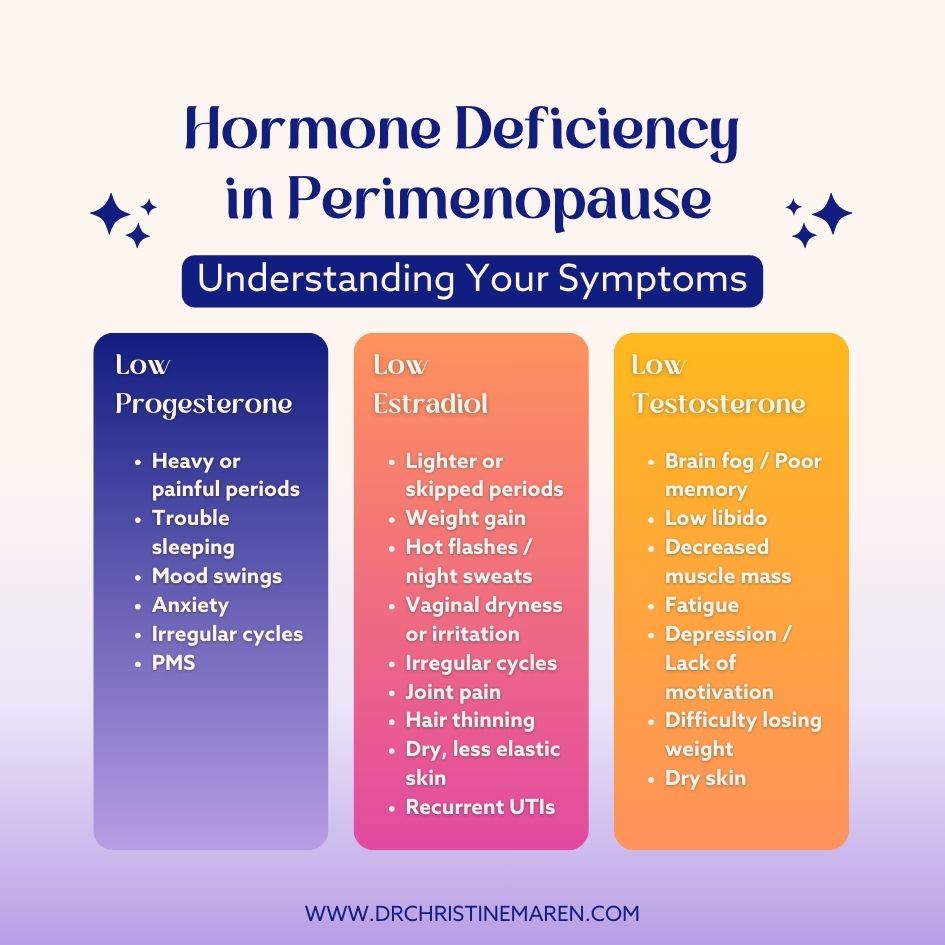
Core Hormone Components of HRT for Perimenopause
As with all recommendations, there’s no one-size-fits-all. Some key factors I take into consideration are: age, symptoms, menstrual cycle length/ flow, medical history and personal preferences.
These factors help dictate the types of body-identical hormones I prescribe and the delivery systems.
The three main hormones to consider are:
- Progesterone,
- Estrogen,
- And testosterone.
Let’s get into the details next.
Progesterone for Perimenopause
Progesterone is often super helpful during the early stages of perimenopause, especially in women who struggle with heavy periods, anxiety, and sleep disruptions.
Timing and dosage can be customized based on symptoms and cycle.
Forms Available:
- Oral micronized progesterone: Most effective and well-tolerated option.
- Vaginal preparations: Alternative for those sensitive to oral form.
- Topical creams: Another option for those who prefer it, but I don’t recommend relying on this for uterine protection if taking estrogen.
Primary benefits of progesterone in perimenopause include:
- Cycle Regulation: Stabilizes irregular or heavy menstrual cycles and helps balance the proliferative effects of estrogen. If you have heavy/painful periods in perimenopause, this can be a game changer! I see a lot of women who’ve had ablations or even a hysterectomy due to heavy periods in perimenopause.
- Improved Sleep: Promotes deep, restful sleep and can help with insomnia.
- Mood and Emotional Balance: Reduces anxiety, irritability, and mood swings by calming the brain through GABA activity.
- Hot Flash Relief: Decreases the intensity and frequency of hot flashes and night sweats.
- Breast Comfort: Reduces tenderness from estrogen fluctuations. However, it may also cause breast tenderness since that is all about hormone balance.
- Brain and Cognitive Support: Improves mental clarity/ brain fog and protects brain health.
- Anti-Inflammatory Effects: Reduces systemic inflammation and associated symptoms.
- Bone Health: Supports bone remodeling and complements estrogen.
- Endometrial Protection: Prevents uterine lining thickening and reduces cancer risk. This is especially important for women taking estradiol.
- Potential Colon Cancer Risk Reduction: Linked to lower risk of colon and hormone-related cancers.
Estrogen Replacement During Perimenopause
Supplementing with estradiol (the body-identical form of estrogen) can be incredibly helpful, especially for women struggling with hot flashes, vaginal dryness, mood changes, weight gain, brain fog, low libido, or sleep disruptions.
While some women in perimenopause experience high and erratic estradiol levels, others have consistently low levels. The optimal delivery method and dose are personalized and carefully balanced by progesterone. Estrogen and progesterone work together like yin and yang— complementary forces that need to be in harmony. Too much or too little of either can disrupt this natural balance.
Women with a uterus always need progesterone if they are taking estrogen to protect the endometrium. However, I also recommend progesterone for women without a uterus because of this important balance.
Forms Available:
- Transdermal Delivery (patches, gels, creams, rings): Absorbed directly through the skin and bypasses liver metabolism, which negates the risk of blood clots and provides a safer option for many women.
- Oral Estradiol: Processed through the digestive system and subject to first-pass metabolism in the liver, which means it can slightly increase the risk of blood clots.9, 10. On the flip side, there is evidence that oral estrogen may decrease the risk of other heart diseases, 11so there is a place for it. For perspective, the blood clot risk from oral estradiol is significantly lower than that of birth control pills.
- Other options include troches/lozenges dissolved in the mouth or pellets inserted under the skin.
I am a huge advocate of vaginal estrogen, which is local versus system therapy. But this is another story, so stay tuned for a future article on this.
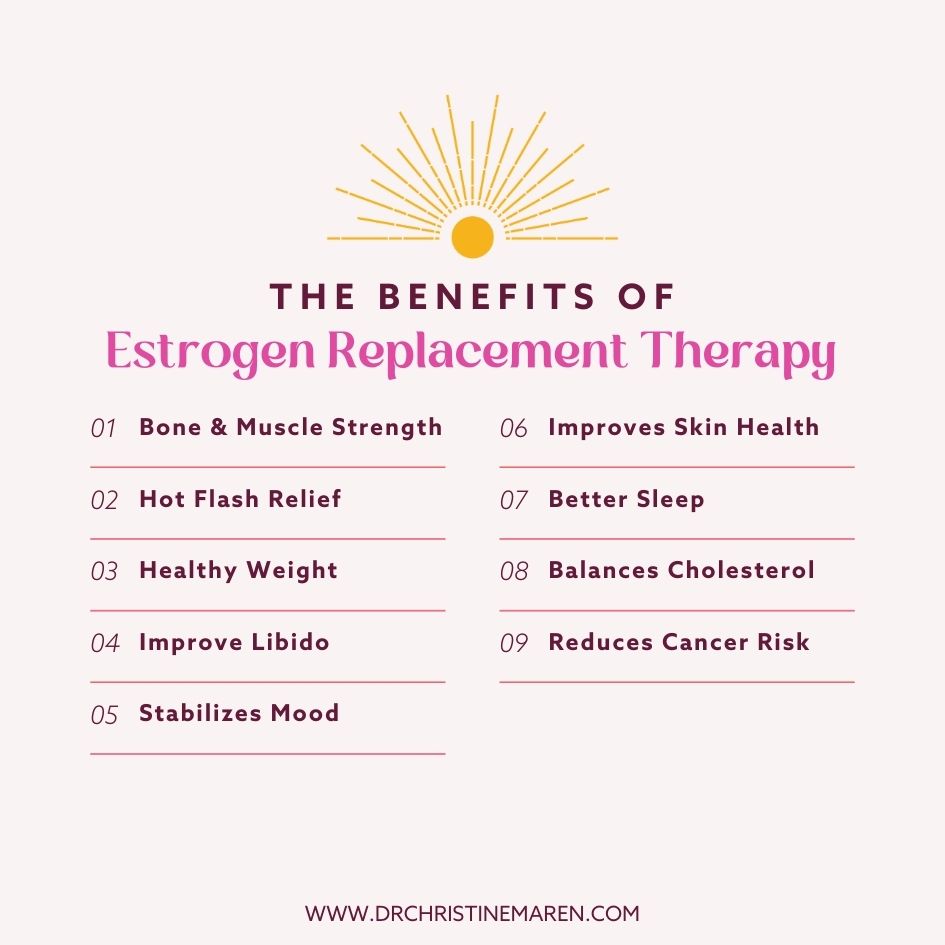
Primary benefits of estradiol in perimenopause include:
12, 13, 14, 15, 16, 17, 18 , 19,20, 21
- Bone and Muscle Strength: Keeps your bones strong and muscles healthy as you age. Think of it as maintenance for your body's foundation, helping prevent bone loss that can lead to fractures.
- Hot Flash Relief: Makes those sudden waves of heat and night sweats less frequent and intense, helping you get through your day (and night) more comfortably.
- Metabolic Health: Helps maintain a healthy weight and steady energy levels. Makes it easier to manage blood sugar and decrease belly fat. Research shows it may help prevent type 2 diabetes.
- Sexual Health: Improves vaginal health and natural lubrication while helping restore libido—that spark that might have been missing lately.
- Mental Health: Smooths out the emotional roller coaster of perimenopause with better sleep, more stable moods, and less anxiety.
- Brain Function: Clears away mental fog and keeps memory sharp by maintaining your brain's wiring. Research suggests it may help protect against dementia.
- Skin Health: Improves moisture, elasticity, and resilience while reducing wrinkles.
- Sleep Quality: Helps resolve sleep difficulties and insomnia that often come with perimenopause.
- Heart Health: When started early in perimenopause, supports cardiovascular health and maintains healthy cholesterol levels. Think of it as preventive maintenance for your heart.
- Cancer Protection: Working together with progesterone, may help reduce colon cancer risk. Timing matters here, so discuss with your healthcare provider.
Perimenopause and Testosterone
Testosterone has been used to treat perimenopause and menopausal symptoms for over 80 years.22 While often overlooked, this hormone plays crucial roles in women's health beyond sexual function.
Research shows young women's ovaries normally produce 3-4 times more testosterone than estrogen daily.23
Not all perimenopausal women need testosterone supplementation. It is often the first hormone that women benefit from in perimenopause, but it really depends on the person. It seems to be most helpful when symptoms include fatigue, muscle loss, low libido, or mood changes—along with low or low normal testosterone levels in the blood.
Forms Available:
Since no FDA-approved testosterone exists for women in the US, options include:
- Compounded creams at female-appropriate doses.
- Very low doses of FDA-approved male preparations.
- Pellets or troches through specialty pharmacies.
- Regarding pellets: While some women love them, I generally recommend starting with creams or gels first. Pellets can raise testosterone levels higher than intended, and once inserted, they can't be removed if side effects like acne or hair loss develop. I reserve pellets as an option for women who haven't achieved optimal results with other methods (and know they don’t have side effects from testosterone).
Primary benefits of testosterone in perimenopause include:24
- Sexual Health: Enhances libido and sexual satisfaction when deficient.
- Brain Health: Supports memory, focus, and may offer protection against cognitive decline.
- Muscle and Bone Strength: Helps maintain muscle mass and bone density, which is particularly important during perimenopause.
- Energy and Metabolism: Improves fatigue, exercise recovery, and helps maintain healthy body composition.
- Mood Balance: Many women report feeling "more like themselves" with improved mood stability.
- Breast Health: Recent research suggests possible protective effects.
- Joint Health: May help reduce joint pain and maintain strength.
- Sleep Quality: Some women report improved sleep when combined with other hormones.
5 Foundational Lifestyle and Diet Strategies for Perimenopause
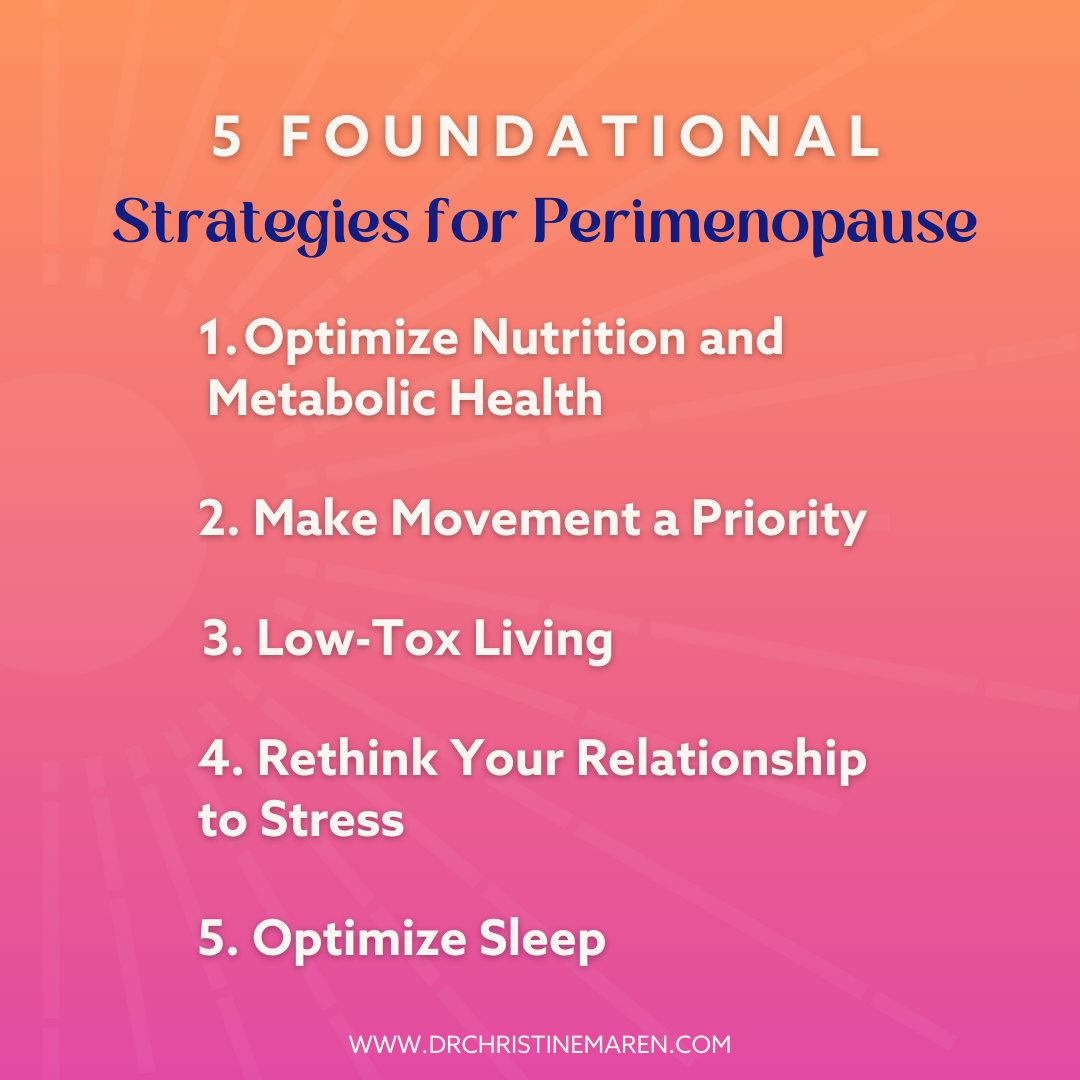
While HRT is powerful, optimal health requires a strong foundation. Here's what matters most during perimenopause:
- Optimize Nutrition and Metabolic Health
Why it matters: Perimenopause brings increased insulin resistance and muscle loss. Strategic nutrition helps maintain metabolic health and energy.
Here are some helpful tips to help optimize nutrition and metabolic health during perimenopause (and beyond).
- Prioritze protein: 0.8-1g per pound of ideal body weight and at least 30 grams per meal.
- Include plenty of fiber from organic whole fruits and vegetables.
- Focus on balanced meals that combine protein, healthy fats, and complex carbohydrates to help stabilize blood sugar levels throughout the day.
- Consider gentle intermittent fasting (12-14 hour window).
- Consider a gluten-free diet or avoiding other food sensitivities if you have inflammation, autoimmune, skin or digestive issues.
- Limit or avoid refined carbs & sugars, alcohol, and ultra-processed foods.
- Make Movement a Priority
Why it matters: Muscle is your organ of longevity, improving hormone sensitivity and providing structural support as you age.
The following are some general recommendations to help build muscle and increase movement.
- Prioritize 3-5 strength training sessions weekly.
- Add a weighted vest for walking.
- Build toward 10,000 daily steps.
- Choose movement that energizes rather than depletes.
Related reading: How To Lose Weight In Your 40s (and Beyond)
- Embrace Low-Tox Living
Why it matters: Environmental toxins directly impact your hormones, metabolism, and immune system.
Since avoiding all toxins is impossible, I suggest focusing on what you can control within your own home. Here are some simple starting points.
- Filter water and opt for organic when possible.
- Choose clean personal care products.
- Eliminate fragrances and harsh cleaning products.
- Focus on progress over perfection.
- Make gradual, sustainable changes.
- To learn how toxins impact the timing of perimenopause, read: Part I: A Woman’s Guide to Perimenopause: Signs & Symptoms, Hormonal Changes, Testing, & More.
- Rethink Your Relationship to Stress Management & Mindset
Why it matters: Perimenopause offers an opportunity for powerful personal growth and transformation.
Here are some creative, time-efficient ways to create healthier stress management and mindset practices.
- Practice daily mindfulness (even 5-10 minutes helps).
- Embrace self-compassion, especially if you tend to prioritize others.
- Learn to set boundaries and prioritize self-care.
- View challenges as opportunities for growth.
Learn more in: 7 Tips + Resources to Cultivate a Healing (Growth) Mindset Right Now
- Optimize Sleep (this is non-negotiable!)
Why it matters: Quality sleep becomes crucial as hormones fluctuate.
Sleep is a natural biological process, yet it can be a challenge, especially during perimenopause. Here are some tips to help you get enough zzzs.
- Target 7-9 hours of quality sleep.
- Consider progesterone at bedtime for better sleep.25
- Estradiol also helps with sleep maintenance.26
- Manage blood sugar to prevent 3-4 am wake-ups (see previous section on nutrition, protein counts!).
- Use adaptogenic herbs like Ashwagandha for additional sleep support if needed.
Remember: Progress over perfection. Small, consistent changes create lasting transformation. Work with your healthcare provider to customize these strategies for your unique needs.
If this resonates, there's more.
My newsletter and community are where I share clinical insight, evolving research, and what's helping women feel more like themselves again in midlife.
Addressing Root Causes in Perimenopause
Our resilience often decreases as we approach perimenopause, making underlying health conditions more impactful than ever before.
That nagging gut health, thyroid, or autoimmune condition you've been managing? It may become harder to ignore as this phase of life often unmasks or amplifies existing health challenges.
That's why our approach is comprehensive. We not only optimize hormones and help women build resilience through our five foundational health habits, we also dig deeper to address root cause conditions like:
- Gut health issues
- Hypothyroidism/Hashimoto’s
- Other autoimmune conditions
- Metabolic disorders/Weight gain
By resolving these underlying imbalances while supporting hormonal health, we help women create a stronger foundation for lasting wellness. This integrated approach is particularly crucial during perimenopause when your body needs extra support to navigate this transition with grace.
Supportive Supplements for Perimenopause
While supplements should complement (not replace) HRT and lifestyle changes, these can be particularly helpful during perimenopause. Always work with your healthcare provider for personalized recommendations.
- Adaptogens: Support healthy stress response through the HPA axis, especially helpful when combined with hormonal precursors. Some of my favorite adaptogens for perimenopause include: Ashwagandha 27, Rhodiola 28 and Tulsi. 29
- Pregnenolone and DHEA: Support hormone balance, energy, and cognitive function. Note: DHEA should be used with some caution as it can cause acne or hair loss in certain women.
- Collagen: Supports skin elasticity, joint health, bone health, and gut health. Note: doesn't count toward protein goals as it's not a complete protein.30, 31
- Creatine: Supports muscle strength, exercise performance, and bone health - particularly important during perimenopause.32
- Methyl B Complex: Crucial for energy, hormone production, stress management, and cellular health as well as healthy estrogen metabolism. Choose methylated forms for optimal absorption.33
- Zinc: Supports immune function, cognitive health, and skin health.36
- Vitamin D3/K2: Vitamin D3 is essential for bone health, hormones, and immune function. Vitamin K2 works synergistically with D3 by helping direct calcium to the bones and teeth where it's needed, while preventing calcium from depositing in soft tissues like blood vessels. Regular vitamin D level checking is recommended.37
- Omega-3 Fatty Acids: Support heart and brain health, mood stability, and reduce inflammation.38
- Turmeric: Potent anti-inflammatory properties supporting joint health, cognitive function, and overall inflammation.39
- Resveratrol: Powerful antioxidant supporting cardiovascular health and healthy aging.40
- DIM (Diindolylmethane): Beneficial for some women on estrogen HRT to support healthy metabolism and hormonal acne. Not recommended without estrogen therapy as it may deplete already low levels.41, 42
Remember: Supplement needs vary by individual and should be based on your symptoms, lab work, and overall health status.
You can access our favorite pharmaceutical-grade brands through our online dispensary here.
And Finally: The Recap! Key Takeaways from this Article
Once again, we’ve covered a lot about treatment options for perimenopause, so let’s recap the highlights:
- Foundational HRT for perimenopause may include progesterone, estradiol, and/or testosterone, though not necessarily all three for every woman at every stage.
- I recommend body-identical HRT for maximum safety and benefits— I do NOT recommend birth control pills to manage hormonal symptoms.
- HRT is available in various delivery forms, such as pills, creams, gels, vaginal rings, pellets, lozenges, etc. to suit your needs.
- Although HRT is an incredible tool, nutrition, lifestyle, and supplements also play invaluable support roles in a healthy and happy perimenopause journey (and BTW, eating well, exercising, and self-care are non-negotiable at this stage!).
And the biggest takeaway: perimenopause doesn’t have to suck!
Truly, this should be a time of stepping into your power and using the natural forces of transformation at play to rediscover your most true and authentic self. The self you’ve likely been looking for for a long time.
I know because I’m living proof, and I’m honored to help other women understand and harness this process every single day.
This truly has the potential to be the most powerful time of self-discovery and enlightenment, and integrative therapies can really help you take full advantage of this precious time without suffering or just slogging through.
Take advantage of your 40s… you’ve worked hard to get here and your journey thus far has given you the tools you need to succeed.
What Might a Customized Perimenopause Plan Look Like?
Every woman's path through perimenopause is unique, which is why we take a comprehensive, individualized approach combining modern medicine with functional health principles.
Here's a general idea of what this may look like:
Since we firmly believe in testing, not guessing, we'll run various labs to assess your health and hormonal status, including a full hormone panel, thyroid panel, metabolic markers, and nutrient levels.
We'll also recommend more in-depth functional medicine testing, depending on your case. This often includes testing for gut health or a deeper dive on hormones and cortisol like the DUTCH test.
Our 3 pillar approach focuses on:
- Addressing the root cause of underlying health conditions like digestive issues, inflammation and autoimmune conditions like Hashimoto's.
- Optimizing hormones using body-identical HRT when appropriate, as well as thyroid medication or a low dose/ compounded GLP-1 when indicated.
- Building resilience through our 5 foundational habits
Every patient also gets an individualized treatment plan with specific supplement recommendations.
And our approach is highly personalized.
Of course, there's more to it than that, but you get the general idea of how an integrative, functional medicine approach to perimenopause works.
Share the Knowledge
If you found this guide helpful, please share it with other women in your life. Perimenopause can feel isolating, but it doesn't have to be. Together, we can create a community of informed, empowered women supporting each other through this important transition.
Ready to take the next step? Visit our Work With Us page to learn more about becoming a patient.
- https://www.tandfonline.com/doi/full/10.1080/13697137.2018.1455657
- https://menopause.org/wp-content/uploads/professional/nams-2022-hormone-therapy-position-statement.pdf
- https://menopause.org/wp-content/uploads/professional/nams-2022-hormone-therapy-position-statement.pdf
- https://news.weill.cornell.edu/news/2023/10/study-suggests-estrogen-to-prevent-alzheimer%E2%80%99s-warrants-renewed-research-interest
- https://www.nature.com/articles/s41598-023-28673-2
- https://pubmed.ncbi.nlm.nih.gov/25380275
- https://pubmed.ncbi.nlm.nih.gov/10340280
- https://www.ncbi.nlm.nih.gov/pmc/articles/PMC2685269
- https://pubmed.ncbi.nlm.nih.gov/33417686/
- https://www.bmj.com/content/364/bmj.k4810/rr-1
- https://menopause.org/wp-content/uploads/professional/nams-2022-hormone-therapy-position-statement.pdf
- https://menopause.org/wp-content/uploads/professional/nams-2022-hormone-therapy-position-statement.pdf
- https://menopause.org/wp-content/uploads/professional/nams-2022-hormone-therapy-position-statement.pdf
- https://news.weill.cornell.edu/news/2023/10/study-suggests-estrogen-to-prevent-alzheimer%E2%80%99s-warrants-renewed-research-interest
- https://pubmed.ncbi.nlm.nih.gov/39077777
- https://www.ncbi.nlm.nih.gov/pmc/articles/PMC8063246
- https://www.nature.com/articles/s41598-023-28673-2
- https://pubmed.ncbi.nlm.nih.gov/25380275/
- https://pubmed.ncbi.nlm.nih.gov/11730394
- https://pubmed.ncbi.nlm.nih.gov/10340280
- https://www.ncbi.nlm.nih.gov/pmc/articles/PMC2685269
- https://pmc.ncbi.nlm.nih.gov/articles/PMC9331845/
- https://pmc.ncbi.nlm.nih.gov/articles/PMC9331845/
- https://pmc.ncbi.nlm.nih.gov/articles/PMC9331845/
- https://menopause.org/wp-content/uploads/professional/nams-2022-hormone-therapy-position-statement.pdf
- https://menopause.org/wp-content/uploads/professional/nams-2022-hormone-therapy-position-statement.pdf
- https://pubmed.ncbi.nlm.nih.gov/34553463/
- https://pubmed.ncbi.nlm.nih.gov/26776957/
- https://pmc.ncbi.nlm.nih.gov/articles/PMC4296439/
- https://pmc.ncbi.nlm.nih.gov/articles/PMC8620403/
- https://pmc.ncbi.nlm.nih.gov/articles/PMC5793325/
- https://pmc.ncbi.nlm.nih.gov/articles/PMC7871530/
- https://pmc.ncbi.nlm.nih.gov/articles/PMC9662251/
- https://pubmed.ncbi.nlm.nih.gov/35184264/
- https://pmc.ncbi.nlm.nih.gov/articles/PMC5926493/
- https://pmc.ncbi.nlm.nih.gov/articles/PMC3724376/
- https://www.endocrine.org/clinical-practice-guidelines/vitamin-d-for-prevention-of-disease
- https://pubmed.ncbi.nlm.nih.gov/36641259/
- https://pmc.ncbi.nlm.nih.gov/articles/PMC10111629/
- https://pmc.ncbi.nlm.nih.gov/articles/PMC8289612/
- https://pubmed.ncbi.nlm.nih.gov/34035125/
- https://pmc.ncbi.nlm.nih.gov/articles/PMC5015761/