

The Benefits of Resistant Starch Foods (and 5 easy ways to eat more of it)
Published On: July 2, 2024
Lately, we’ve been talking a lot about what “good nutrition” means and the importance of fueling your body rather than depriving yourself.
One of the issues I run into a lot with my patients is confusion about carbs or total carb-fear.
And I get it. Even in the functional medicine community, the topic of carbs can be controversial, confusing, and ever-changing.
However, if you think all carbohydrates are bad (which they’re not, by the way!), resistant starch might change your mind.
This healthy carbohydrate boasts a myriad of benefits for digestion, gut health, blood sugar, and beyond.
In this article, you’ll get the inside scoop on the benefits of resistant starch foods including the types of resistant starch, what foods contain resistant starch, how to increase resistant starch in foods you love, and nine ways to get more of it in your diet.

What is Resistant Starch?
Resistant starch is a type of carbohydrate that "resists" digestion in the small intestine and reaches the large intestine intact, making it function more like fiber.
Unlike regular starch, which is broken down into glucose and absorbed in the small intestine, resistant starch passes through the digestive system without being broken down.
Once it reaches the large intestine, it is fermented by gut bacteria, producing beneficial compounds.
There are 4 main types of resistant starch, which are classified based on their source.1
- RS1 (Physically Inaccessible Starch): Found in whole or partially milled grains and seeds. The starch is physically protected from digestion by the seed coat or plant cell walls.
- RS2 (Resistant Granules): Found in raw potatoes, green bananas, and high-amylose corn. The starch granules are naturally resistant to digestive enzymes.
- RS3 (Retrograded Starch): Formed when starchy foods like potatoes, rice, or pasta are cooked and then cooled. During cooling, the gelatinized starch molecules realign and become resistant to digestion.
- RS4 (Chemically Modified Starch): Starches that have been chemically altered to resist digestion. These are often used in processed foods to enhance fiber content.
Now that you understand the different types of resistant starches and how they impact the body, let’s examine some of the benefits of adding more to your diet.

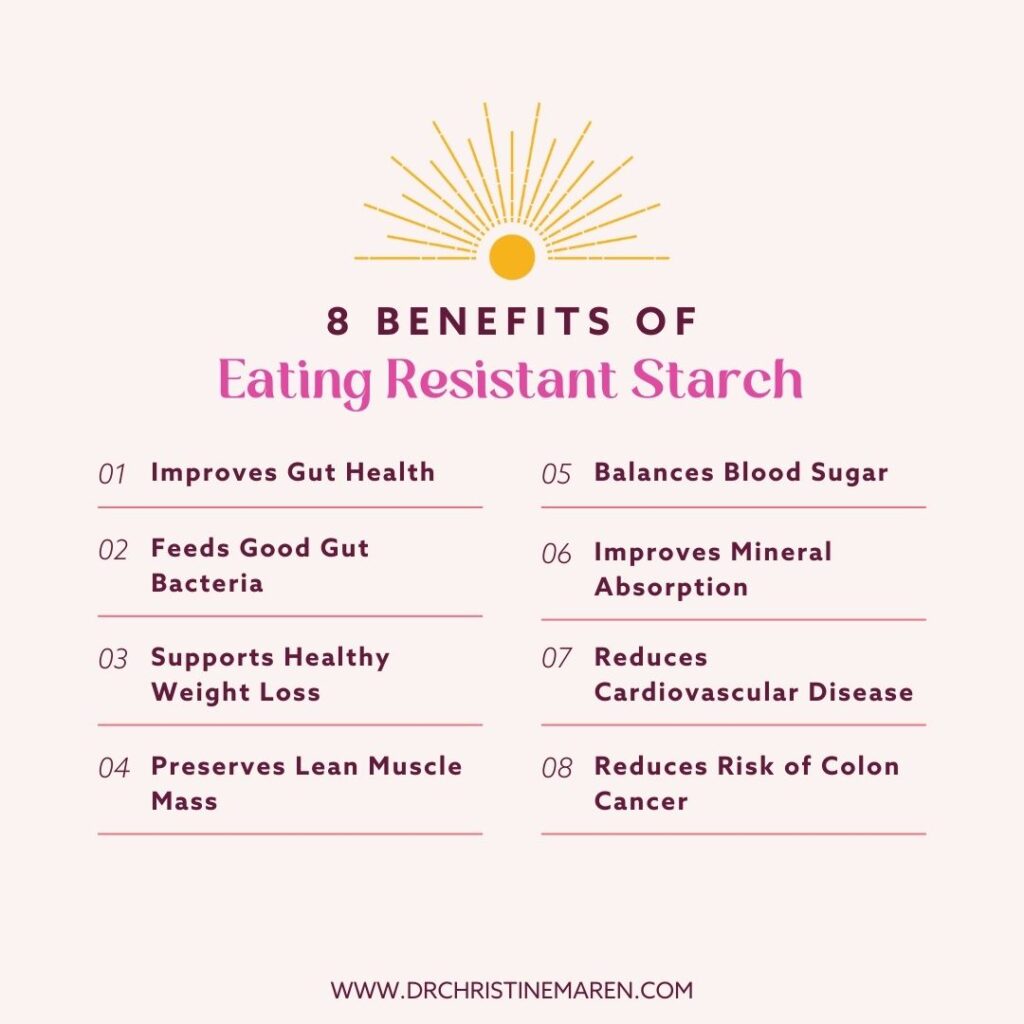
6+ Benefits of Resistant Starch
Resistant starches are incredibly healing foods that deserve a place on your plate.
Here, we break down the science behind the benefits of resistant starch.
1. Resistant starch feeds healthy gut microbes and can help restore gut flora, which improves overall health.
Resistant starch is a type of prebiotic, insoluble dietary fiber that resists normal digestion in the small intestine. It then makes its way to the large intestine undigested, where it feeds good bacteria.
Eating resistant starch can improve intestinal permeability (aka leaky gut), which is a root cause of inflammatory conditions, autoimmune diseases, and food sensitivities.
It has been shown to improve mucosal barrier function2 and reduce endotoxin influx3 from the intestinal tract. Long-term intake of resistant starch can also reduce colonic and systemic immune reactivity.4
We love talking gut health around here. For more information and advice, see:
- How to Heal Your Gut 101
- 10 Ways To Improve Gut Health
- IBS Not Going Away? Here Are 5 Reasons You Can’t Heal
2. Resistant starch can even help with weight loss.
That’s right, healthy carbs can help you lose weight. Here’s how that works.
Consuming resistant starch has been shown to increase satiety and reduce overall calorie intake by promoting feelings of fullness.5
When combined with regular exercise (like strength training and regular walking), it’s also been shown to preserve lean muscle mass and reduce fat storage.6
In addition, we know a healthy gut microbiome can reduce your risk of obesity7 and help you maintain a healthy weight.
Get more tips on healthy, sustainable weight-loss in: How To Lose Weight In Your 40s.
3. Resistant starch can help balance blood sugar.
The biggest argument against eating carbs is that they can spike blood sugar which leads to a cascade of hormonal, inflammatory, and other negative side effects.
That is certainly true in some cases, but not always.
Regarding resistant starch, numerous studies show the opposite effect. For example, the anti-obesity effect of eating resistant starch is significant enough to improve insulin sensitivity.8
It’s been shown to:
- Decrease insulin spikes after meals in healthy subjects.9
- Improve insulin sensitivity in people with metabolic syndrome.10
- Improve glucose metabolism in both normal and overweight women when combined with soluble fiber.11
Other studies show resistant starch can even contribute to a “second-meal effect”, meaning it has the potential to regulate blood sugar and insulin responses in a subsequent meal.12
4. Resistant starch has also been shown to increase the bioavailability and intestinal absorption of essential nutrients.
It can improve the absorption of essential minerals like calcium, magnesium, iron, zinc, and other minerals.13
(So don’t believe everything you read about the dangers of phytates in starches.)
This is likely partly why it can help minimize loss of bone mass during weight loss.14
5. Resistant starch is good for cardiovascular health.
Eating resistant starch is associated with reduced risk for developing type 2 diabetes and cardiovascular disease, demonstrating a positive effect on cholesterol and blood sugar levels in overweight people.15
6. Resistant starch may help prevent colon cancer.
The bacterial fermentation of resistant starch produces beneficial short-chain fatty acids (SCFA), such as butyrate, that are an important fuel source for colonic cells.16,17
These SCFAs, like butyrate,18 help maintain a normal colonocyte population which contributes to healthy function and disease prevention in the large intestine and may protect against colorectal cancer,19,20 the fourth most common cancer in men and women and the fourth leading cause of cancer-related deaths in America.21
Butyrate produced by resistant starch may also confer protection against the potentially detrimental effects of dietary red meat, specifically processed meats like salami, hot dogs, and deli meats.22
In addition to butyrate, the research behind the role of gut bacteria and cancer risk is also very exciting.23
Studies have shown that the bacterial species Fusobacterium nucleatum may play a causal role in colorectal cancers.24
5 Easy Ways to Add More Resistant Starch to Your Diet
What a joy to know it’s okay and even healthful to include these types of carbs in your diet!
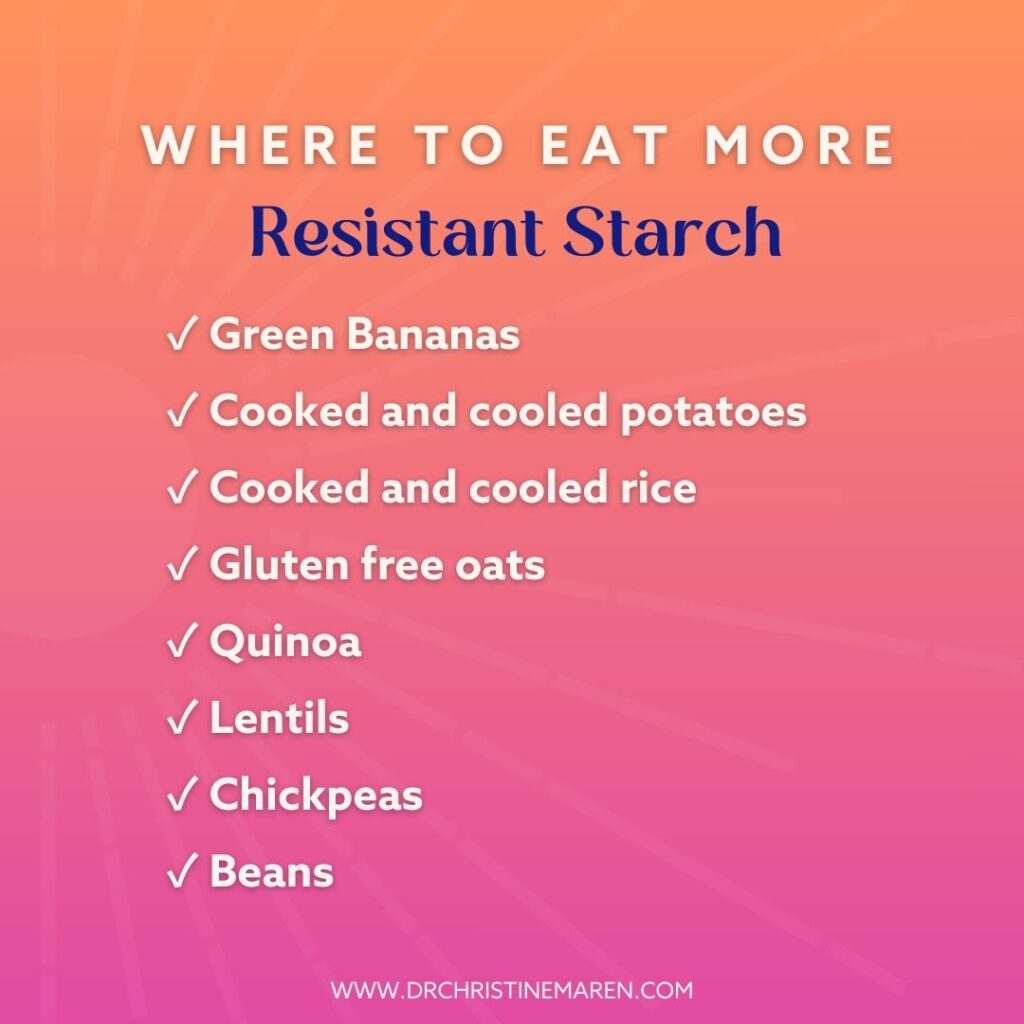
Getting resistant starch can be super simple and requires very little effort. Just cook extra potatoes or rice for dinner and enjoy the next day as leftovers.
Here are 5 easy ways to get more resistant starch and start reaping the health benefits.
1. Green Bananas or Plantains:
When bananas are green they contain more resistant starch. Perhaps this is partly why green plantains have been a staple in traditional diets for centuries, they’re chock-full of prebiotic-resistant starch.
I like to buy green (unripe) bananas, peel them, chop them, and freeze them for smoothies. This reduces prep time and makes them much easier to use.
Green plantain chips are a great snack with guacamole or salsa. Note that they will have a higher resistant starch content if dehydrated, but you could also bake them at very low heat (less than 130 degrees Fahrenheit).
You can also find green banana powders, but I prefer using the whole food.
2. Cooked and Cooled Potatoes:
Cooking and then cooling certain foods increases their resistant starch content. This process, known as retrogradation, changes the structure of the starch.
Using leftover potatoes is a great (and super easy) way to get more resistant starch.
I personally love the contrasting flavor and texture of leftover, diced sweet potatoes served cold on a salad with a punchy vinaigrette and a healthy portion of protein.
I also like to cut up leftover cooked potatoes and fry them gently to eat with eggs or chicken.
Potato salad is also a great way to enjoy cooked and cooled potatoes.
I personally love French-style potato salads with olive oil vinaigrette and fresh herbs.
If you prefer a more classic version, I’d recommend opting for mayo with avocado oil instead of refined seed oils.
3. Cooked and Cooled Rice:
Again, here’s where leftovers come in handy! I typically prepare extra rice when cooking and store it in the fridge for later.
I like to gently reheat leftover rice for use in a rice bowl for lunch with chicken and veggies.
Leftover rice is also great for making a quick fried rice with frozen chopped vegetables, eggs, your favorite meat, sesame oil, and gluten-free tamari or coconut aminos.
Note that leftover rice can pose food safety concerns due to the potential growth of Bacillus cereus, a type of bacteria that can cause food poisoning. After cooking, cool the rice as quickly as possible to prevent the growth of bacteria, refrigerate immediately, and consume within 72 hours.

4. Legumes:
If you tolerate legumes, it’s so easy to add some beans or lentils to salads, soups, or stews. Hummus or bean dips are also a fave.
To make a delicious homemade hummus, soak chickpeas overnight before cooking and use a high-powered blender to make it extra smooth.
5. Whole Grains:
Many of my patients with autoimmune conditions or gut health issues are on gluten-free diets, but that doesn’t mean we have to give up all grains. It’s worth experimenting with gluten-free oats and quinoa.
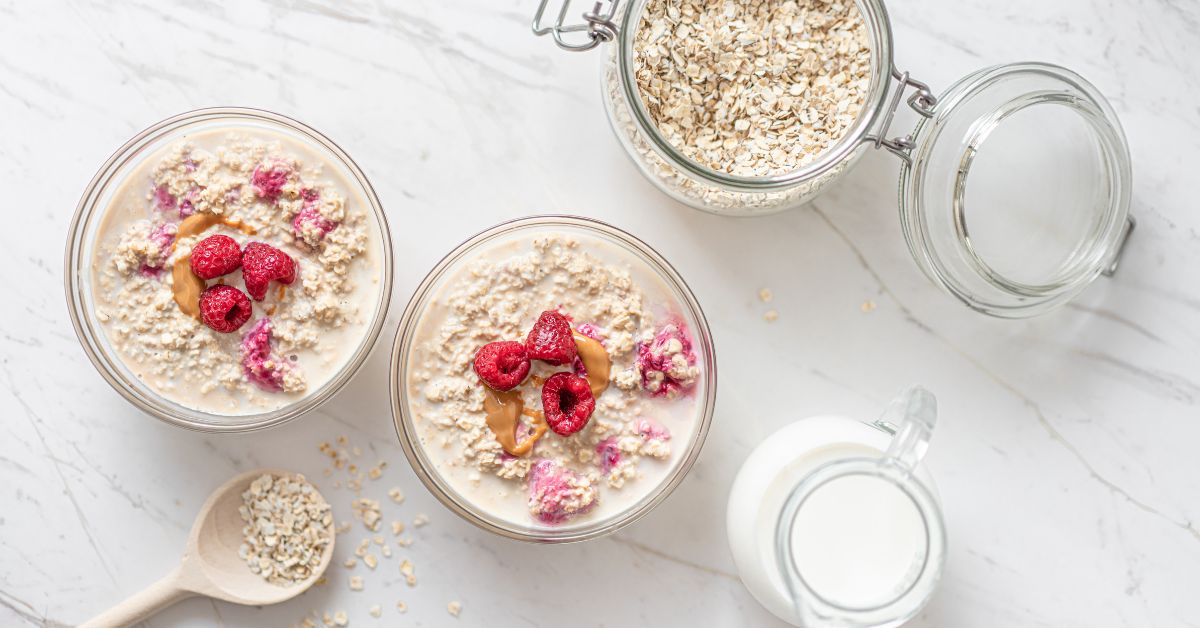
My favorite breakfast staple is overnight oats.
Dr. Maren’s Overnight Oats
Ingredients:
- 1/3 cup Bob’s Red Mill Gluten-Free Protein Oats
- 1 Tablespoon Chia seeds
- 1 Tablespoon Hemp Hearts
- 1 Chopped Date
- 1 Teaspoon Ceylon cinnamon
To make:
- Combine everything in a small 8 oz mason jar.
- Top off with filtered water.
- Stir well to combine.
- Store in the refrigerator for a quick breakfast throughout the week.
Tips for Maximizing Resistant Starch:
- Cooking and Cooling: Cooking and then cooling certain foods increases their resistant starch content. This process, known as retrogradation, changes the structure of the starch, making it less digestible.
- Reheating: Reheating cooled foods can still retain some of the resistant starch benefits, but for maximum effect, reheat gently or consume them cooled.
- Consistency: Regularly incorporating these foods into your diet will provide the most benefit over time.
- Diversity: For best results, try to eat a variety of these foods, as different types of resistant starch favor different types of gut bacteria, which creates more microbiome diversity.
By integrating these foods and methods into your meals, you can easily boost your intake of resistant starch and enjoy its health benefits.
Get more healthy diet meal planning tips in:
- Healthy Meal Prep: 8 Ways To Cook Your Way to Better Health (even if you’re busy).
- 12 Functional Nutrition Principles To Help You Ditch Dieting And Get Healthy For Life

How To Start Eating More Resistant Starch (without getting bloated or gassy)
When incorporating resistant starches into your diet, start with small doses and gradually increase as tolerated.
Gas and bloating may occur as your gut flora changes and adapts. This is a normal process.
However, if you experience significant gastrointestinal symptoms with even small amounts of resistant starch, this may be a sign of Small Intestine Bacterial Overgrowth (SIBO), yeast overgrowth, or dysbiosis (an imbalance of gut bacteria).
In this case, I recommend working with a functional medicine doctor (like me) to address these issues.
Click here to learn more about my team and our approach to integrative functional medicine.
Based on licensing, we are currently serving patients in Colorado, Michigan, and Texas with limited spots available.
Outside our tri-state area? Keep in touch via Instagram or by subscribing to our Monthly Newsletter.
- https://academic.oup.com/advances/article/4/6/587/4595564
- https://www.ncbi.nlm.nih.gov/pubmed/17936196
- https://www.ncbi.nlm.nih.gov/pubmed/14748878
- https://www.ncbi.nlm.nih.gov/pubmed/17936196
- https://nutritionj.biomedcentral.com/articles/10.1186/s12937-015-0104-2
- https://nutritionandmetabolism.biomedcentral.com/articles/10.1186/1743-7075-8-49
- https://www.ncbi.nlm.nih.gov/pubmed/19901833
- https://www.ncbi.nlm.nih.gov/pmc/articles/PMC4220782/
- https://academic.oup.com/ajcn/article/82/3/559/4862973
- https://www.ncbi.nlm.nih.gov/pubmed/20536509
- https://www.ncbi.nlm.nih.gov/pubmed/16644623
- https://academic.oup.com/ajcn/article/83/4/817/4649162
- https://www.ncbi.nlm.nih.gov/pubmed/8726244
- https://nutritionandmetabolism.biomedcentral.com/articles/10.1186/1743-7075-5-34
- https://www.ncbi.nlm.nih.gov/pubmed/15242012
- https://www.ncbi.nlm.nih.gov/pubmed/21430242
- https://pubmed.ncbi.nlm.nih.gov/22676885/
- https://pubmed.ncbi.nlm.nih.gov/22676885/
- http://www.physiology.org/doi/full/10.1152/physrev.2001.81.3.1031
- https://www.ncbi.nlm.nih.gov/pubmed/23385525
- https://www.cdc.gov/colorectal-cancer/statistics/index.html
- https://www.cambridge.org/core/journals/british-journal-of-nutrition/article/butyrylated-starch-intake-can-prevent-red-meatinduced-o6methyl2deoxyguanosine-adducts-in-human-rectal-tissue-a-randomised-clinical-trial/9AB0F481F8AD62D705D3C1A007506097
- https://www.sciencedirect.com/science/article/pii/S1044579X17301463
- http://science.sciencemag.org/content/358/6369/1443